Reviewed · GUIDED
Ban Pa Pong Pieng Rice Terraces Private Guided Tour
Ban Pa Pong Piang and Doi Inthanon National Park are a powerful combo. This private 2-day tour strings together waterfalls, hill tribe culture, and some of the most photo-friendly paddy rice terraces in Northern Thailand. The pace is active, but it is guided, so you spend less time figuring things out and more time enjoying what you came for.
Two things I really like: first, the waterfall day on Doi Inthanon, with Maeklang’s white water pouring over large rocks and later Wachirathan for that big “wow, I did not know Thailand could look like this” moment. Second, the hill tribe side of the trip feels practical, not staged, from bargaining at a Hmong market to meeting the White Karen community and trying organic coffee in their village.
One possible drawback is the trekking and uneven ground. You do a 2-hour soft downhill trek to hidden waterfalls and village stops, plus you’ll be walking around remote areas in sun, rain, or cool mountain air. If you are not used to hills, plan for slower steps and bring the right shoes.
In This Review
- Key Points You Should Know Before You Go
- Two Days in Chiang Mai’s Hills, Waterfalls, and Rice Terraces
- Price and Value: What $237 Buys in Real Time
- Getting There Smoothly: Hotel Pickup and Private Air Con Transport
- Day 1 at Doi Inthanon: Maeklang, Summit Trails, and Twin Pagodas
- Maeklang Waterfall: White Water Over Large Rocks
- Hmong Hill Tribe Market: Bargaining Skills in Thai Mode
- Twin King and Queen Pagodas at the Summit
- Summit or Roof of Thailand: Rainforest and Wooden Trails
- Ban Pa Pong Piang Overnight: The Rice Terraces at Golden Hour
- What Makes the Overnight Feel Authentic
- Photo and comfort tips for the terraces
- Day 2 Soft Trekking: Hidden Waterfalls and Hill Tribe Villages
- Downhill Trek for Hidden Waterfalls
- White Karen Village: Coffee, Organic Drinks, and Opium Valley Views
- Lunch and recharge
- Wachirathan Waterfall on the Way Back to Chiang Mai
- Guides Matter: Why Arnon and Tu Land Well With This Trip
- What to Bring, What to Wear, and How Not to Suffer in the Hills
- Must-bring items
- Clothing rules to keep in mind
- Who This Tour Fits Best, and Who Might Want a Different Option
- Should You Book This Ban Pa Pong Piang Private Tour?
- FAQ
- How long is the Ban Pa Pong Piang private guided tour?
- What is included in the price?
- What time are the pickups?
- Is there an overnight stay?
- What should I bring for the remote area?
- Who is this tour not suitable for?
Key Points You Should Know Before You Go
- Private guided routing with hotel pickup and drop-off, using an air con SUV (5-7 seats) or a VIP van (10-14 seats).
- Doi Inthanon National Park highlights include Maeklang Waterfall, twin King and Queen pagodas, and summit trails.
- Hill tribe experiences include a Hmong market bargaining stop and time in a White Karen village tied to coffee growing.
- Ban Pa Pong Piang overnight with remote-area power realities, including solar panels and candlelight at night.
- Trekking down to hidden waterfalls on Day 2, about 2 hours, plus scenic viewpoints like the old Opium Valley area.
- English guide with TAT license, with guides such as Arnon and Tu mentioned as strong at making northern life feel real.
Two Days in Chiang Mai’s Hills, Waterfalls, and Rice Terraces
This tour is built for people who like seeing Thailand beyond the usual old city loop. In 2 days you get two very different Northern Thailand vibes. Day 1 leans nature and viewpoints, with Doi Inthanon’s high elevation and waterfall power. Day 2 mixes soft adventure with village life, coffee, and terraced rice scenes.
What makes it especially good value is the way the days are connected. You do not just bounce between far points. The itinerary is designed so the hard parts, like long drives and mountain walks, actually pay off with multiple highlights. You finish Day 1 in Ban Pa Pong Piang, so you wake up among the terraces instead of rushing out right away.
The tour is also private, which matters when you want flexible pacing. It is easier to slow down for photos, stop for breath on the hills, or ask questions when your guide can focus on your group.
Price and Value: What $237 Buys in Real Time
At $237 per person for a 2-day private guided experience, the value comes from the whole package nature of it.
You are getting:
- Hotel pickup and drop-off
- 1 night in Ban Pa Pong Piang with breakfast
- 2 lunches plus local-dish breakfast
- Admission fees tied to the program
- English guide with a TAT license
- Air con SUV or VIP van
- Drinking water and soft drinks in the vehicle
- Accident insurance cover
If you were to piece this together yourself, you would quickly run into the same costs: private transport for remote mountain areas, guide time, entrance fees, and the cost of getting to the terraces overnight. The best “value” part is that guide knowledge is baked into the day, especially with the hill tribe stops where bargaining, local customs, and what to look for matter.
The main thing to watch is your personal fit. If you skip trekking or you struggle with mountain walking, you might feel like you are paying for time you did not fully enjoy. If you are comfortable with moderate walking, this price starts to feel fair.
A few more ways to fill a day here
- Chiang Rai Temples: Private Tour from Chiang Mai★ 5.0 · 1,267 reviews
- Doi Inthanon Private Tour with Trek & Lunch from Chiang Mai★ 5.0 · 622 reviews
- The 10 Tastings of Chiang Mai With Locals: Private Street Food Tour★ 5.0 · 216 reviews
- Best of Chiang Mai: Private Tour in a Day★ 5.0 · 196 reviews
Getting There Smoothly: Hotel Pickup and Private Air Con Transport
Pickup is set for 9:00 am on Day 1 and 8:40 am on Day 2. That early start is not just for show. Doi Inthanon and the surrounding hill routes tend to get busier as the morning goes on, and you want daylight for the summit trails and the waterfall areas.
Transport is handled in an air con SUV for 5-7 seats, or a VIP van for larger private groups (10-14). Either way, you get door-to-door convenience, plus in-car water and soft drinks. That matters because you are in a remote region where you cannot rely on constant shops nearby.
One small practical note: because pickup depends on your hotel or Airbnb location, you will need to share your place details and a WhatsApp number after booking. If you are the kind of traveler who hates last-minute messages, save those contact details now.
Day 1 at Doi Inthanon: Maeklang, Summit Trails, and Twin Pagodas
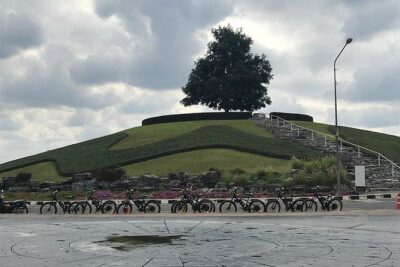
Day 1 begins with Doi Inthanon National Park, the highest mountain area in Chiang Mai Province. Even if you are not a hardcore hiker, this park works because the highlights are designed to be reachable by visitors without needing a long multi-day expedition.
Add a day trip while you're up north:
- Half-Day Thai Cooking Class at Organic Farm in Chiang Mai
★ 5.0 · 19,087 reviews - Chiang Mai: Elephant Sanctuary, Waterfall & Bamboo Rafting
★ 4.9 · 9,160 reviews - Chiang Mai: Doi Inthanon National Park Eco-Friendly Tour
★ 4.6 · 6,667 reviews
Maeklang Waterfall: White Water Over Large Rocks
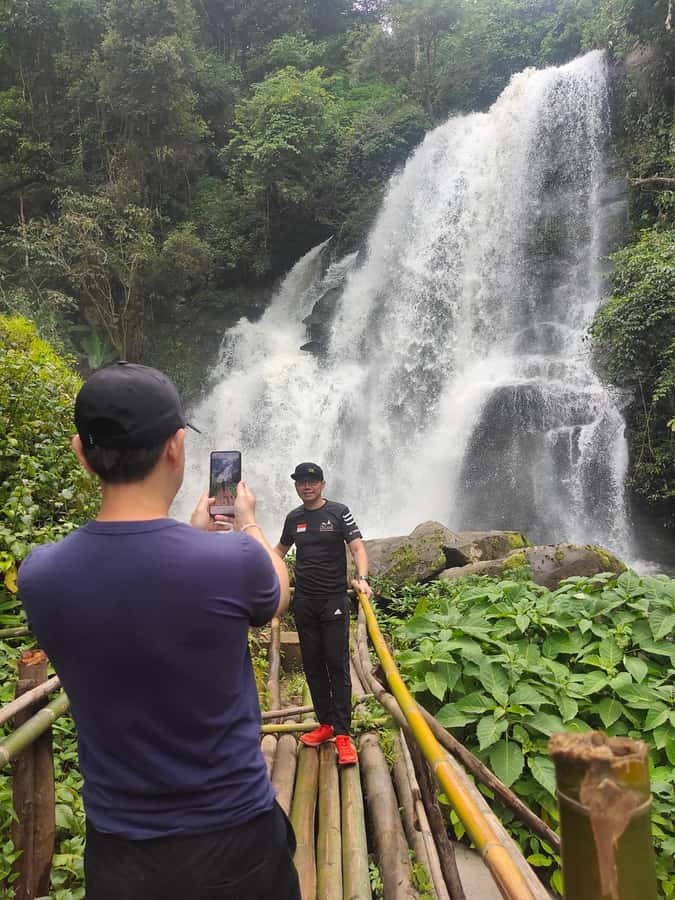
You visit Maeklang Waterfall first. The standout detail is the look of the water as it hits big rocks below, creating that white, foamy effect. That visual texture is why this stop is worth it, even if you have seen other waterfalls in Thailand. It feels more dramatic because of the way the water breaks.
Practical angle: waterfalls usually mean slippery footing. Wear shoes you trust, not just sandals. If you are traveling in the rainy months, bring a rain jacket or poncho as advised.
Hmong Hill Tribe Market: Bargaining Skills in Thai Mode
After Maeklang, the itinerary includes a Hmong hill tribe market. You do not just stroll. You practice bargaining in the Thai way. That turns a market into a skill-building experience, and your guide can help you understand what is fair to ask for.
This is also where you learn what matters in real local buying. Prices and expectations can be very different from what you are used to. The goal is not to win every deal, it is to communicate respectfully and learn the rhythm.
Twin King and Queen Pagodas at the Summit
Then you drive up to see the twin pagodas, King and Queen. This part gives you a cultural stop layered on top of the mountain scenery, so it does not feel like you are doing only natural sights.
Summit or Roof of Thailand: Rainforest and Wooden Trails
You also visit the summit area, described as the roof of Thailand, with rainforest views and wooden trails around the peak. This is where you get the mountain mood. Often the air feels cooler up there, and the trails help you move without trampling vegetation.
If you visit in December, January, or February, pack for cold. The tour notes it can feel cold in those months, so bring a jacket or sweater even if Chiang Mai city feels warm.
Ban Pa Pong Piang Overnight: The Rice Terraces at Golden Hour
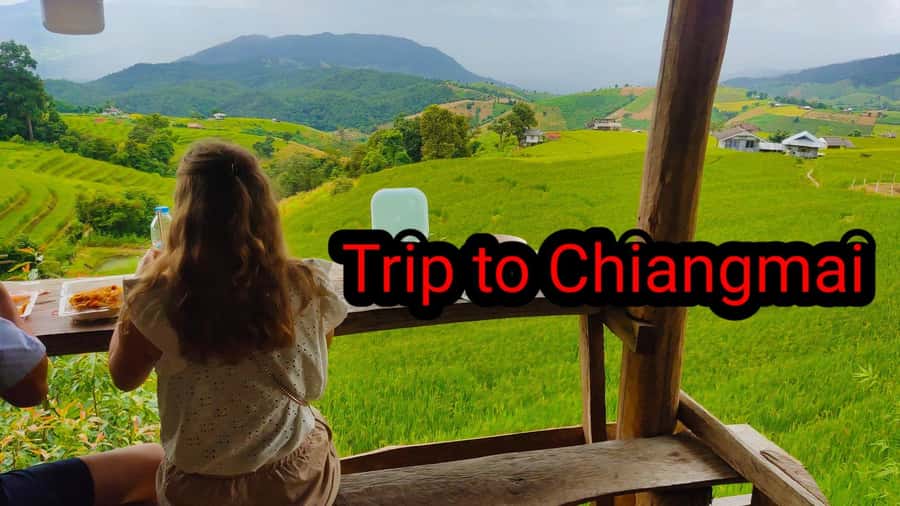
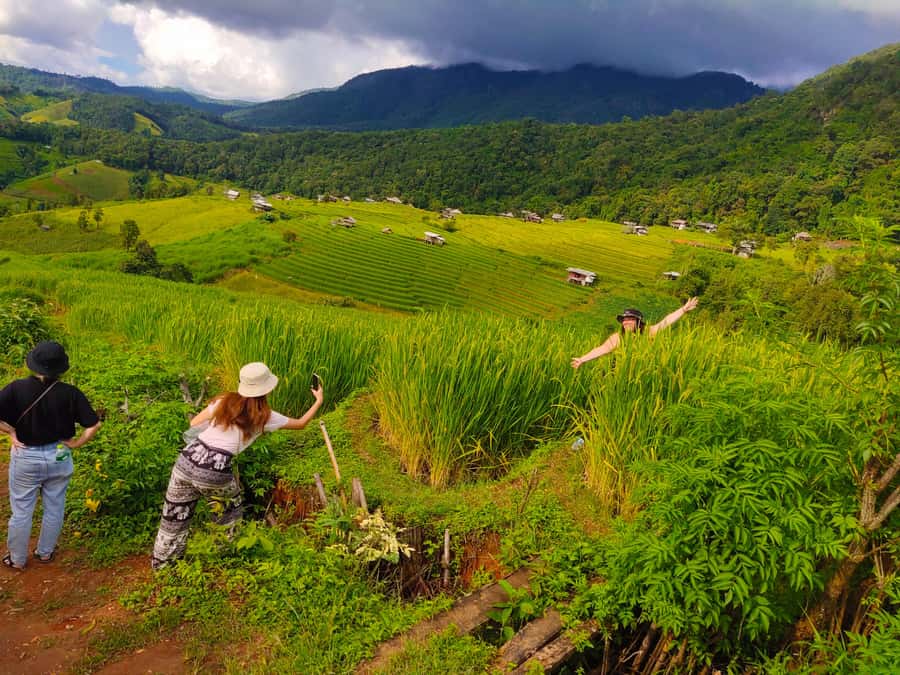
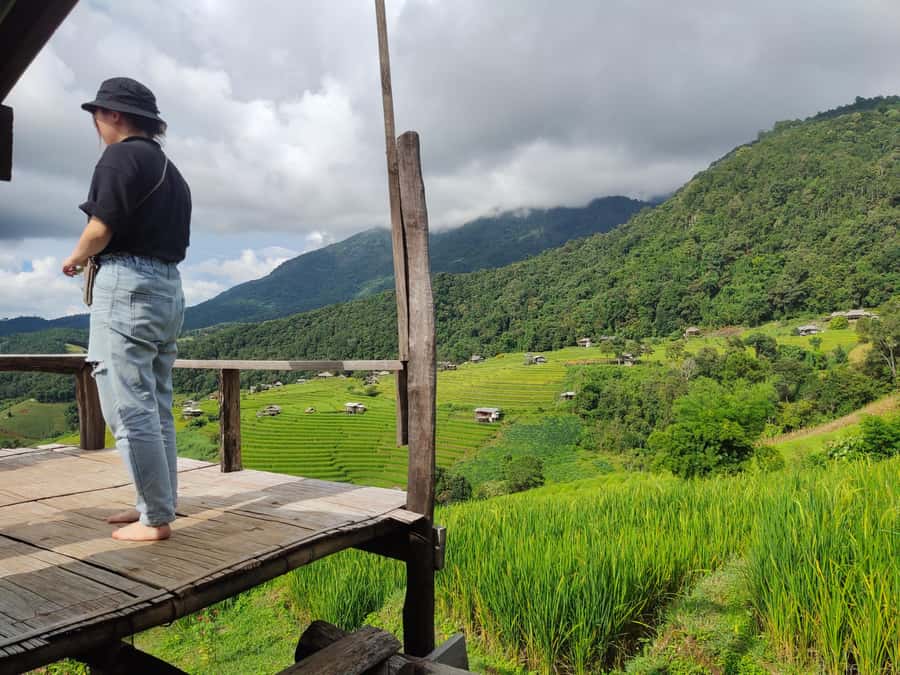
In the afternoon, you head to Ban Pa Pong Piang. The big reason this overnight works is timing. You arrive in daylight, walk around the rice terraces, take photos, and then you sleep right in the area instead of returning to Chiang Mai the same day.
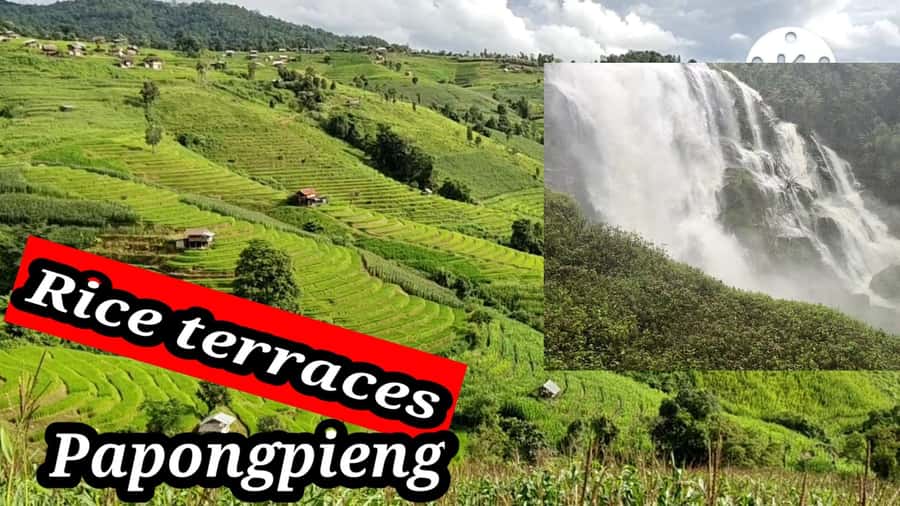
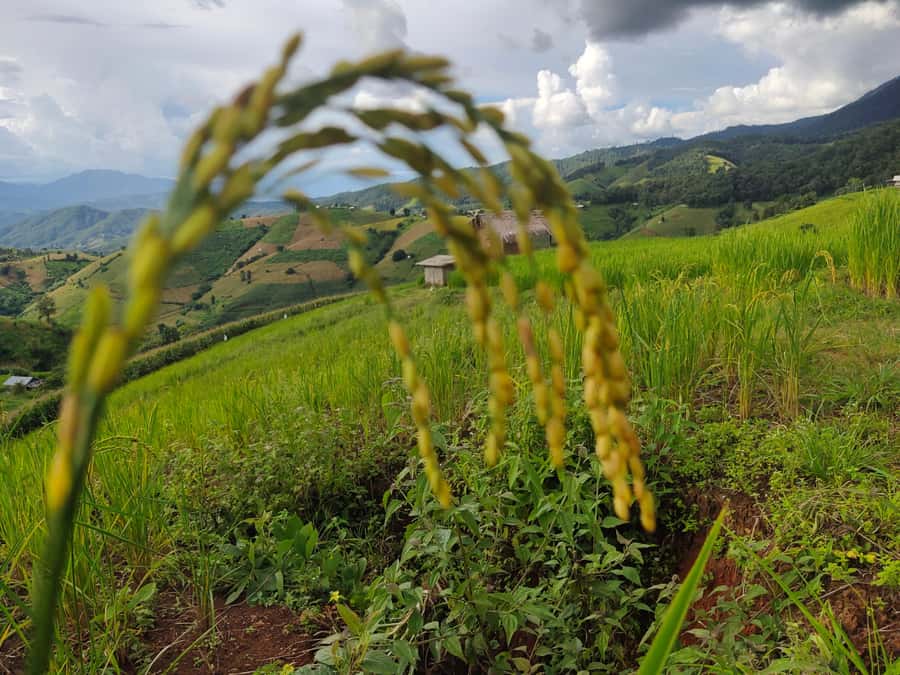
The terraces here are famously photogenic, and the view changes as light shifts on the steps of rice fields. Even if you are not chasing perfect shots, you still get that “Thailand feels different in the hills” feeling.
What Makes the Overnight Feel Authentic
The lodging is a simple place in a hill-tribe style. That simplicity is part of why it feels real. You are not in a polished resort, and you are in a remote area where electricity access is limited.
The tour specifically recommends a power bank for your mobile phone. The reason is practical: the area uses solar powered panels, and at night candlelight is available. So plan for low-power living in the evenings. It is also easier to enjoy the nighttime quiet if you are not constantly checking your screen.
Photo and comfort tips for the terraces
Bring your camera, obviously, but also bring patience. The best terrace moments happen when you slow down and look back over your shoulder as the light moves. If it rains, protect your gear with a waterproof camera cover or dry bag, and keep a small rain layer with you.
Day 2 Soft Trekking: Hidden Waterfalls and Hill Tribe Villages
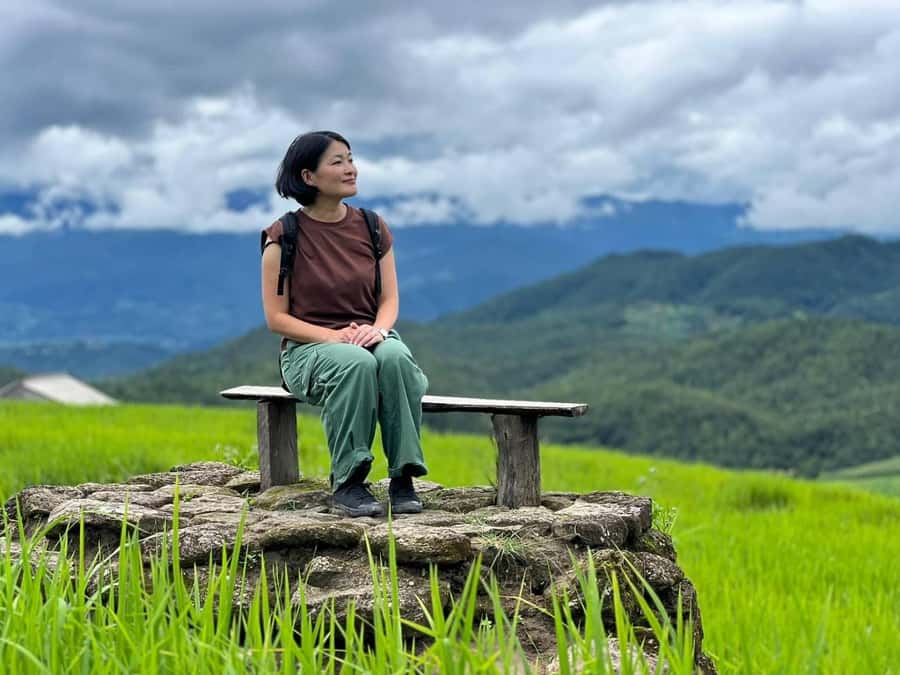
Day 2 starts earlier again, with pickup at 8:40 am. You also get time to spend more at the paddy fields after waking up. That matters because the terraces look different in morning light, and you are less rushed than if you only did an afternoon stop.
After breakfast, the tour moves to trekking time. This is a soft downhill trek, about 2 hours, to hidden waterfalls and a hill tribe village.
Downhill Trek for Hidden Waterfalls
The “down to hidden waterfalls” part is the adventure angle. Even though it is described as soft, downhill walking still means you need stable footing and careful steps. You might get muddy paths, and you will likely be uneven ground most of the way.
This is the moment where shoes really matter. Hiking shoes or footwear with grip is strongly the right call, and insect repellent helps if bugs are active around the wooded areas.
White Karen Village: Coffee, Organic Drinks, and Opium Valley Views
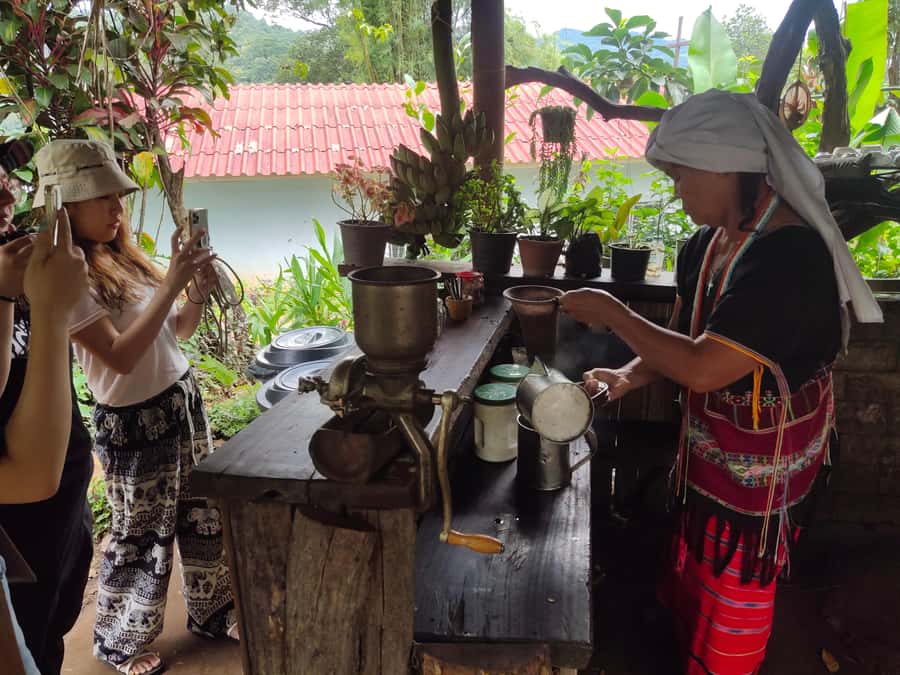
You then reach a White Karen hill tribe village. The tour notes that coffee is grown there, and you can enjoy organic coffee drinks. That is one of the smartest cultural stops in the whole itinerary because it ties a product to daily life. You are not just seeing a homestead, you are understanding what people work on and drink themselves.
You also get stunning views of the old Opium Valley. The tour explains that the land has changed, moving away from opium cultivation toward winter fruits, winter flowers, and vegetables. That makes the scenery feel purposeful, not just pretty.
If you are curious, ask your guide how the seasons affect growing. You will not get every answer, but even a few details make the village visit more than a quick photo stop.
Lunch and recharge
Lunch is served at a local restaurant. This is a useful reset point after walking and village time. Use it to drink water, adjust layers, and ask your guide what to focus on for the next stop.
Wachirathan Waterfall on the Way Back to Chiang Mai
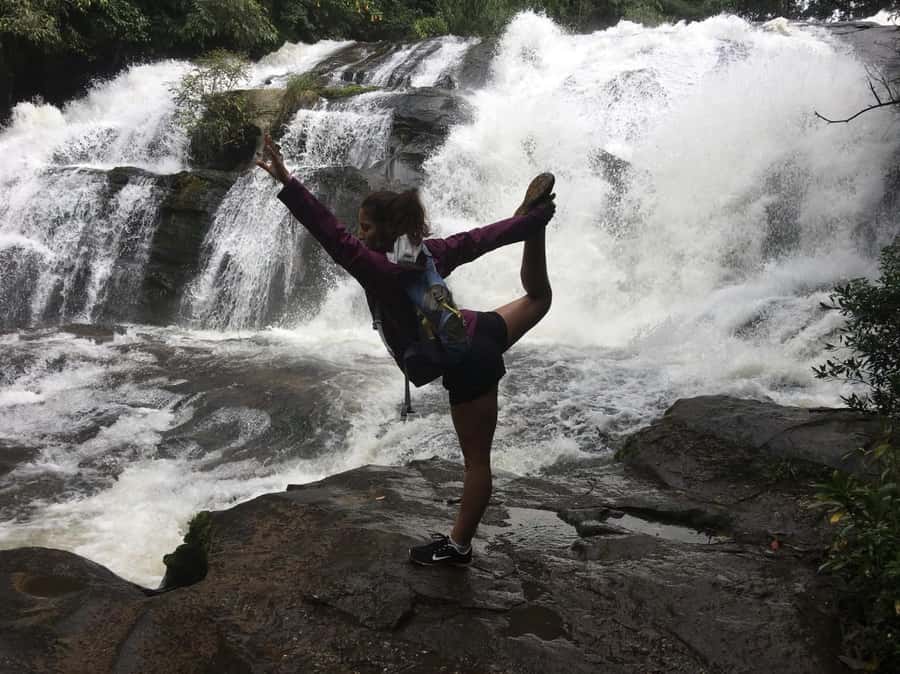
On the way back, you stop at Wachirathan Waterfalls. It is described as one of the best waterfalls in the park, and you get a chance to stretch your legs and take pictures before traveling back to Chiang Mai.
This timing is good. You do not want your big waterfall moment to happen right at the end when everyone is tired and hungry. Here, you still have energy, so the final waterfall stop lands well.
You are back to Chiang Mai before dark, around 6:00 pm.
Guides Matter: Why Arnon and Tu Land Well With This Trip
Private tours live and die on guide quality. Based on the strong feedback around the experience, guides like Arnon and Tu are often praised for making northern hill life feel real, not like a checklist.
In practice, that kind of guide skill shows up in small things:
- helping you bargain without turning it awkward
- pointing out what is worth your time in a crowded-looking market area
- keeping the walk paced and understandable
- explaining what you are seeing at pagodas, waterfalls, and village stops
If you are the type who likes asking questions on the fly, an English-speaking guide with a TAT license is the right setup.
What to Bring, What to Wear, and How Not to Suffer in the Hills
This tour gives pretty clear packing advice, and it is worth taking seriously.
Must-bring items
- Power bank, because the Ban Pa Pong Piang area uses solar power and has limited electricity at night
- Flashlight or torch, since night lighting can be candle-based
- Insect repellent
- Rain jacket or poncho for August-September and October
- Jacket or sweater for December, January, and February (it can feel cold)
- Hiking shoes or footwear with grip for the downhill trek
- Change of clothes, especially if it rains
Clothing rules to keep in mind
Wear long pants or long skirts that cover the knees. Shorts are not recommended for ladies. A T-shirt or polo is fine, and any shoes work if they are comfortable, but for trekking, choose grip.
Also bring cash. The tour data includes cash in the suggested bring list, which is a hint that some purchases might happen during market or village time.
Who This Tour Fits Best, and Who Might Want a Different Option
This one is for you if you want a balanced Northern Thailand mix: waterfalls plus terraces plus hill tribe village time, with a real guiding hand.
It is not a good match if you want an easy, fully flat day. The itinerary includes a 2-hour soft downhill trek plus walking in national park settings and village areas.
It also lists people who should not book, including pregnant women, wheelchair users, and people over 150 kg (331 lbs). There are also age limits listed for children under specific ages. If any of those apply, you should choose a different Chiang Mai tour that fits your needs better.
The tour also uses a simple yardstick: bring a spirit of adventure and be easy going. In other words, go with the flow, accept that weather can change, and you will enjoy the day more.
Should You Book This Ban Pa Pong Piang Private Tour?
If you want an organized 2-day route that actually hits Doi Inthanon, includes real waterfall time, and ends with an overnight in the Ban Pa Pong Piang rice terraces, I think this is a smart booking. The price makes sense when you account for private transport, admissions, meals, and a licensed English guide.
Book it if:
- you like hiking at a moderate level, especially downhill walks
- you want both nature and hill tribe culture, not just one theme
- you are excited to wake up among terraces, not just visit for a couple hours
Skip it if:
- you want minimal walking or you cannot handle uneven terrain
- you hate cold weather surprises, rain, or remote-area power limits
If you are a “plan it and enjoy it” traveler, this private format is a good match. You get structure, time for photos, and guide help where it counts.
FAQ
How long is the Ban Pa Pong Piang private guided tour?
It is a 2-day tour.
What is included in the price?
The price includes hotel pickup and drop-off, 1 night with breakfast, local dish breakfast, 2 lunches, all admission fees required for the program, an experienced English speaking guide with TAT license, transport by air con SUV or VIP van, accident insurance cover, drinking water and soft drinks in the car, and flexibility for your needs.
What time are the pickups?
Pickup is at 9:00 am on Day 1 and 8:40 am on Day 2.
Is there an overnight stay?
Yes. You spend 1 night at Ban Pa Pong Piang rice terraces.
What should I bring for the remote area?
The tour suggests bringing a power bank for your phone. It also recommends a torch or flashlight, insect repellent, rain gear, and a jacket or sweater for colder months.
Who is this tour not suitable for?
It is not suitable for pregnant women, wheelchair users, and people over 150 kg. It also lists children under certain ages as not suitable.
Fresh listings for Chiang Mai
- Skydive Chiang Mai★ 5.0 · 1 review
- One day hiking tour in Chaing Mai★ 5.0 · 1 review
- One Day Non Tourist Trek 100% Guarantee★ 5.0 · 1 review
- Chiang Mai to Chiang Rai (Private 3 day Tour)★ 5.0 · 1 review
- San Kamphaeng Hot Springs and Thai Handicraft Tour from Chiang Mai★ 5.0 · 1 review
- Half day Doi Suthep Temple & Mae Ping River cruise (Private)★ 5.0 · 1 review
Guided, compared.
3 Hour Old City and Temples Guided Walking Tour
Read our review →
Doi Inthanon Trip with Pha Dok Siew Guided Trek
Read our review →
Taste of Chiang Mai: Michelin Guide & Street Food Tour
Read our review →
Full-Day Guided Tuk Tuk Chiang Mai Adventure and Rafting
Read our review →