
Reviewed · ETHICAL ELEPHANT SANCTUARY TOURS
Chiang Mai: Elephant Sanctuary & Thai Cooking Workshop
Thai cooking and elephants, in one smooth day.
This is a small-group outing that pairs an ethical elephant experience at Pon Elephant Thailand with a guided Thai cooking workshop, using herbs you pick on-site. I like that the elephant part is elephant-led and respectful, with rules that focus on safe, calm interaction. One thing to plan for, though, is that water time depends on what the elephants choose to do, so your schedule can shift a bit.
A second reason I’d put this high on your Chiang Mai list is the food instruction. You learn the core Thai flavors (sweet, sour, salty, bitter, spicy) and then cook dishes like Pad Thai, Khao Soi, Tom Yum Goong, green curry, and mango sticky rice, with guidance that helps you actually repeat the recipes later. Many groups also get extra ingredient moments, like Northern Thai snacks such as Chiang Mai sausage, depending on the flow of the day.
In This Review
- Key things I’d zero in on before you book
- The real value: ethical elephant time plus a Thai cooking lesson you can repeat
- Getting there from Chiang Mai: van ride, meeting point, and what it means for your day
- Morning vs afternoon sessions: how timing changes what you’ll do
- Organic garden start: collecting herbs and learning Thai flavor building blocks
- The Thai cooking workshop: what you’ll actually cook and how it’s taught
- Vegetarian and vegan options in real life
- Elephant sanctuary time: briefing, safe behavior, and feeding Napier grass
- River bathing and elephant-led splashing: what to expect and how to stay comfortable
- Lunch, fruit, recipes: how the day feeds you and then teaches you
- Guide impact: why names like Pimdao, Som, and Air keep showing up
- Price and value: why $63 can make sense for this full 9-hour mix
- Who should book Pon Elephant Thailand plus the cooking workshop
- Should you book this Chiang Mai tour?
- FAQ
- How long is the Chiang Mai elephant and Thai cooking experience?
- What are the return times for the morning and afternoon sessions?
- Is hotel pickup included?
- What should I bring for the day?
- Are vegetarian or vegan options available?
- Will the elephants bathe in the river for sure?
Key things I’d zero in on before you book
- Organic garden herbs before cooking: you collect fresh ingredients right in the sanctuary area, then use them in your dishes.
- Hands-on Thai cooking, not a demo: you pick dishes and cook with real technique guidance from an English-speaking local chef/guide team.
- Ethical elephant care focus: there’s a briefing on elephant history, habits, and how to behave around them, with no riding or performances-style behavior implied.
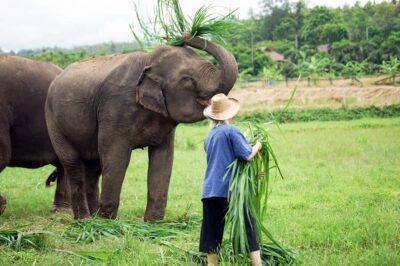
- Feeding with specific food types: you feed Napier grass, sugarcane, and bananas in a natural setting.
- River bathing can happen, but you can’t force it: the elephants decide if they’ll splash, so come ready for wet fun, but stay flexible.
- Recipe booklet to take home: the workshop ends with take-home instructions so the food isn’t just a one-day memory.
The real value: ethical elephant time plus a Thai cooking lesson you can repeat
Most “elephant days” in Thailand fall into two camps: animal interaction only, or animal interaction plus a generic snack-and-photo stop. This one stands out because it pairs the elephants with an actual skill, Thai cooking, and it ties both parts back to how people live with nature in northern Thailand.
The elephant sanctuary side is designed around observation, feeding, and education. You get the elephant habitat and behavior briefing before you move around with them, so you’re not wandering in blind or treating them like props. Then you’re doing simple, respectful actions like feeding approved foods and walking in the environment while caretakers manage the space.
On the cooking side, the value is that you learn the “why” behind Thai flavors, not just the “what.” The tour spells out the five basic flavors, and that framework makes it easier to adjust dishes at home later. Add in the fact that you’re using fresh herbs sourced from an organic garden on-site, and the food part feels tied to the place, not pasted onto it.
Getting there from Chiang Mai: van ride, meeting point, and what it means for your day
You’ll travel from Chiang Mai Province to Pon Elephant Thailand by air-conditioned van, about 1 hour and 20 minutes. The whole point of that drive is you get out of town and into a more natural setting for both the garden herb step and the elephant time.
How the day starts depends on your pickup option. If you select pickup, it’s hotel pickup and drop-off in Chiang Mai town only. If not, you meet your guide at the Pon Elephant Thailand office in town, about 10 to 15 minutes before the tour begins.
Why this matters: the transport is part of the comfort factor for a full 9-hour experience. The tour also runs in a way that keeps the day structured, so you’re not spending half your time “waiting for the next thing.” The reviews are heavy on smooth, comfortable transport, including praise for air-conditioned vans.
What to pack for the commute and the day:
- Sunscreen (and biodegradable sunscreen if you have it)
- Flip-flops (practical for getting in and out of areas around water and grass)
- Insect repellent (biodegradable is recommended)
- Cash (useful since cash is listed as something you should bring)
- Passport or ID card (a copy is accepted)
Market run first, then into the kitchen
- Half-Day Thai Cooking Class at Organic Farm in Chiang Mai★ 5.0 · 19,087 reviews
- Chiang Mai: Cooking Class, Market & Thai Herbs Garden Tour★ 4.9 · 4,824 reviews
- Chiang Mai: Authentic Cooking Class with Market & Farm Visit★ 4.9 · 4,546 reviews
- Thai and Akha Cooking Class in Chiang Mai★ 5.0 · 4,358 reviews
Morning vs afternoon sessions: how timing changes what you’ll do
The tour runs about 9 hours, and there are two common time blocks.
Morning session runs roughly from 7:30 AM to 8:00 AM departure and returns to Chiang Mai around 5:00 PM, with lunch included. This is also the session that includes a market visit plus the organic farm tour.
Afternoon session starts around 12:30 PM to 1:00 PM departure and returns to Chiang Mai around 9:00 PM, with dinner included. In this block, the information you’re given is that there is no market visit, while the organic farm tour is still included.
Practical advice: if you care about ingredient shopping and seeing local food basics, choose the morning session. If you prefer a later start and a more relaxed pace into the evening, the afternoon session can work well, especially since dinner is included.
Organic garden start: collecting herbs and learning Thai flavor building blocks
Before you cook, you get a guided walk through an organic vegetable garden located right inside the sanctuary area. This is one of the most useful parts of the day, because it turns Thai cooking from a list of dishes into something you can source and understand.
Here’s what you do: you explore the garden to collect fresh herbs daily, then you’re guided on prepping “four chords of Thai ingredients” (the tour uses that phrasing) and how those ingredients fit into dishes.
Then the guide connects it to Thai flavor logic using the five basic flavors: sweet, sour, salty, bitter, and spicy.
Why I like this setup for you: once you understand that framework, Thai cooking stops feeling like a mystery. Even if you don’t replicate every herb exactly at home, you can still rebuild the flavor balance.
Also, the tour notes vegetarian and vegan options are available. Since your ingredients come from the garden and you’ll be preparing dishes yourself, these options are easiest to execute when there’s a clear ingredient plan from the start.
Feed and bathe elephants, no riding involved
- Chiang Mai: Elephant Sanctuary, Waterfall & Bamboo Rafting
★ 4.9 · 9,160 reviews - Chiang Mai: Elephant Sanctuary & Waterfall Group Tour
★ 4.9 · 5,780 reviews - Chiang Mai: Elephant Sanctuary Feeding Program Half-Day Tour
★ 4.8 · 4,527 reviews
The Thai cooking workshop: what you’ll actually cook and how it’s taught
You’re not just watching someone cook. You choose dishes and cook them using traditional methods with the ingredients provided.
The workshop is built around popular Thai dishes and classic technique:
- Pad Thai
- Khao Soi
- Tom Yum Goong
- Green curry
- Mango sticky rice
You might also see other dishes show up depending on group flow and preferences, and reviews mention options like Pad See Ew (sometimes written as Pas Sew). There’s also a choice-based structure described in feedback: some groups cooked multiple courses, picking which dishes they wanted for each.
One more detail worth knowing: the tour is set up so the chef/guide explains ingredients clearly in English. Reviews repeatedly praise guide energy and clarity, with several guides getting mentioned by name, including Pimdao, Som, Air, and Noi. If you’re the type who learns best by asking questions and getting quick feedback, that matters.
What about the challenge level? Because you’re cooking from scratch but guided, it’s best for people who want hands-on fun and don’t mind getting a little messy. You’re also given all necessary cooking ingredients, so you are not hunting down specialty items.
Vegetarian and vegan options in real life
The inclusion of vegetarian and vegan options is not just a checkbox. Since you’re cooking with provided ingredients and a local instructor team, you can usually tailor your dish choices ahead of time. If you have strict dietary needs, it’s smart to confirm your options early when you talk with your guide.
Elephant sanctuary time: briefing, safe behavior, and feeding Napier grass
After cooking and eating lunch (morning) or dinner timing considerations (afternoon), you move into elephant time with a briefing first. You learn:
- Elephant habitat background
- Elephant history
- Daily habits and behavior
- How to behave around elephants
This briefing is a big deal because it sets expectations about distance, movement, and respectful interaction. The tour is built around walking around the natural environment with the elephants, not staging interactions.
Feeding is a core activity. You feed approved foods including:
- Napier grass
- Sugarcane
- Bananas
You’ll also get fruit for elephants included in the package, which means there’s a planned flow rather than random feeding. The goal is a calm, safe routine.
One more element in the highlights is learning about Asian elephants and making herbal treats for them. That’s a more educational twist than “just feeding,” and it’s a useful reminder that ethical elephant care includes thoughtful daily enrichment.
River bathing and elephant-led splashing: what to expect and how to stay comfortable
Many days at Pon Elephant Thailand include the river phase. The information you’re given says the tour may include taking elephants to the river, swimming, and bathing.
Here’s the key rule: the elephants choose to bathe in the river, and the guides do not force them. That means activities can change shortly. You should treat water time as a bonus, not a guarantee.
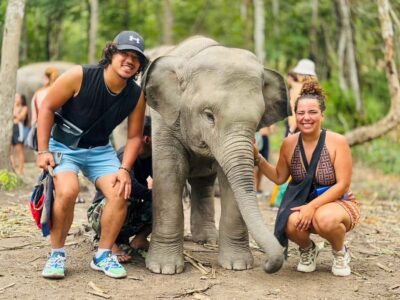
In practice, that can still feel like a once-in-a-lifetime moment. Reviews specifically mention being showered by elephants if the animals splash, which can turn into a fun, surprising photo moment.
What to bring for this part:
- Change of clothes is listed as a thing to bring
- Beachwear is listed
- Flip-flops help keep your feet comfortable when you’re near wet ground
Also note: towels and a change of clothes are not included in the tour. I’d plan to bring your own towel, even if you pack a light outfit. You’ll be happier when the river moment happens and you can dry off quickly.
Lunch, fruit, recipes: how the day feeds you and then teaches you
Food is a two-part experience here: you eat what you cook, and you also get lunch (or dinner depending on session) included.
For the cooking workshop, the tour includes:
- Lunch (morning session) or dinner (afternoon session)
- Drinking water
- All necessary ingredients for cooking
- Recipe booklet
- Fruit for elephants
The recipe booklet is one of those “small” inclusions that becomes big value. If you’ve ever tried to recreate Thai food later and realized you only remembered the general vibe, a recipe sheet is what turns your memory into a real dinner at home.
It also helps you keep the five flavor balance concept. You’re more likely to remember which ingredient gives the sour kick or the sweet rounding effect because you have a written reference.
Guide impact: why names like Pimdao, Som, and Air keep showing up
The elephant and cooking parts both depend on guidance quality. The reviews are very consistent here, and several names come up again and again, especially Pimdao. People describe her as funny, energetic, and attentive, and she’s praised as both a strong elephant guide and a capable cooking instructor.
Other guide names that show up with strong feedback include Som, Air, Noi, and Toot.
What this means for you: you’ll get the best day if you’re the kind of person who likes explanations. If you also like jokes and a lively pace, you’ll probably feel more connected to the day, whether you’re feeding elephants or learning how the Thai dishes come together.
Price and value: why $63 can make sense for this full 9-hour mix
At $63 per person for about 9 hours, this tour is trying to bundle three things that are often sold separately:
1) Ethical elephant sanctuary interaction and education
2) Transportation from Chiang Mai via air-conditioned van
3) A Thai cooking workshop with guided instruction, included ingredients, and take-home recipes
If you price those separately in your head, $63 starts to look more reasonable. The small group size capped at 10 participants also supports value. Less crowding usually means more time with the instructor and a better elephant interaction flow.
Also, inclusions matter. You’re not paying extra for basic items like drinking water, lunch/dinner, insurance, and the cooking ingredients. You even get fruit for the elephants.
One caution on value: you’ll get the most out of the day if you actually want both elephants and Thai cooking. If you’re only here for one of them, it might feel like extra time spent on the other.
Who should book Pon Elephant Thailand plus the cooking workshop
This fits best if you:
- Want an ethical-feeling elephant encounter focused on feeding and behavior education
- Love Thai food enough to learn the flavor system and techniques
- Prefer a small group setting, limited to about 10 people
- Don’t mind being outdoors and having flexible water time
Who should think twice:
- Very young kids, since it is not suitable for children under 5
- Older adults, since it is not suitable for people over 70
- Anyone who hates getting wet or doesn’t like having the schedule depend on animal choices
Should you book this Chiang Mai tour?
My take: if your Chiang Mai trip has room for one standout day, this is a strong candidate. It’s the rare combo where elephants are treated as living, behavior-first animals, and cooking is taught as a real skill you can bring home. The organic garden herb step is especially practical, because it links ingredients to the dishes you cook instead of leaving you with a blur of photos.
Book it if you want:
- Hands-on Thai cooking with guidance and a take-home recipe booklet
- A calmer elephant experience focused on feeding and education
- A day that feels complete, with structured pacing from van pickup to river time
Skip it if:
- You only want the elephant portion and nothing else
- You require a rigid schedule for water activities, since river bathing depends on elephant choices
If you want, tell me whether you’re choosing the morning or afternoon session, and I’ll suggest the best way to plan your day around it, including what to prioritize for photos and what to pack for comfort.
FAQ
How long is the Chiang Mai elephant and Thai cooking experience?
The tour runs about 9 hours, and the exact timetable depends on whether you choose the morning or afternoon session.
What are the return times for the morning and afternoon sessions?
For the morning session, you return to Chiang Mai around 5:00 PM. For the afternoon session, you return around 9:00 PM.
Is hotel pickup included?
Pickup is optional. If you select it, it includes hotel pickup and drop-off in Chiang Mai town only.
What should I bring for the day?
Bring a change of clothes, camera, sunscreen (biodegradable sunscreen is recommended), flip-flops, beachwear, cash, and your passport or ID card (a copy is accepted). You should also bring biodegradable insect repellent.
Are vegetarian or vegan options available?
Yes, vegetarian and vegan options are available.
Will the elephants bathe in the river for sure?
No. The elephants choose whether to bathe in the river, and the guides do not force them, so some water activities may change.
Fresh listings for Chiang Mai
- Skydive Chiang Mai★ 5.0 · 1 review
- One day hiking tour in Chaing Mai★ 5.0 · 1 review
- One Day Non Tourist Trek 100% Guarantee★ 5.0 · 1 review
- Chiang Mai to Chiang Rai (Private 3 day Tour)★ 5.0 · 1 review
- San Kamphaeng Hot Springs and Thai Handicraft Tour from Chiang Mai★ 5.0 · 1 review
- Half day Doi Suthep Temple & Mae Ping River cruise (Private)★ 5.0 · 1 review
Ethical Elephant Sanctuary Tours, compared.
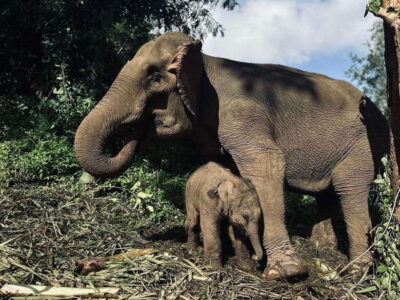
Elephant Sanctuary, Waterfall & Bamboo Rafting
Read our review →
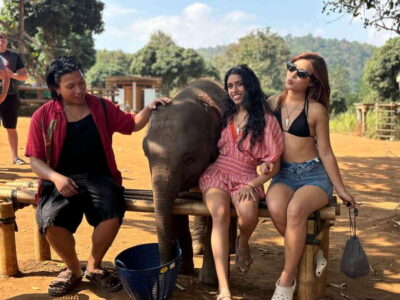
Elephant Sanctuary Feeding Program Half-Day Tour
Read our review →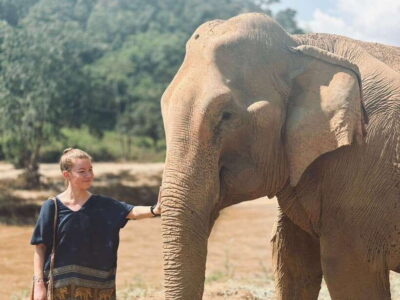
Elephant Sanctuary, Long Neck & Sticky Waterfall
Read our review →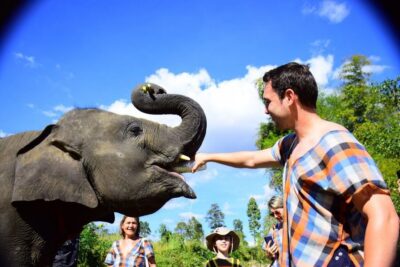

Browse the lists this tour appears in