
Reviewed · NORTHERN THAI COOKING CLASSES
Chiang Mai: Local Northern Thai Cooking Class at Grandma’s
Chiang Mai has a cooking lesson that feels personal. This Northern Thai Lanna cooking class takes you beyond recipes, with a market stop, farm ingredients, and real kitchen skills like lighting a charcoal grill and grinding flour. I love that it is hands-on from start to finish, and I also like that you learn why ingredients taste the way they do, not just what to mix. One thing to consider is that you will be on your feet for most of the 6 hours, so comfortable shoes matter.
Grandma’s Home Cooking School keeps the day practical: you visit ingredient sources, cook together with English-speaking guidance, and then eat what you make, plus dessert. That mix of farm to plate and plate to palate is the point. If you want a fast, passive tour with lots of free time, this is not that kind of experience.
In This Review
- Key highlights worth your attention
- A Northern Thai class that teaches technique, not just dishes
- Getting to Grandma’s: transfers, timing, and a smooth start
- The market stop: where Northern Thai flavor starts
- Farm time: herbs, vegetables, and learning the ingredient story
- Tools and techniques you might not get elsewhere
- Lighting the charcoal grill
- Washing vegetables
- Millstone flour and coconut grating
- What you cook: Northern Thai dishes and what to expect
- Northern Thai sausage
- Nam Prik Ong or Nam Prik Num
- Northern pork belly curry (Hang Lay Curry)
- Curry young jackfruit (Kraeng Khanun-on)
- Stuffed dough pyramid (Ka Nhom Tian or Kanomjok)
- Thai coconut pancakes
- Lunch, dessert session, and the food you get to keep enjoying
- The group experience: caring instructors and a calm pace
- Who this class is best for in Chiang Mai
- Price and value: is $48 worth it for 6 hours?
- Practical tips so the day goes smoothly
- Should you book this Chiang Mai Lanna cooking class?
- FAQ
- FAQ
- How long is the cooking class?
- What time is pickup in Chiang Mai?
- What dishes will I learn to cook?
- Do I visit a market during the class?
- Is lunch included?
- Is there dessert included?
- Are transfers from my hotel included?
- Can the class accommodate special dietary requirements?
- What language are the instructions in?
- What should I bring, and what is not allowed?
- Can I cancel for a refund?
- Is there a way to pay later?
Key highlights worth your attention
- Market-first ingredient learning so seasoning choices make sense
- Organic farm and herb picking, plus egg collecting at the coop
- Hands-on tools, including a traditional millstone and coconut grater
- Charcoal grill skills that you can actually reuse at home
- A small-group feel, with portions planned so you get what you cook
- Dessert session tasting and an e-recipe book to practice later
A Northern Thai class that teaches technique, not just dishes
Northern Thailand food has a different rhythm than what most people expect from Thai cuisine. It tends to lean more into herbs, grounded pastes, and hearty flavors, and it is the kind of cooking where technique matters. This is why I like this class in Chiang Mai: you are not just following steps, you are learning processes you can repeat later.
You also get a day that feels grounded in real local food culture. You will shop for ingredients, see how vegetables and herbs grow, and then use those same items in your dishes. That gives you a map in your head, so when you taste Nam Prik Ong or Nam Prik Num later, you understand what is driving the flavor.
The day also sounds very “method focused” because you do a surprising set of manual tasks. You will wash vegetables, light a charcoal grill, mill flour with a traditional millstone, and grate coconut meat with a coconut grater. Those are not just fun activities. They teach the textures and pacing that shape Northern Thai dishes.
Getting to Grandma’s: transfers, timing, and a smooth start
Most people want cooking classes to be easy to get to, and this one includes round-trip transfers from your hotel. Pickup runs at about 8:30am to 9:00am, and you should be ready at the lobby at 8:30am so the day does not start late.
When you arrive, expect welcome snacks and a refreshing drink. That matters more than it sounds, because you then head into ingredient learning and cooking with energy. The class runs about 6 hours, which is long enough to feel satisfying but not so long that you lose the thread.
Language is English with an instructor, which is important here because the class includes both cooking steps and ingredient explanations. If you are not fluent in Thai, this is the difference between copying a recipe and understanding it.
Market run first, then into the kitchen
- Half-Day Thai Cooking Class at Organic Farm in Chiang Mai★ 5.0 · 19,087 reviews
- Chiang Mai: Cooking Class, Market & Thai Herbs Garden Tour★ 4.9 · 4,824 reviews
- Chiang Mai: Authentic Cooking Class with Market & Farm Visit★ 4.9 · 4,546 reviews
- Thai and Akha Cooking Class in Chiang Mai★ 5.0 · 4,358 reviews
The market stop: where Northern Thai flavor starts
The day begins with a visit to a local market where instructors introduce key Northern Thai ingredients and seasonings. This is where the class becomes useful for your future cooking. You get to connect names on a menu to what you actually see at stalls.
Northern Thai cooking often depends on building blocks: grounded aromatics, chili-based dips, and herbs. In a market setting, you can spot which products are fresh, which are dried, and how different seasonings function in real cooking. You also get a chance to ask questions and get clear explanations while the ingredients are right there in front of you.
For you, this part is valuable because it changes how you shop later. Instead of buying “Thai curry paste” and hoping it works, you start thinking in terms of components: chili style, tomato style, herb choices, and the balance between salty, sour, and spicy.
Farm time: herbs, vegetables, and learning the ingredient story
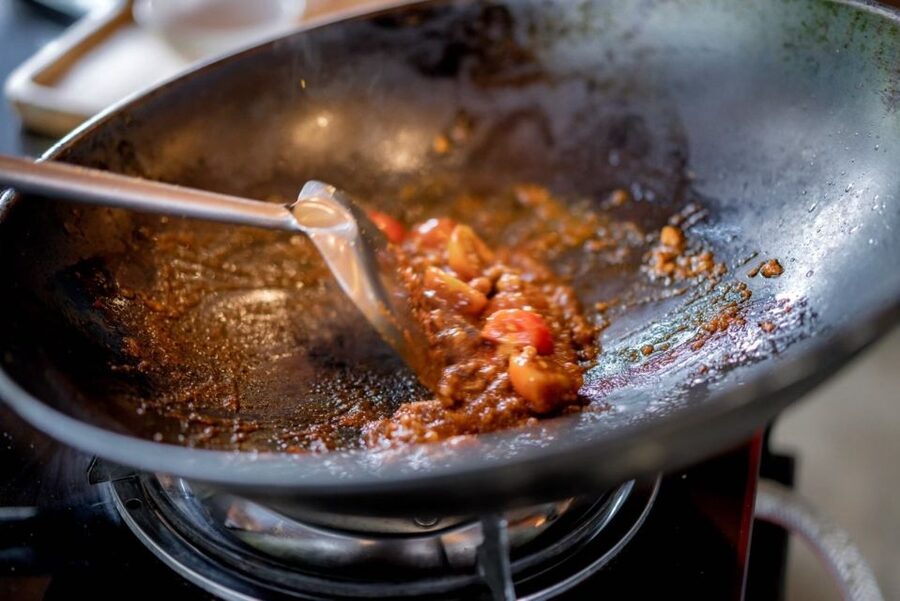
After the market, you move to an organic farm. The focus here is not scenery. It is the practical question: where do the herbs and vegetables you are about to cook actually come from?
You will tour the farm and learn how Thai herbs and vegetables are used in cooking. There is also an egg stop, with a chance to visit the chicken coop and collect eggs. That is the kind of detail that makes food feel more real, and it also helps you remember what each ingredient contributes.
One of the underrated benefits of farm-style ingredient learning is timing. You get a sense of what is in season and how freshness affects taste. Even if you do not recreate it exactly at home, you will start making smarter substitutions.
Add a day trip while you're up north:
- Chiang Mai: Elephant Sanctuary, Waterfall & Bamboo Rafting
★ 4.9 · 9,160 reviews - Chiang Mai: Doi Inthanon National Park Eco-Friendly Tour
★ 4.6 · 6,667 reviews - Chiang Mai: Elephant Sanctuary & Waterfall Group Tour
★ 4.9 · 5,780 reviews
Tools and techniques you might not get elsewhere
This class includes the kind of cooking tasks that most urban cooking classes skip. And that is a big part of the value.
Lighting the charcoal grill
You will learn how to light a charcoal grill. That matters because grilling techniques are about managing heat, not just firing up something hot. You will see how charcoal heat changes how food cooks, especially for dishes in the Northern style.
Washing vegetables
It sounds basic, but washing well affects texture and flavor. If you cook herbs and vegetables that are still a bit dirty or sandy, your dishes suffer in small ways you might not notice until you taste.
Millstone flour and coconut grating
You will mill flour using a traditional millstone, and you will grate coconut meat using a coconut grater. This is one of the most “hands on” cooking moments of the day. The textures you get from those tools influence dough and filling, and you will feel the difference as you work.
If you like cooking that teaches craft, you will enjoy this section. If you hate manual prep tasks, you might find it slower than a standard recipe class. Either way, these tools are exactly why this course does not feel generic.
What you cook: Northern Thai dishes and what to expect
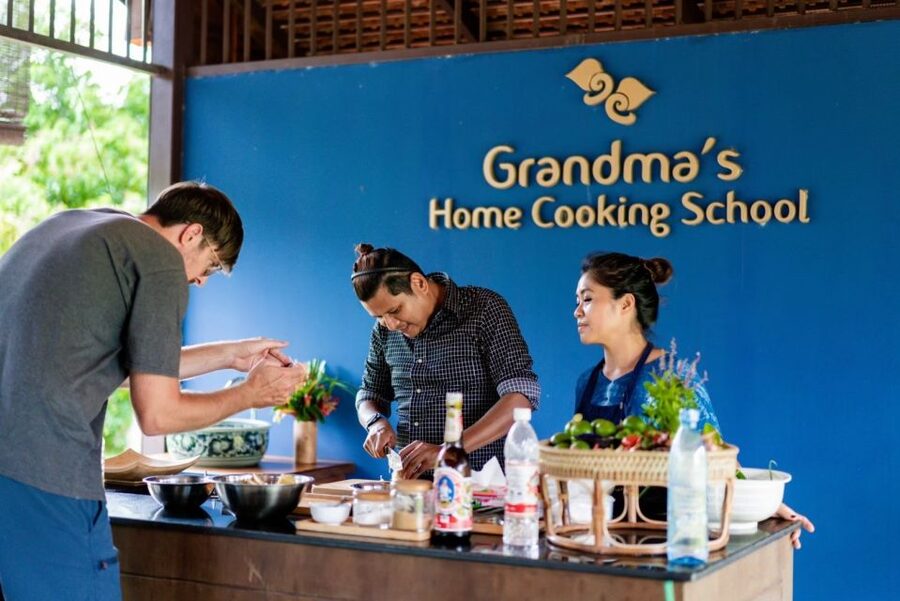
The course is described in a couple of ways regarding the total dish count, but the core promise is clear: you will make Northern Thai favorites with hands-on steps and guidance. The included list highlights five traditional dishes, while the broader class description also mentions a sixth dish option. Expect a day built around Northern staples, plus coconut pancakes and desserts.
Northern Thai sausage
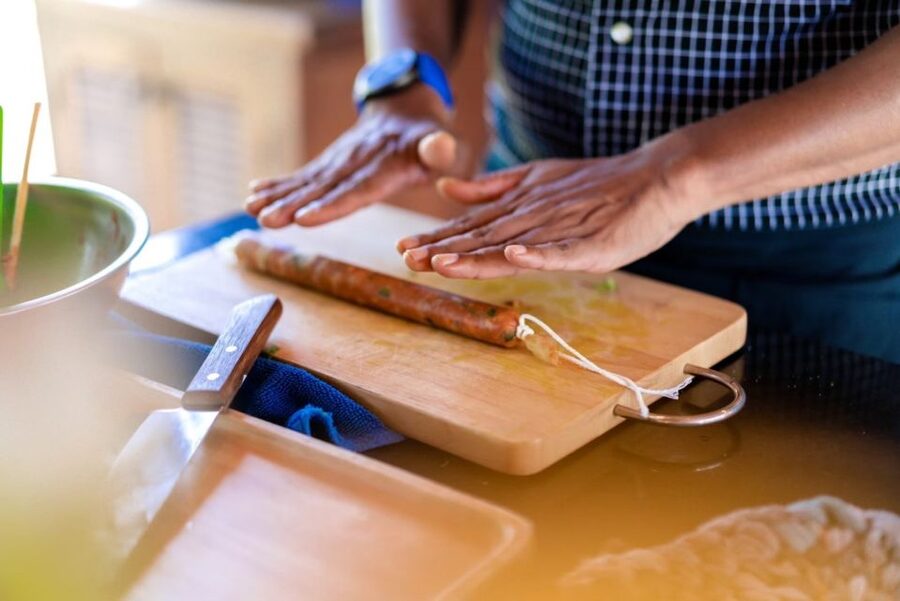
You will learn to cook a Northern Thai sausage. Northern sausage is not just a novelty. It teaches seasoning balance and how herbs and chili interact with meat.
Nam Prik Ong or Nam Prik Num
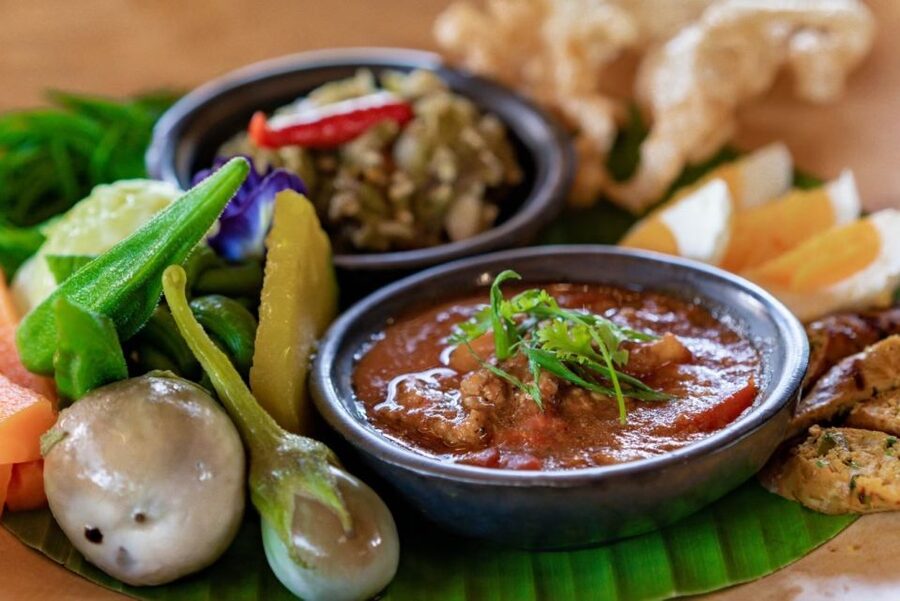
You will make either Nam Prik Ong or Nam Prik Num. Nam Prik Ong is described as a spicy Northern Thai pork and tomato chili dip. Nam Prik Num is a Northern Thai green chili dip.
This is a key skill for you because chili dips are among the easiest ways to bring Northern Thai flavors into your kitchen later. Once you understand the direction, you can adjust heat levels and ingredients.
Northern pork belly curry (Hang Lay Curry)
You will cook Northern Pork Belly Curry, also known as Hang Lay Curry. This is the kind of dish that helps you understand how Northern curries feel heavier and deeper, and how time, fat, and spice affect the final sauce.
Curry young jackfruit (Kraeng Khanun-on)
You will also cook Curry Young Jackfruit. Young jackfruit offers a texture that soaks up flavor while staying interesting to bite. If you are used to more tender meats in Thai curries, this dish can shift your expectations in a good way.
Stuffed dough pyramid (Ka Nhom Tian or Kanomjok)
Another included dish is a stuffed dough pyramid, listed as Ka Nhom Tian or Kanomjok. This teaches filling, dough handling, and cooking technique, and it is also a fun show of Northern shape and form.
Thai coconut pancakes
The class description specifically includes making Thai coconut pancakes in a traditional way, and coconut work is a major part of the preparation. If you like breakfast flavors or dessert-adjacent foods, this is a highlight to aim for.
Lunch, dessert session, and the food you get to keep enjoying
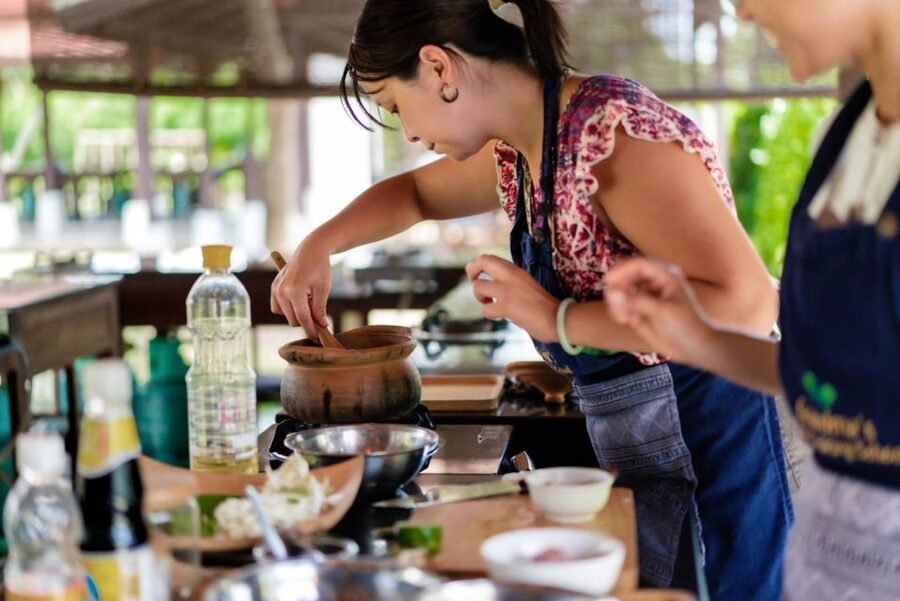
You cook, then you eat. Lunch break is included, and it is not just a placeholder. It is designed so you taste what you made in the same day.
There is also a dessert and refreshment session where you taste traditional Thai desserts and snacks. This is one of those parts that helps you feel you had a complete food experience, not just a cooking class without a payoff.
And here is a practical perk that I really value: you can often take leftovers home. One past participant noted that you can receive disposable containers for leftovers you do not finish. That means you do not have to feel wasteful if the day’s portions are more than you want to eat on the spot.
The group experience: caring instructors and a calm pace
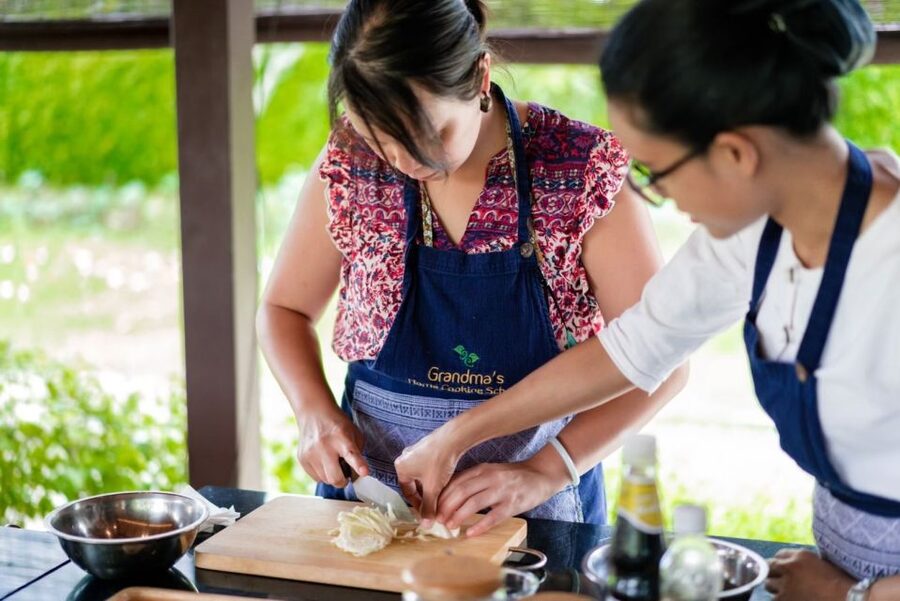
Cooking classes can either feel chaotic or feel coached. This one seems built to keep it organized.
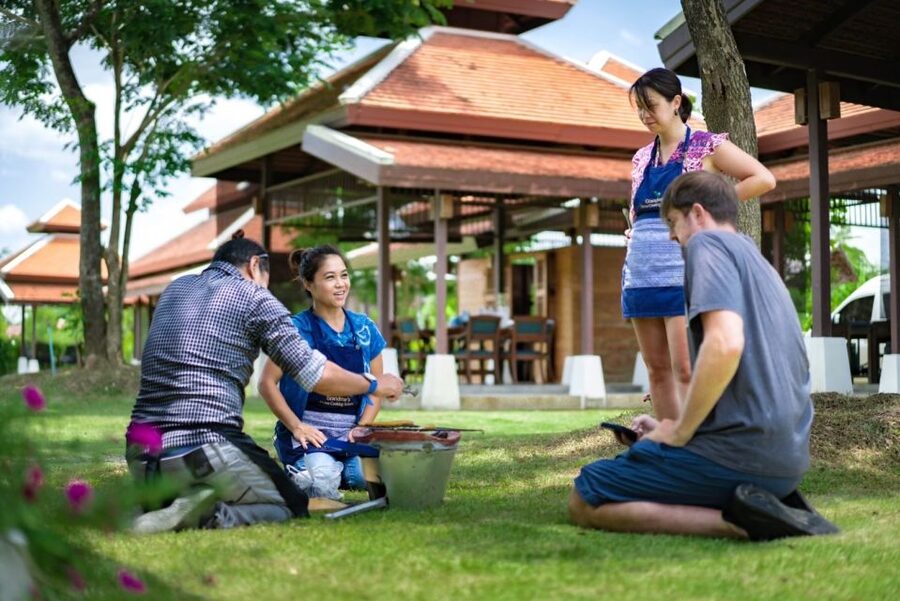
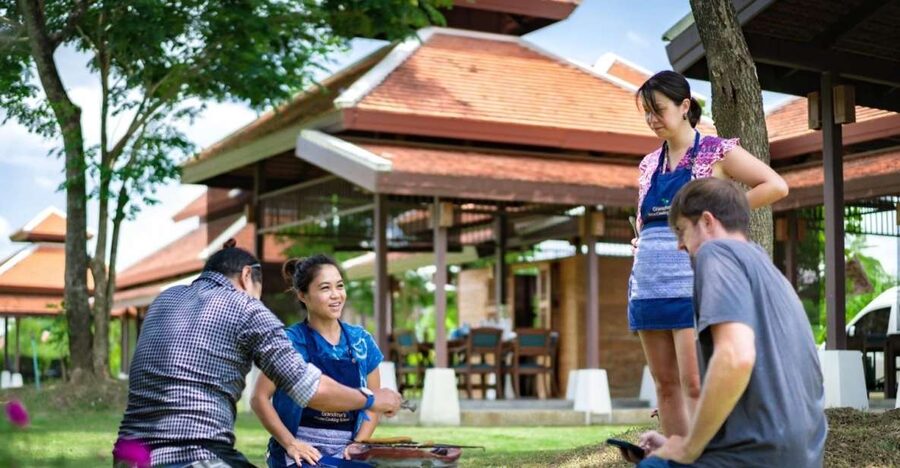
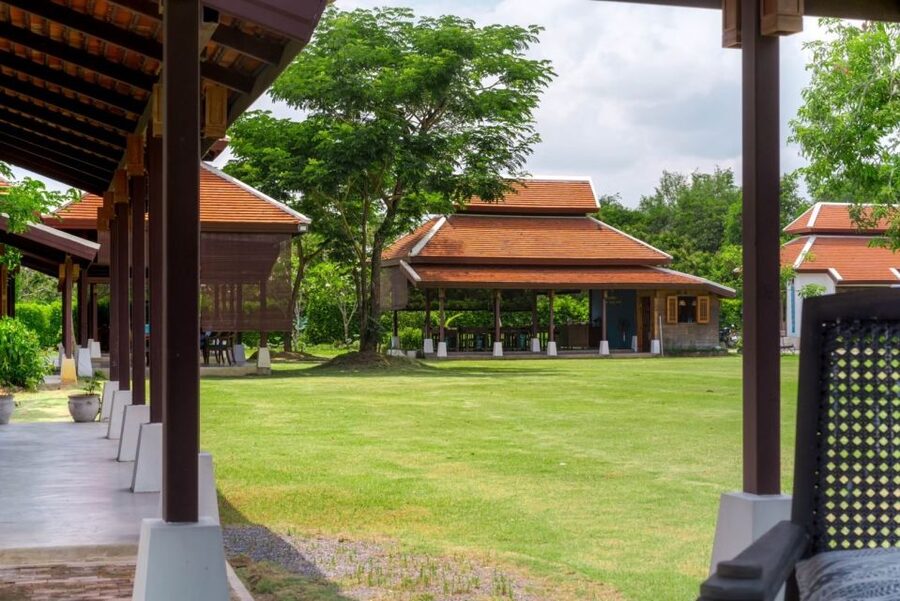
The class is structured for hands-on teamwork, and participants help each other prep dishes with the guidance of English-speaking instructors. The atmosphere described by past participants often points to a small-group feel. Some sessions are described with groups of five or eight, and the grounds are said to be big but still feel separate from other groups, so you can focus without constant noise from everywhere.
A guide named Best is specifically mentioned as friendly, funny, and helpful. That type of instructor energy matters for cooking classes because it keeps you from getting stuck, especially when you are working with unfamiliar techniques like charcoal grilling and traditional milling.
Cleanliness also comes up. One participant noted the site was very clean, including the toilets. That sounds minor, until you are halfway through a hands-on food day and want basic comfort.
Who this class is best for in Chiang Mai
This is an excellent pick if you:
- Want a hands-on Northern Thai cooking class with more than just recipes
- Enjoy markets and want to understand ingredients, not just taste dishes
- Like learning techniques such as charcoal grilling and traditional tool prep
- Prefer an English-speaking guide and a calmer small-group environment
It is also a good choice if you have dietary needs. The class states it can accommodate special dietary requirements, which is a big deal for planning.
It may be less ideal if you:
- Want minimal walking or mostly sitting
- Get uncomfortable with manual kitchen tasks, like milling and grating
Kids can attend as observers, including children aged 0-10, so it can work for family planning if you are comfortable with the setting.
Price and value: is $48 worth it for 6 hours?
At $48 per person, you are paying for more than “watch someone cook and eat.” You are paying for an entire food learning pathway.
Here is what you get included:
- Cooking instruction with an English-speaking instructor
- A market visit to learn ingredients and seasonings
- An organic farm tour and herb education
- Egg collecting at the chicken coop
- Hands-on cooking for multiple Northern dishes, plus coconut pancakes
- Lunch
- Dessert and refreshment tasting
- Round-trip transfers from your hotel
- An e-recipe book to download and practice
For you, the value is in the combination. Cooking classes that only cover dishes are cheaper, but they usually skip the ingredient story and the real technique time. This one combines both, which helps you remember what you learned and gives you the tools to reproduce flavors at home.
If you hate paying separately for transport, lunch, and admission-style stops, the all-in structure helps. You can spend the day focused on learning and eating, rather than budgeting minute by minute.
Practical tips so the day goes smoothly
A few small things can make a big difference.
- Wear comfortable shoes. You will likely be walking and standing for stretches.
- Bring sunglasses. You may spend time outdoors in the farm area.
- Plan to leave valuables behind. The class notes that valuables are not allowed.
- Come ready to work. This is hands-on, with tasks ranging from washing vegetables to milling flour and grating coconut.
Also, if you like taking notes, do it during the ingredient learning parts. You will see the ingredients first in the market and farm stops, then you will use them in cooking later. Notes then turn into useful memory for your home cooking.
Should you book this Chiang Mai Lanna cooking class?
I think you should book if you want a cooking day that teaches technique and context, not just a meal. The market and organic farm elements give the class a strong backbone, and the practical kitchen skills like charcoal grill lighting, millstone flour, and coconut grating make it feel different from a standard cooking workshop.
Choose it with caution if you want a low-effort experience. This is hands-on, and you will be moving and working for most of the 6 hours.
FAQ
FAQ
How long is the cooking class?
The class duration is listed as 6 hours.
What time is pickup in Chiang Mai?
Pickup is around 8:30am to 9:00am, and you should be ready at your hotel lobby at 8:30am.
What dishes will I learn to cook?
The included dish list mentions Northern Thai sausage, Nam Prik Ong (spicy Northern Thai pork and tomato) or Nam Prik Num (Northern Thai green chili dip), Northern pork belly curry (Hang Lay Curry), curry young jackfruit (Kraeng Khanun-on), and a stuffed dough pyramid (Ka Nhom Tian or Kanomjok). The class description also mentions other items like Thai coconut pancakes and additional Northern Thai dishes.
Do I visit a market during the class?
Yes. There is a local market visit to learn about the ingredients and seasonings used in Northern Thai cooking.
Is lunch included?
Yes. Lunch is included, and you will also get to taste what you cook.
Is there dessert included?
Yes. There is a dessert and refreshment session where you can taste traditional Thai desserts and drinks.
Are transfers from my hotel included?
Round-trip transfers to and from your hotel are included.
Can the class accommodate special dietary requirements?
Yes, the activity states it can accommodate special dietary requirements.
What language are the instructions in?
The instructor language is English.
What should I bring, and what is not allowed?
Bring comfortable shoes and sunglasses. Valuables are not allowed.
Can I cancel for a refund?
Free cancellation is available if you cancel up to 24 hours in advance for a full refund.
Is there a way to pay later?
Yes. You can reserve now and pay later, with the option shown as book your spot and pay nothing today.
Fresh listings for Chiang Mai
- Skydive Chiang Mai★ 5.0 · 1 review
- One day hiking tour in Chaing Mai★ 5.0 · 1 review
- One Day Non Tourist Trek 100% Guarantee★ 5.0 · 1 review
- Chiang Mai to Chiang Rai (Private 3 day Tour)★ 5.0 · 1 review
- San Kamphaeng Hot Springs and Thai Handicraft Tour from Chiang Mai★ 5.0 · 1 review
- Half day Doi Suthep Temple & Mae Ping River cruise (Private)★ 5.0 · 1 review
Northern Thai Cooking Classes, compared.
Half-Day Thai Cooking Class at Organic Farm in Chiang Mai
Read our review →
Cooking Class, Market & Thai Herbs Garden Tour
Read our review →
Authentic Cooking Class with Market & Farm Visit
Read our review →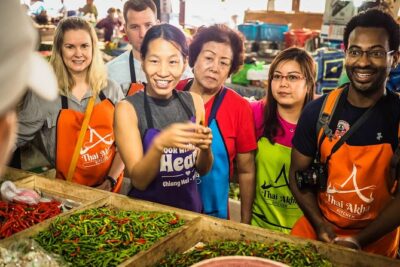
Full Day Thai Cooking at Farm (Chiang Mai)
Read our review →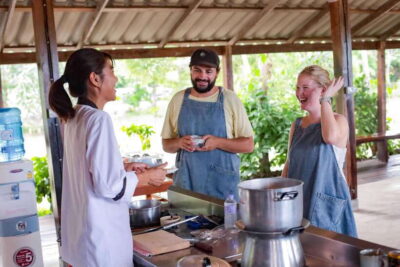
Browse the lists this tour appears in