
Reviewed · LANNA TEMPLE TOURS
Chiang Mai: Chiang Rai Temples, Karen Tribe and Hot Springs
Six stops, one unforgettable Chiang Rai day. I especially love the start at Mae Kachan Hot Springs and the surreal artistry of Wat Rong Khun, the White Temple. The only real drawback is the pace, it is a long travel day, and the last temple can feel rushed if you want to linger.
This tour is built for people who want major Chiang Rai highlights in one shot, with an official English-only guide and an optional QR audio guide in dozens of languages. Just note the long-neck village has an extra entrance fee, and lunch is not included, so you should plan for a few baht decisions along the way.
In This Review
- Key things that make this tour worth your time
- Mae Kachan Hot Springs: a warm reset before the temples
- Karen long-neck Mae Kachan village: cultural learning with a careful mindset
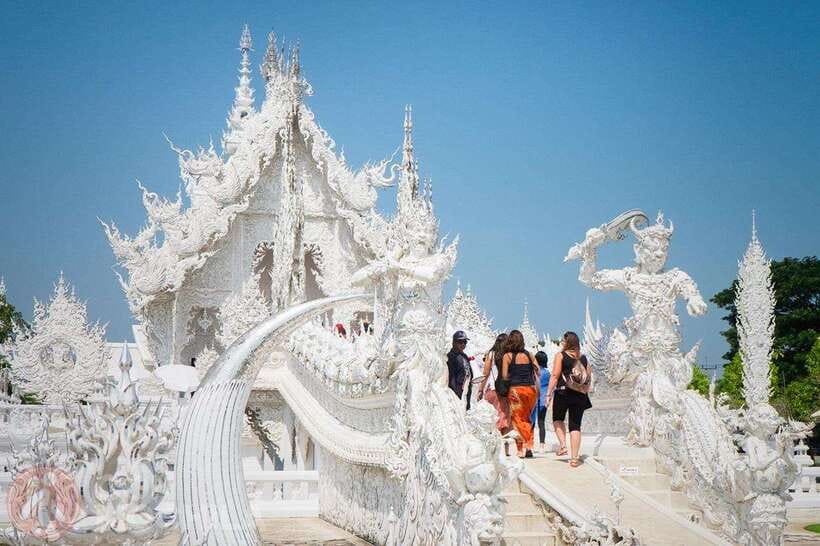
- Wat Rong Khun, the White Temple: purity in white and glass detail
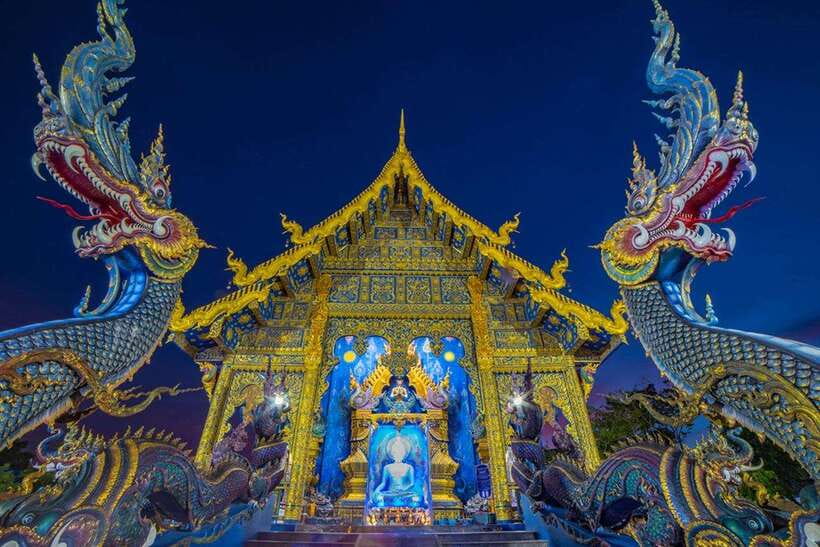
- Wat Rong Suea Ten, the Blue Temple: gold, dragons, and a calmer center
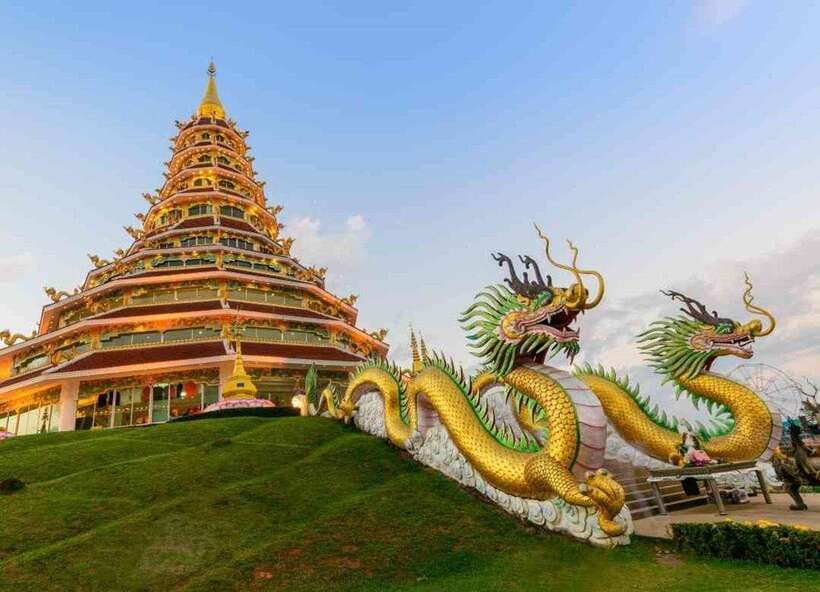
- Huay Pla Kang Temple: Guan Yin plus a nine-tier climb
- The real deal on timing and that long Chiang Mai to Chiang Rai drive
- Entrance fees, lunch, and what you should budget extra
- Your guide and the QR audio system: how to get more from every stop
- What to bring, what not to bring, and temple etiquette
- Who this Chiang Rai highlights tour is best for
- Should you book this Chiang Rai day trip from Chiang Mai?
- FAQ
- How long is the Chiang Rai temples and Karen village tour from Chiang Mai?
- Where do I meet the guide?
- Is lunch included in the tour price?
- Is swimming allowed at Mae Kachan Hot Springs?
- Are entrance fees for the long-neck village included?
- What languages are available for the guide and audio?
- Is this tour suitable for people with mobility impairments?
Key things that make this tour worth your time
- Mae Kachan Hot Springs start the day with a calm, warm-water reset (no swimming allowed)
- Wat Rong Khun delivers that unmistakable all-white Buddhist architecture mixed with modern detail
- Wat Rong Suea Ten gives you deep blue interiors, gold accents, and dragon guard statues
- Karen long-neck Mae Kachan village offers a real cultural stop, plus handmade craft shopping (with an extra fee)
- Huay Pla Kang Temple brings both a huge Guan Yin statue and a nine-tier pagoda with stairs up for views
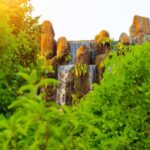
Mae Kachan Hot Springs: a warm reset before the temples
I like that this day starts slow. You roll out of Chiang Mai, but the first major stop is Mae Kachan Hot Springs, where you get a guided visit plus time to photograph the grounds.
The hot springs complex is set up for relaxation more than swimming. Swimming is not allowed here, so set expectations for soaking feet or simply enjoying the warm mineral-water atmosphere while the group catches its breath. You are also likely to see the usual food and drink spots around the area, and some runs include coffee and Thai tea breaks.
Practical tip: bring sunscreen and something for your neck. Even when you are in warm water, Chiang Rai sun can hit hard once you are out and walking.
Karen long-neck Mae Kachan village: cultural learning with a careful mindset
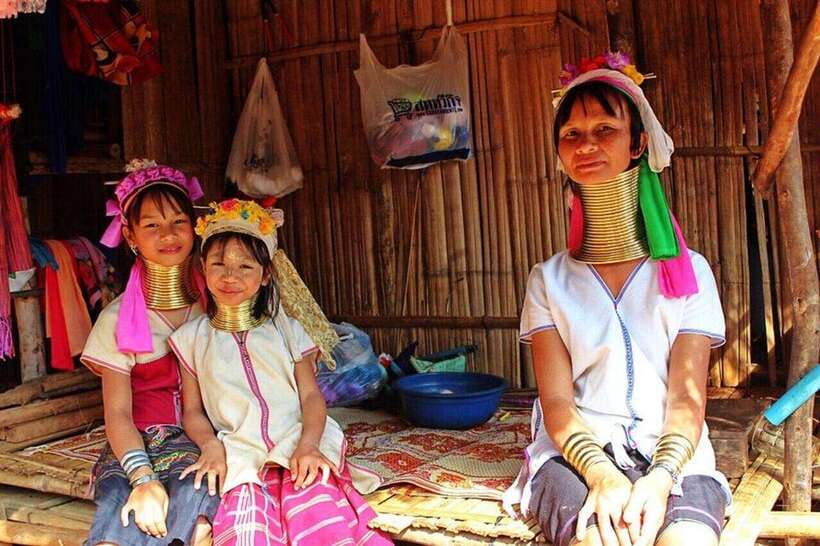
Next comes the hill tribe cultural stop at the Mae Kachan Karen long-neck village. You get a photo stop, a visit, and guided context, plus a chance to see how daily life and craft traditions are carried forward in this community.
Two important notes. First, the long-neck brass-ring tradition is a cultural practice passed through generations, and you will see the brass rings worn by women. Second, it is not the kind of stop where you should treat everything like a souvenir photo moment. It helps to approach with respect, ask questions if your guide invites it, and think about what you are supporting when you buy crafts.
Value angle: this is also one of the best places on the route to slow down and talk with your guide about Thai, Lanna, and Burmese influences in northern culture. It gives the temple art meaning, because the day is not only about architecture.
Extra cost: the long-neck village entrance fee is 300 thb, and it is not included.
Villages in the hills, still practicing old crafts
- Thai and Akha Cooking Class in Chiang Mai★ 5.0 · 4,358 reviews
- Chiang Mai: Elephant Sanctuary, Long Neck & Sticky Waterfall★ 4.9 · 2,262 reviews
- 4-Hour Doi Suthep & Hmong Hill Tribe Village from Chiang Mai★ 4.7 · 696 reviews
- Chiang Mai: Long Neck Village & Chiang Rai’s Iconic Temples★ 4.3 · 338 reviews
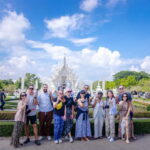
Wat Rong Khun, the White Temple: purity in white and glass detail
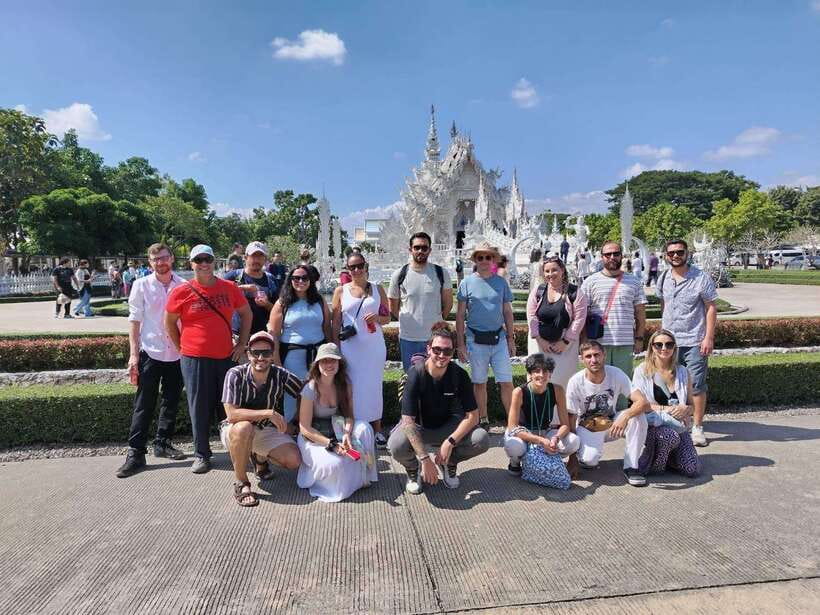
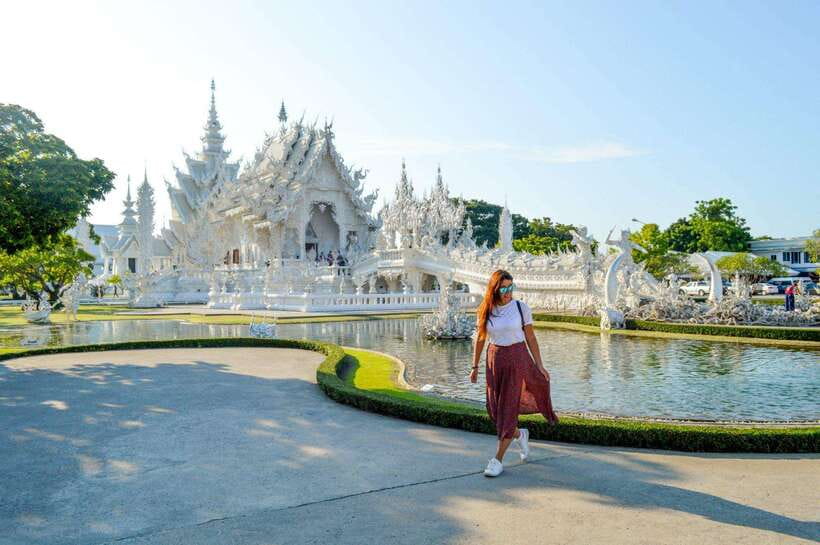
Then the day turns sharply artistic. Wat Rong Khun, the White Temple, is one of Chiang Rai’s most famous sights for a reason: it looks like nothing else in Thailand.
You get a guided visit here, and the story behind it matters. This temple was created by artist Chalermchai Kositpipat, and the all-white design represents purity. The intricate glass details are meant to reflect Buddhist wisdom, and the temple mixes classic religious art with surprising modern imagery.
What to do with your time: don’t just shoot photos from the easiest angles. Use the guided part to understand what you are looking at, because the White Temple rewards attention. If you care about religious symbolism and contemporary Thai art, this is typically the stop that makes the whole trip feel “worth it.”
Time reality check: this is a long day with multiple sites, so you will want to be ready to move when your group moves. If you get stuck in one perfect photo spot, you can lose the rest of your temple context.
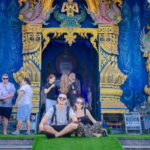
Wat Rong Suea Ten, the Blue Temple: gold, dragons, and a calmer center

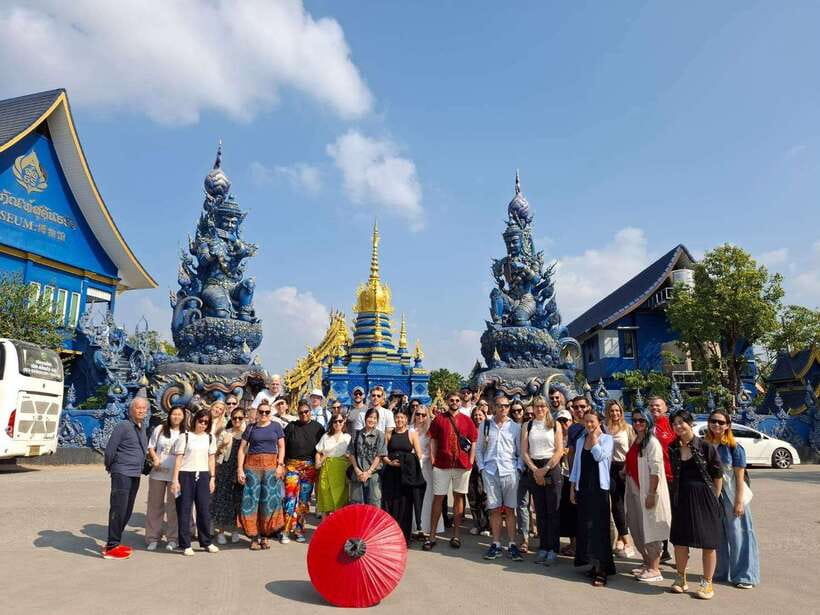
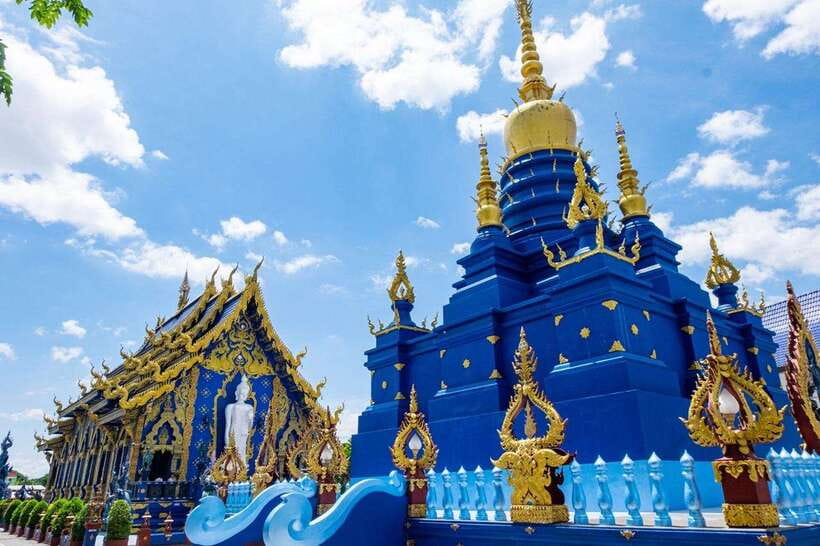
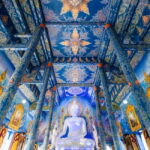
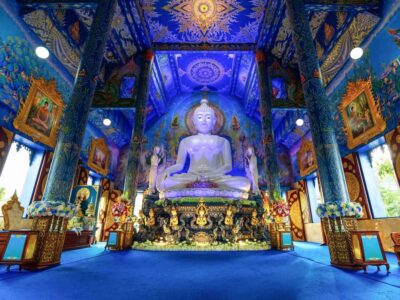
After lunch time in Chiang Rai, you head to Wat Rong Suea Ten, often called the Blue Temple. This one is famous for its deep blue interiors and gold details, with a modern artistic style that still feels rooted in Buddhist tradition.
At the entrance, dragon statues guard the approach, so expect dramatic visuals right away. Then the mood shifts inside, where you find a calm, bright Buddha statue at the center.
I like this stop because it balances the White Temple’s busy symbolism. The Blue Temple tends to feel more meditative in the way you experience it, even though you are still in a place built for visitors.
Photo and pacing tip: the blue walls can make your phone camera act weird with color. If your shots look too dark, step back for a wider angle, then try again once your eyes adjust.
The White Temple and more, no driving yourself
- Chiang Rai White Temple and Blue Temple Day Tour
★ 4.6 · 3,366 reviews - Chiang Rai Temples: Private Tour from Chiang Mai
★ 5.0 · 1,267 reviews - From Chiang Mai: Chiang Rai’s Temples Exploration Day Trip
★ 4.5 · 871 reviews
Huay Pla Kang Temple: Guan Yin plus a nine-tier climb
The final temple is Huay Pla Kang Temple, known for two big attractions. First, there is a large statue of Guan Yin, the Goddess of Mercy. Second, the temple is famous for its nine-tier pagoda, and you can climb up for views.
This stop is where you feel the day’s physical side. Expect stairs and crowd flow, especially if everyone wants to hit the upper levels at the same time. If you prefer to take it slow, aim to start climbing soon after your group arrives so you do not end up rushing at the top.
What makes this temple special for most people is that it is not only one giant statue. The grounds include beautifully carved statues and decorations that reward a slower stroll, even if your total time there is limited.
The real deal on timing and that long Chiang Mai to Chiang Rai drive
This trip is listed at about 11 hours, and the schedule makes sense. You start with a roughly 1.5 hour bus/coach ride, then there are short hops between stops, including:
- a short transfer to Mae Kachan Hot Springs
- a brief bus segment to the long-neck village area
- a longer drive to Wat Rong Khun
- then short transfers between lunch and the next temples
- finally a longer return drive back to Chiang Mai
So yes, you are on the road. But you also get purposeful breaks. The hot springs stop breaks up the travel fatigue, and temple visits include guided time, not just drop-offs.
Bigger picture: if you are only in northern Thailand for a short window, this kind of day tour is practical. It compresses the must-see Chiang Rai temples into one day, instead of forcing you to spend a night in Chiang Rai and reorganize your entire itinerary.
Reality check: it is not a relaxed day. If you hate clock-based travel, choose a slower option. If you like structure and want maximum highlights per day, this fits well.
Entrance fees, lunch, and what you should budget extra
The headline price is about $35 per person, and most of your major costs are handled up front. Included in the tour price are round-trip transport from Chiang Mai, an air-conditioned vehicle, the official guide, and entrance fees for:
- Wat Rong Khun (White Temple)
- Wat Rong Suea Ten (Blue Temple)
- Huay Pla Kang Temple
Also included: mandatory insurance, and an audio guide option via QR.
What costs extra:
- Lunch is not included
- The long-neck village entrance fee is 300 thb
- You need your own earphones for the QR audio guide
- Earphones are not included
My advice: pack a rough lunch budget and carry some small bills. Some stops have snacks and drink opportunities, and having cash that is easy to break helps when small vendors are busy.
Your guide and the QR audio system: how to get more from every stop
The official guide speaks English only. That is important, because your guide is the “main story teller” for the day.
On top of that, there is a multi-language audio guide via QR code with 41 languages. The catch is simple: you must bring your own earphones.
Look for guide behaviors that make a big difference on tours like this. In particular, guides who keep the group moving efficiently, explain what you are seeing, and give photo pointers usually help you get more out of shorter time blocks. You may also get personal touches, like basic Thai phrases, music moments, or extra help for people who need it mid-day.
Small comfort tip: bring a sun hat, and also insect repellent. Temples are outdoors in parts, and northern Thailand heat and bugs show up fast.
What to bring, what not to bring, and temple etiquette
For this kind of day, comfort wins. Wear comfortable shoes because you will do stairs, walkways, and temple courtyards.
Bring:
- passport or ID card
- sunglasses
- sun hat
- sunscreen
- insect repellent
- comfortable clothes
Dress modestly at temples. Even with hot weather, light coverage matters so you can enter without stress.
Not allowed:
- luggage or large bags
- alcohol and drugs
Who this Chiang Rai highlights tour is best for
I think this tour is a strong fit if you:
- want the big Chiang Rai names without changing hotels
- love temple art and want guided context, not just wandering
- handle a long coach day and don’t mind pacing
It is not a great fit if you:
- need lots of mobility support, because the temples involve stairs
- want a slow, quiet experience with no hurry at the last stop
- feel uncomfortable with the long-neck village topic and the reality of cultural tourism, you should decide carefully before you go
If you are traveling with teenagers or a mixed-age group, the combination of hot springs plus three major temples often works well because people can enjoy different parts of the day.
Should you book this Chiang Rai day trip from Chiang Mai?
If you want White and Blue Temples plus Huay Pla Kang in one day, and you are okay with long drives, I would book it. The price-to-entrance-fees ratio is solid, and the tour structure helps you see the highlights efficiently.
Skip it if you hate bus days or you prefer deeper time in fewer places. Also think twice if the long-neck village stop does not sit well with your personal comfort level, since this tour includes it as a central experience.
If you book, do these three things: bring your own earphones, pack modest temple-ready clothes and strong sun protection, and plan a budget for lunch and the 300 thb long-neck village entrance.
FAQ
How long is the Chiang Rai temples and Karen village tour from Chiang Mai?
The tour is listed at about 11 hours (810 minutes).
Where do I meet the guide?
Meet the guide 15 minutes before departure at Burger King Thapae in Hotel M Chiangmai.
Is lunch included in the tour price?
No. Lunch is not included.
Is swimming allowed at Mae Kachan Hot Springs?
No. Swimming is not allowed there, but it is still a relaxing place to rest.
Are entrance fees for the long-neck village included?
No. The long-neck village entrance fee is 300 thb and is not included.
What languages are available for the guide and audio?
The official guide speaks English only. An optional audio guide is available via QR in many languages (41 listed), but you must bring your own earphones.
Is this tour suitable for people with mobility impairments?
No. It is not suitable for people with mobility impairments.
Soak & Unwind
Lanna Temple Tours

Fresh listings for Chiang Mai
- Skydive Chiang Mai★ 5.0 · 1 review
- One day hiking tour in Chaing Mai★ 5.0 · 1 review
- One Day Non Tourist Trek 100% Guarantee★ 5.0 · 1 review
- Chiang Mai to Chiang Rai (Private 3 day Tour)★ 5.0 · 1 review
- San Kamphaeng Hot Springs and Thai Handicraft Tour from Chiang Mai★ 5.0 · 1 review
- Half day Doi Suthep Temple & Mae Ping River cruise (Private)★ 5.0 · 1 review
Lanna Temple Tours, compared.
Chiang Rai White Temple and Blue Temple Day Tour
Read our review →
White, Red/Black & Blue Temples Tour with Lunch
Read our review →
Doi Suthep and Wat Umong Enchanting Evening Tour
Read our review →
3 Hour Old City and Temples Guided Walking Tour
Read our review →
Doi Suthep, Wat Umong, and Pha Lat Sunrise Tour
Read our review →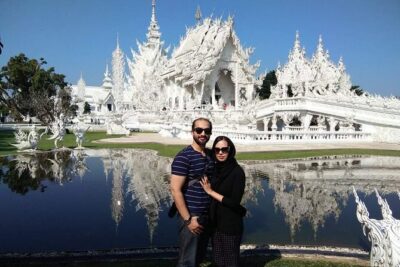
Chiang Rai Temples: Private Tour from Chiang Mai
Read our review →
Browse the lists this tour appears in