
Reviewed · WAT PHRA THAT DOI SUTHEP TOURS
Chiang Mai: Doi Suthep, Wat Umong, and Pha Lat Sunrise Tour
Sunrise on Doi Suthep feels unreal. I love the early-morning quiet at Wat Phra That Doi Suthep and the way the jungle temples shift the mood fast, from pagoda views to Wat Pha Lat’s hidden shrines. You’ll also get the calmer, nature-filled feel of Wat Umong, including its forest and underground tunnels. One thing to plan for: it starts very early, and you’ll climb those 309 steps plus deal with temple dress rules.
This is a smart half-day format if you want real culture without burning the whole day. Your guide matters here, and the operator has used guides like Happy, Peter, James Bond, Cookie, Leela, and Matt, who are the type to explain what you’re seeing instead of just moving you along. The biggest drawback is simple: timing can run a bit longer than the headline 4 hours, so don’t schedule anything tight right after.
In This Review
- Key highlights before you go
- Price and timing: what $32 really buys you
- First stop: Wat Phra That Doi Suthep at sunrise
- The 309 steps: your warm-up for temple etiquette
- Kruba Srivichai Monument: a quieter, story-driven stop
- Wat Pha Lat: the jungle temple feel you’ll remember
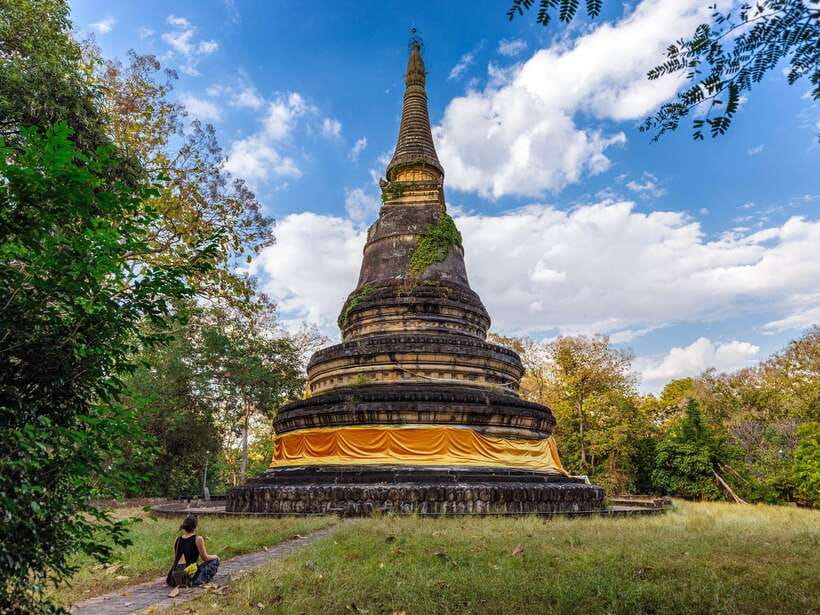
- Wat Umong: tunnels, forest shade, and a temple from 1297
- Transport and group size: why it feels manageable
- Included stuff that actually improves your comfort
- What to bring, and what not to wear
- Optional offerings: how participation usually works
- Who should book this tour, and who should skip it
- Responsible tourism that feels real, not just marketing
- Should you book the Chiang Mai Doi Suthep, Wat Umong, and Pha Lat sunrise tour?
- FAQ
- Where is the meeting point if I choose not to get pickup?
- Does the tour offer hotel pickup?
- What time does the tour meet?
- What languages is the live guide available in?
- How long is the tour?
- What is included in the price?
- What is not included?
- What should I bring?
- What clothing is not allowed?
Key highlights before you go
- Doi Suthep sunrise timing so you see the city waking up and miss the worst crowds
- 309 steps that feel like a warm-up for the views from the main pagoda
- Kruba Srivichai Monument and the story behind a key religious figure
- Wat Pha Lat in the jungle with serene statues, shrines, and a calmer atmosphere
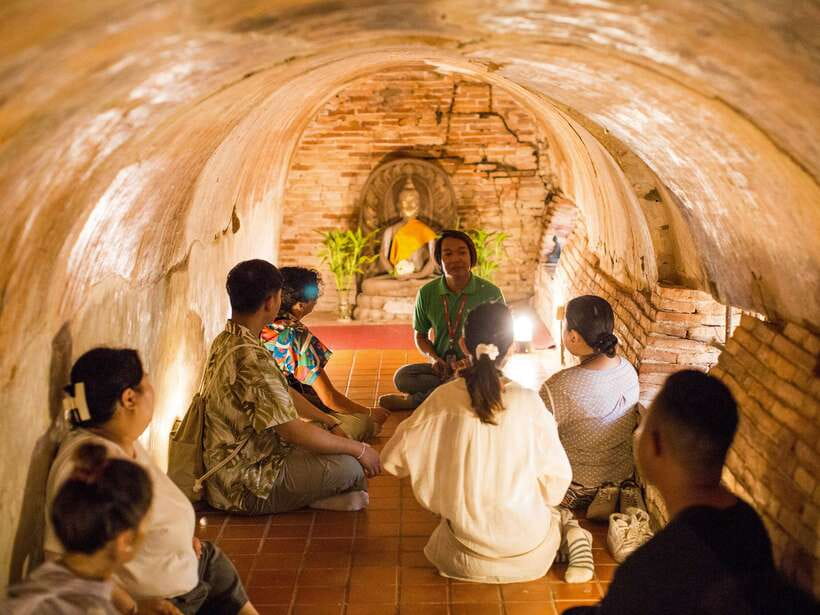
- Wat Umong’s underground tunnels in a temple dating back to 1297
- GSTC-certified, low-impact touring with glass bottled water and carbon offset credits
Price and timing: what $32 really buys you
At about $32 per person, this tour is good value because you’re paying for more than temple tickets. You’re also getting air-conditioned transport, a local guide, and entry fees at multiple sites, plus a glass bottle of drinking water and carbon offset credits.
The duration is listed as 4 hours, but in real life you should treat that as an estimate. Some departures have run closer to 5 or 5.5 hours depending on sunrise conditions, how long you want at each stop, and whether any site needs adjustments. If your plan depends on a strict return time, give yourself breathing room afterward.
What you are not paying for is also clear. Meals and optional temple offerings are extra. That’s normal for Thailand temple visits, and it gives you control over how you want to participate.
First stop: Wat Phra That Doi Suthep at sunrise
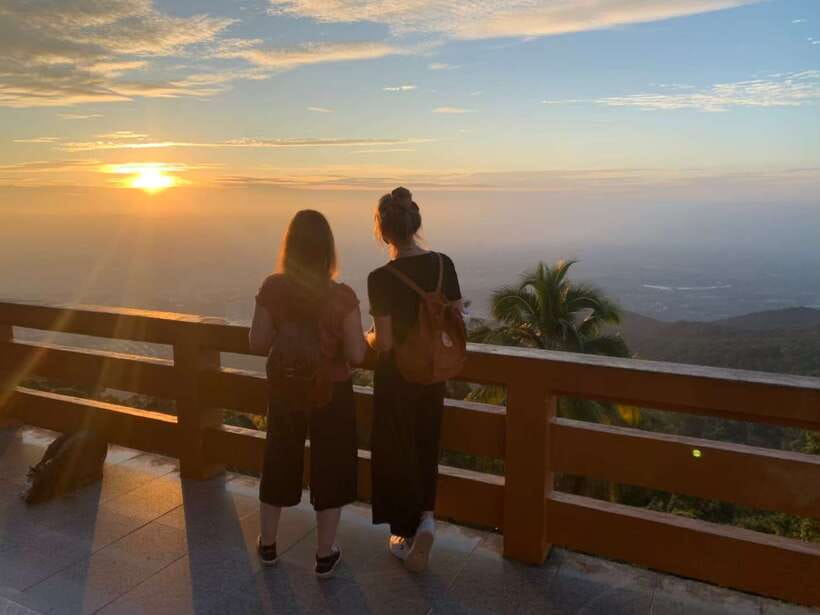
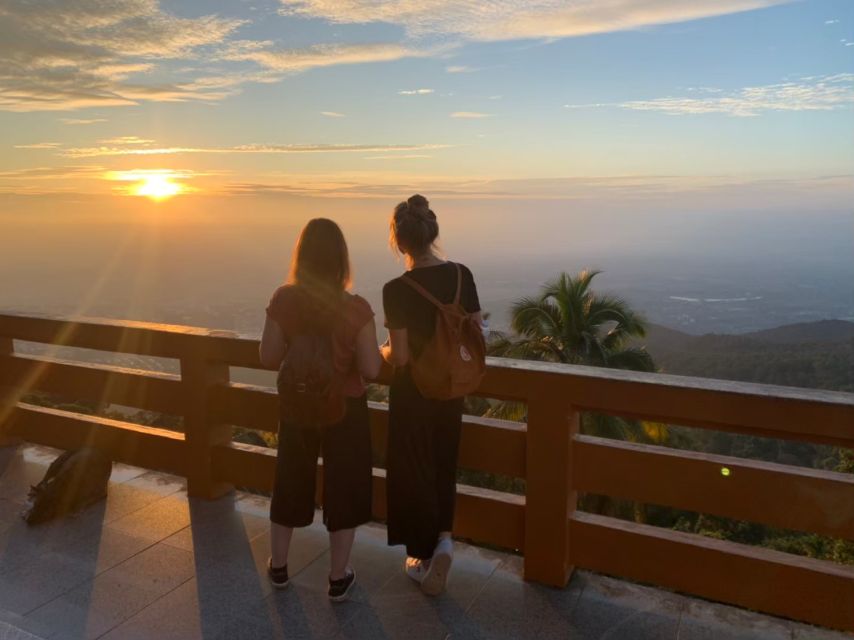
This is the headliner, and you’ll understand why fast. You start with a climb up to Wat Phra That Doi Suthep, then you hit the payoff: golden sunrise light over Chiang Mai.
The route climbs the famous 309 steps, so comfortable shoes are not a suggestion. Go with sneakers or sturdy closed-toe footwear. If you usually hate stairs, bring patience. Once you’re up, it’s not just about reaching the top, it’s the slow build. You’re moving from street noise to temple stillness, and by the time the city opens below you, the effort starts to feel worth it.
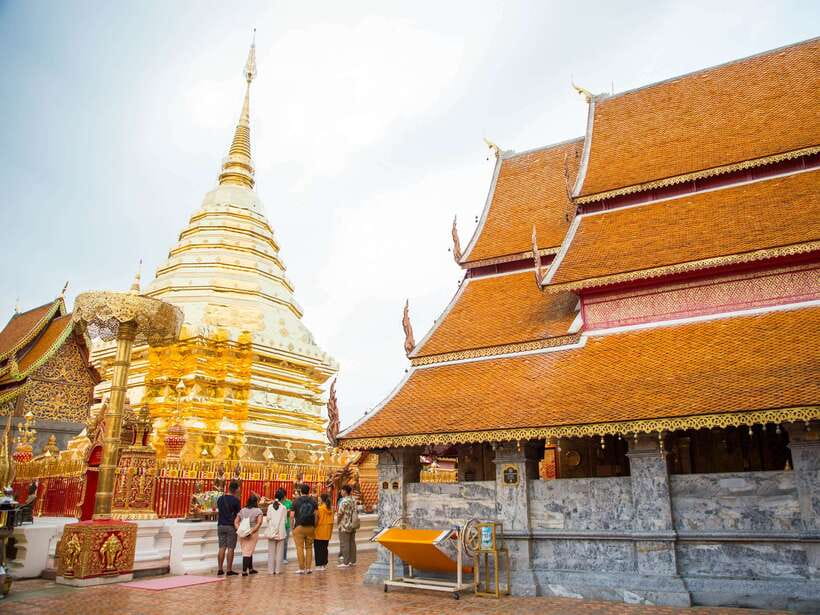
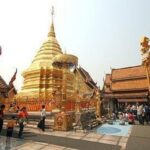
Inside the temple area, the main pagoda is the big visual draw. Sunrise makes it look warmer, softer, and more “glowing” than it does at midday. You’ll also get a chance to watch early temple routines. Several guides on this operator style their sunrise around prayer and chanting moments, so you’re not just sightseeing, you’re seeing living tradition in the early hours.
One practical note from the real world: if it’s chilly, you’ll feel it more on the steps before the sun hits. A light layer helps, even in Thailand.
A tunnel temple hidden under tree roots
- Chiang Mai: Doi Suthep and Wat Umong Enchanting Evening Tour★ 4.6 · 1,811 reviews
- Best seller!! Amazing Night tour, Doi Suthep + Wat umong – Top Must visit!★ 4.5 · 451 reviews
- Chiang Mai: Doi Suthep & Wat Umong Twilight Tour with Pickup★ 4.4 · 112 reviews
- Private Chiang Mai Temple Tour with Doi Suthep and Wat Umong★ 5.0 · 52 reviews
The 309 steps: your warm-up for temple etiquette
Let’s be honest, the climb is the workout. But it’s also part of the experience. In places like this, arriving early means you’re not pushing through a crowd. You’re walking in a more respectful rhythm, and that changes the whole tone.
Before you start climbing, check your clothing. Some temple areas restrict clothing like shorts and sleeveless shirts, and they may also limit bare shoulders and knees. This tour explicitly flags that revealing outfits are not allowed inside some locations. A simple rule works: dress like you’re about to visit a temple, not like you’re going to a beach.
If you want photos, plan your time at the top. The best shots are usually the ones where you angle the pagoda and city view together, so keep your camera ready once the sun lifts. You’ll also want to move slowly. Temple etiquette is part of how the sunrise feels meaningful.
Kruba Srivichai Monument: a quieter, story-driven stop
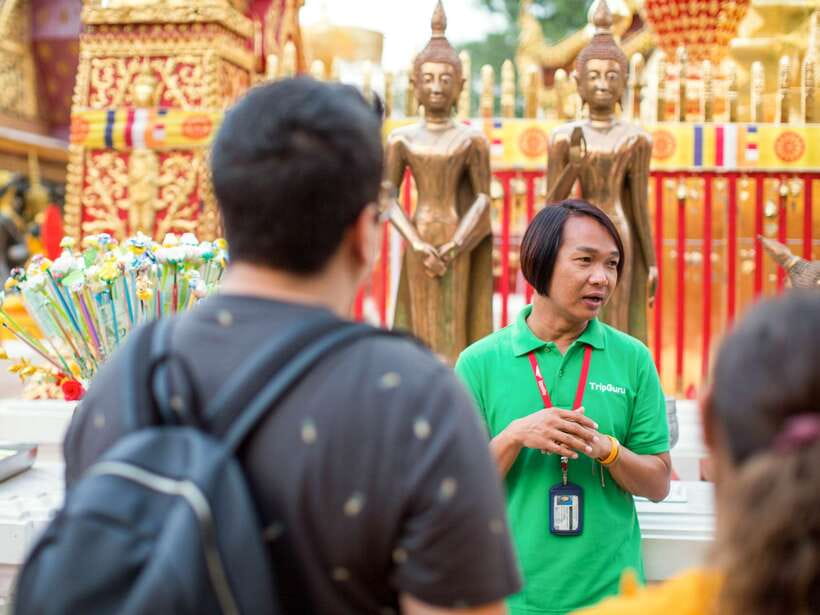
After Doi Suthep, the tour shifts from the big scenic moment to something more personal and cultural. You’ll stand in the shadow of the Kruba Srivichai Monument and learn about his significance.
This stop works because it connects the temple sights to real religious life and local history. A monument is still a monument, but with the right guide, it becomes a “why” moment. Many guides here focus on the life of Thai monks and the role of Kruba Srivichai in shaping belief and community.
This is also where the tour pacing usually hits a sweet spot. You’re not sprinting. You’ve just climbed stairs and seen sunrise. Now you get a break to listen, ask questions, and reset mentally before heading into the more hidden sites.
A forest temple most tour buses skip
- Chiang Mai: Wat Pha Lat & Wat Phra That Doi Suthep Tour
★ 4.8 · 1,207 reviews - Chiang Mai – Doi Suthep Temple & Wat Pha Lat Hike
★ 4.6 · 740 reviews - Spiritual Sunrise Wat Doi Suthep, Pha Lat, Alms & Meditation
★ 4.9 · 674 reviews
Wat Pha Lat: the jungle temple feel you’ll remember
Then comes the “how is this here?” moment. Wat Pha Lat, often described as the hidden temple, sits deeper in the lush jungle. Instead of the wide view feeling of Doi Suthep, you get a softer atmosphere: shaded paths, quiet shrines, and a slower walk through the grounds.
What I like about this stop for your trip is the contrast. Doi Suthep is a famous landmark, Wat Pha Lat feels like a secret someone wants you to experience respectfully. The statues and shrines are serene, and the surrounding nature is part of what makes the temple feel restful.
One thing to consider: Wat Pha Lat is outdoors and in nature. Bring insect repellent. Also, wear clothing you’re comfortable walking in. This is not the time for light, breeze-only outfits, since temple restrictions can apply.
Also, there can be occasional surprises. On at least one departure, Wat Pha Lat was reported as closed, and the guide adjusted the plan. That doesn’t mean this will happen to you, but it does mean you should expect your guide to handle changes calmly if access is limited.
Wat Umong: tunnels, forest shade, and a temple from 1297
If Wat Pha Lat is the jungle detour, Wat Umong is the “slow down and explore” stop. This temple is tied to history going back to 1297, and the experience here is different from the classic pagoda style.
You’ll walk through the forest area and then into the underground tunnels. Even if you’re not a cave person, the tunnels create a cool, grounded atmosphere. It feels like a temple built for quiet contemplation, not for photo frenzy.
The chedi architecture is another reason to pay attention. You’re looking at older design and structure in a setting that feels more natural than engineered. This is the kind of place where you stop for a moment and let your brain catch up with your body after the stairs and early start.
Guide names that have led this part include guides like James Bond and Peter on different departures, and the common thread is how they explain what you’re seeing in plain language, with enough context that the stones stop feeling random.
Transport and group size: why it feels manageable
You ride in an air-conditioned vehicle, which matters because you’re doing a morning that starts before you’re fully awake. Having a minivan setup helps you reset between stops, especially when you’re moving from hilltop to jungle to forest.
Group size is listed as small group. That usually means you’re not constantly waiting while someone hunts for the group photo. It also means your guide can keep an eye on timing without rushing you.
A few things to remember:
- Bring cash in case you want to buy things for an optional temple offering.
- Be ready at the start point or your pickup spot, because this tour is designed around sunrise timing.
Included stuff that actually improves your comfort
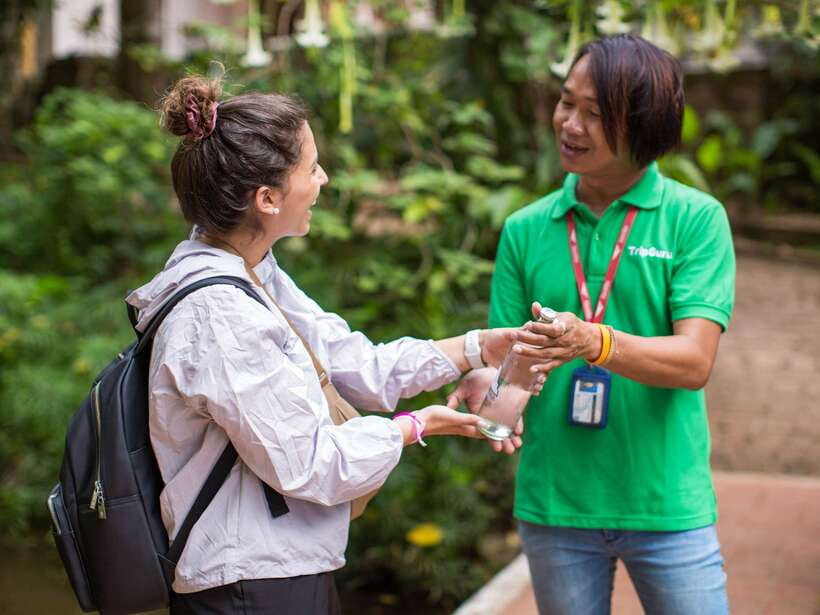
This tour includes the practical pieces that most “cheap temple hopping” tours skip.
You get:
- Hotel pickup and drop-off
- Transport by air-conditioned vehicle
- Tour guide
- Entry fees
- A glass bottle of drinking water
- Carbon emissions offset credits
That glass bottled water detail is more than a gimmick. You’re on the move, and you’ll appreciate having water you can drink without thinking. The carbon offset credits are there for responsible tourism, and while offsets are not magic, it’s still a meaningful step compared to ignoring footprint entirely.
You’re not getting meals, so if you’re doing this at sunrise, plan to eat afterward. A lot of people like it because it’s early enough to still enjoy breakfast or brunch after.
What to bring, and what not to wear
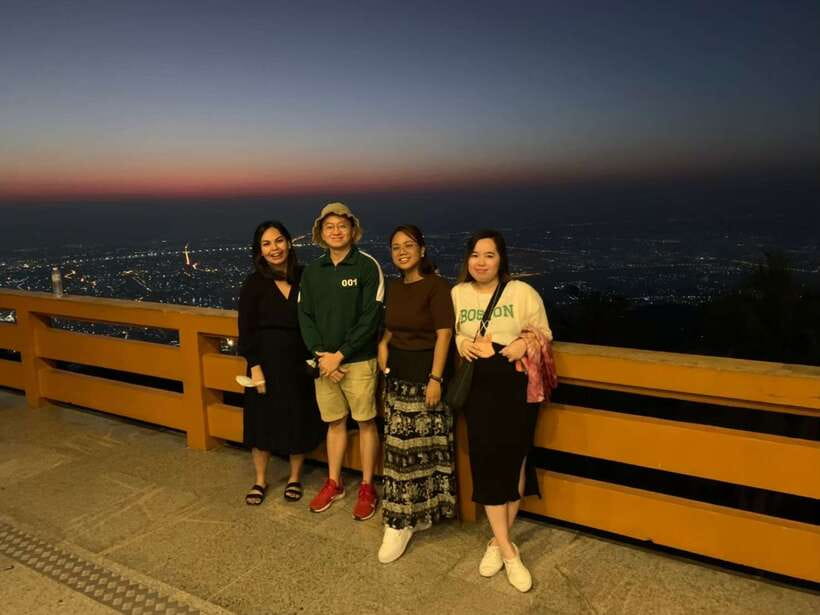
Here’s your quick checklist based on what the tour requires.
Bring:
- Comfortable shoes
- Sunglasses
- Hat
- Camera
- Sunscreen
- Insect repellent
- Cash
Wear:
- Modest clothing that covers what temples require, especially shoulders and knees
- Layers if you get chilly early in the morning
Don’t bring or wear:
- Shorts
- Short skirts
- Sleeveless shirts
This is one of those tours where the difference between having a good time and getting stopped at an entrance is your outfit. I’d rather you look slightly over-prepared than forced to sit out part of a visit.
Optional offerings: how participation usually works
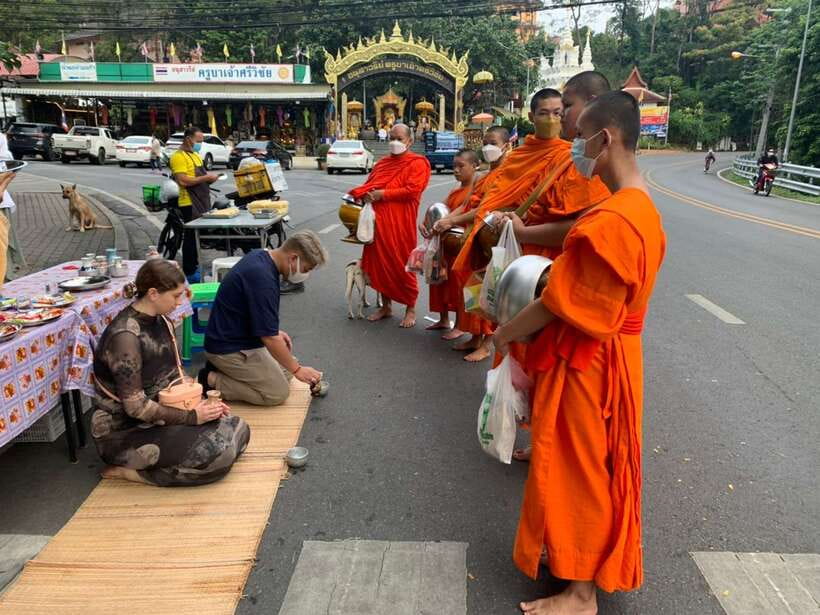
Temple offerings are optional, and that’s good because it keeps the experience respectful. If you want to participate, you’ll need to bring cash for offerings. Guides often help explain what to offer and how to do it.
In past departures, at least one guide planned a quick convenience stop for supplies, like grabbing items to gift to monks. That may not be exactly how every group does it, but it’s a helpful reminder: don’t wait until the last second to figure out what you want to bring.
If you’re nervous about doing it “right,” tell your guide. They’ll explain what’s expected in simple terms. This is one reason the guide quality gets so much praise.
Who should book this tour, and who should skip it
This tour is a strong match if you want:
- Sunrise views without the chaotic crowd crush
- Temples that feel different from each other, from pagoda to jungle to forest tunnels
- A guide who explains Buddhism basics and temple meaning in practical language
- A small-group, half-day schedule that still feels full
You might want to skip it if:
- You hate early mornings so much that sunrise sounds miserable
- You struggle with stairs, since the 309-step climb is part of the experience
- You don’t want to follow temple dress rules
- Your schedule is extremely tight after the tour, since some departures run a bit longer
It’s also great for families, but keep expectations realistic. One review mentioned a child staying in the car during the last temple stop due to tiredness. That kind of flexibility depends on the day and the group, but it’s a hint that your guide may work with your situation when possible.
Responsible tourism that feels real, not just marketing
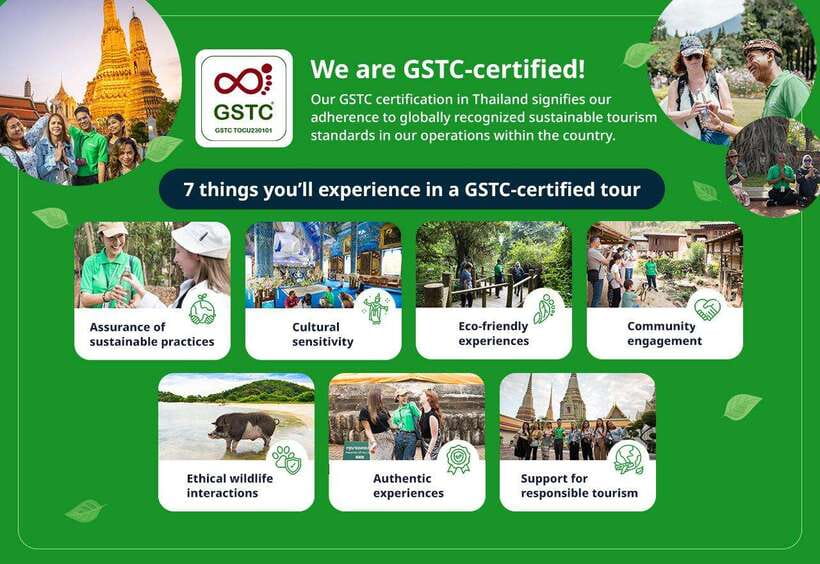
The tour is GSTC-certified and designed for low-impact travel. You’ll notice the practical parts: glass bottled water and carbon emissions offset credits on every tour.
If you care about how tourism affects places, this is the right direction. It doesn’t erase environmental impact, but it reduces avoidable waste and shows the operator is thinking about footprint, not only convenience.
Should you book the Chiang Mai Doi Suthep, Wat Umong, and Pha Lat sunrise tour?
Book it if you want the best of Chiang Mai temples in one efficient morning, and you’re willing to trade extra sleep for quiet sunrise views. The combination is compelling: Wat Phra That Doi Suthep for the iconic pagoda and city light, Kruba Srivichai for context, Wat Pha Lat for the jungle calm, and Wat Umong for the forest and underground tunnels that feel surprisingly different.
Skip it if stairs and strict clothing rules would stress you out. Also skip it if you prefer late starts and hate the early-morning travel rhythm.
If you do book, do two simple things and you’ll be glad you did: wear proper shoes, and show up ready for a real sunrise experience, not a casual stroll.
FAQ
Where is the meeting point if I choose not to get pickup?
Meet your guide at the Tha Pae Gate, in front of McDonald’s. The tour confirms your exact pick-up time and meeting point by email the evening before your activity, and your guide will be holding a TripGuru sign.
Does the tour offer hotel pickup?
Yes. Pickup is optional from major areas in downtown Chiang Mai within a 5 km radius of Tha Pae Gate, the Old City Wall, and nearby areas. Pickup is only offered from hotels or registered accommodations.
What time does the tour meet?
The exact pick-up time is confirmed by email the evening before your activity. The tour is a sunrise-style morning schedule, so plan for an early start.
What languages is the live guide available in?
The live tour guide is available in English and Spanish.
How long is the tour?
The duration is listed as 4 hours. Some departures may take longer depending on timing on the day.
What is included in the price?
Included items are hotel pickup and drop-off, air-conditioned transportation, a tour guide, entry fees, a glass bottle of drinking water, and carbon emissions offset credits.
What is not included?
Temple offerings are optional and not included. Meals and other drinks are also not included.
What should I bring?
Bring comfortable shoes, sunglasses, a hat, a camera, sunscreen, insect repellent, and cash.
What clothing is not allowed?
Shorts, short skirts, and sleeveless shirts are not allowed. Some visited locations also do not allow clothing that reveals shoulders, underarms, back, or knees.
Lanna Temple Tours
Doi Suthep Temple Tours
Fresh listings for Chiang Mai
- Skydive Chiang Mai★ 5.0 · 1 review
- One day hiking tour in Chaing Mai★ 5.0 · 1 review
- One Day Non Tourist Trek 100% Guarantee★ 5.0 · 1 review
- Chiang Mai to Chiang Rai (Private 3 day Tour)★ 5.0 · 1 review
- San Kamphaeng Hot Springs and Thai Handicraft Tour from Chiang Mai★ 5.0 · 1 review
- Half day Doi Suthep Temple & Mae Ping River cruise (Private)★ 5.0 · 1 review
Wat Phra That Doi Suthep Tours, compared.
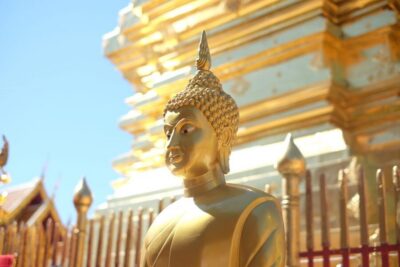
Doi Suthep and Wat Umong Enchanting Evening Tour
Read our review →
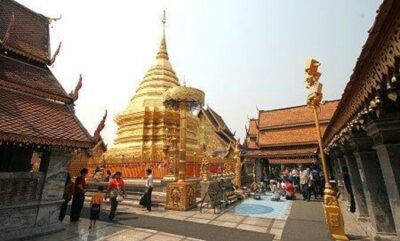
Wat Phra That Doi Suthep spiritual Sunrise Tour with an Ex-monk
Read our review →
4-Hour Doi Suthep & Hmong Hill Tribe Village from Chiang Mai
Read our review →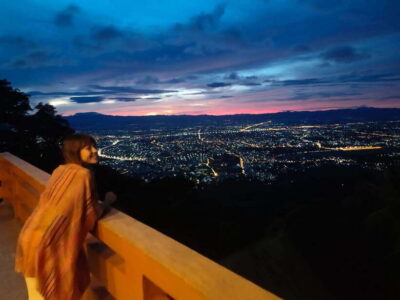
Spiritual Sunrise Wat Doi Suthep, Pha Lat, Alms & Meditation
Read our review →
Elephant Sanctuary, Monk Trail & Doi Suthep Tour
Read our review →Browse the lists this tour appears in