
Reviewed · ETHICAL ELEPHANT SANCTUARY TOURS
Chiang Mai: Elephant Sanctuary Local Hill Tribe Caretakers
Elephants in Chiang Mai, without the circus. This half-day program trades gimmicks for real, stress-free elephant care in a natural setting, plus a Mae Wang Waterfall hike through forest. You also get time to learn about the way of life of local Karen and Hmong communities, not just a quick photo stop.
I like that you actively help with daily care, feed the elephants, and join them in a river bath as part of the routine. The guides also focus on how to behave around elephants, so it feels calmer and more respectful than typical attraction-style tours. One thing to consider is timing: the program is listed at about 4 hours, but it can run longer in real life, so keep your afternoon buffer.
In This Review
- Key highlights that make this tour worth your time
- Why This Chiang Mai Elephant Sanctuary Feels Different
- The Real Schedule: Pickup, Camp Transfer, and a Full Morning Rhythm
- Meeting the Elephants: Feeding, Walking, and Learning Their Cues
- Mud Bath Cool-Down: Why This Part Matters
- The Mae Wang River Bath: Be Ready for Real Water Time
- Mae Wang Waterfall Trek: A One-Hour Forest Reset
- Karen and Hmong Life: Learning Culture Without Turning It Into a Performance
- Lunch in the Sanctuary Surroundings: A Calm Break in the Middle
- What to Bring (So You Actually Enjoy the River Bath)
- Price and Value: What $51 Buys You in Chiang Mai
- Who This Tour Fits Best, and Who Should Skip It
- Practical Tips Before You Go (The Stuff That Saves Your Day)
- Should You Book This Chiang Mai Elephant Sanctuary Care Experience?
- FAQ
- How long is the Chiang Mai elephant sanctuary experience?
- What time do I get picked up from my hotel?
- How long is the drive to the elephant camp?
- What time does the tour return to Chiang Mai?
- What is included in the price?
- Is lunch provided?
- What should I bring for the river bath and hike?
- What is not allowed during the tour?
- Is the tour guided, and what language is it in?
- Who is this tour not suitable for?
Key highlights that make this tour worth your time
- No shows or rides, just care: You do meaningful elephant interactions with a focus on welfare.
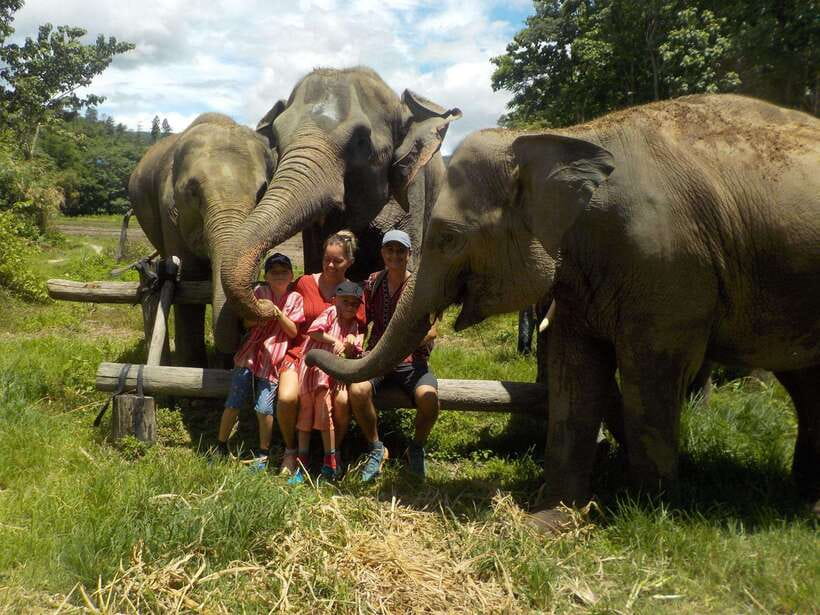
- Feeding, walking, and mud bath: You learn the basics of elephant behavior while elephants cool off naturally.
- Mae Wang River bath: A playful, refreshing swim with staff guidance.
- Forest trek to Mae Wang Waterfall: About an hour of hiking through lush Chiang Mai greenery.
- Karen and Hmong community time: You’ll hear about local life and culture in a more human way.
- Straightforward hotel pickup in Chiang Mai: Morning or late-morning starts, plus round-trip transport.
Why This Chiang Mai Elephant Sanctuary Feels Different
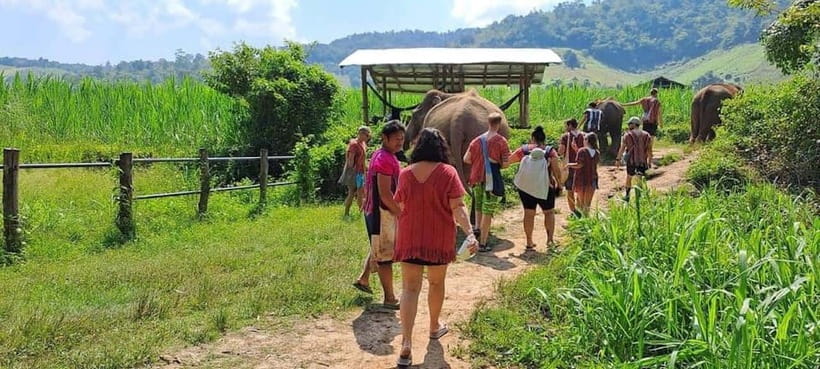
In Chiang Mai, elephant tours come in every flavor, from responsible to very not. What I appreciate about this one is the clear emphasis on ethical conservation and avoiding the show-and-ride model. You’re not there to watch a performance. You’re there to support care that helps elephants live better, stay protected, and stay stress-free.
The setting is also the point. You spend time around elephants in a more natural rhythm, including a mud bath and a river bath, where the “activity” is really about giving elephants what they need. It’s a different mindset from the start, and it shows in how the day flows.
There’s also a culture component that matters. The experience includes time to learn about local Karen and Hmong communities, so you get more than a wildlife moment. You get context about the people who have lived alongside this landscape for generations.
The Real Schedule: Pickup, Camp Transfer, and a Full Morning Rhythm
The day starts with hotel pickup in Chiang Mai. You’ll go in the morning between 8:00 AM and 8:30 AM, or you’ll have an afternoon pickup between 11:30 AM and 11:45 AM. The drive to the elephant camp takes about 1 hour, so you’re already in motion before the main part of the experience begins.
A key detail for planning: the tour returns to Chiang Mai around 2:00 PM. That makes it a good option if you like a short morning plan or you want to trade part of your day for one anchored activity. Still, I’d give yourself slack. One review noted their program ran longer than expected, and they lost their afternoon plans. If you have a tight second booking right after pickup time, consider moving it.
In practical terms, think of this as a half-day that can feel like a chunk of your day. You’ll be active, wet, and outdoors. Once you embrace that, it becomes a very satisfying way to experience Chiang Mai beyond temples and markets.
Villages in the hills, still practicing old crafts
- Chiang Mai: Chiang Rai Temples, Karen Tribe and Hot Springs★ 4.7 · 5,401 reviews
- Thai and Akha Cooking Class in Chiang Mai★ 5.0 · 4,358 reviews
- Chiang Mai: Elephant Sanctuary, Long Neck & Sticky Waterfall★ 4.9 · 2,262 reviews
- 4-Hour Doi Suthep & Hmong Hill Tribe Village from Chiang Mai★ 4.7 · 696 reviews
Meeting the Elephants: Feeding, Walking, and Learning Their Cues
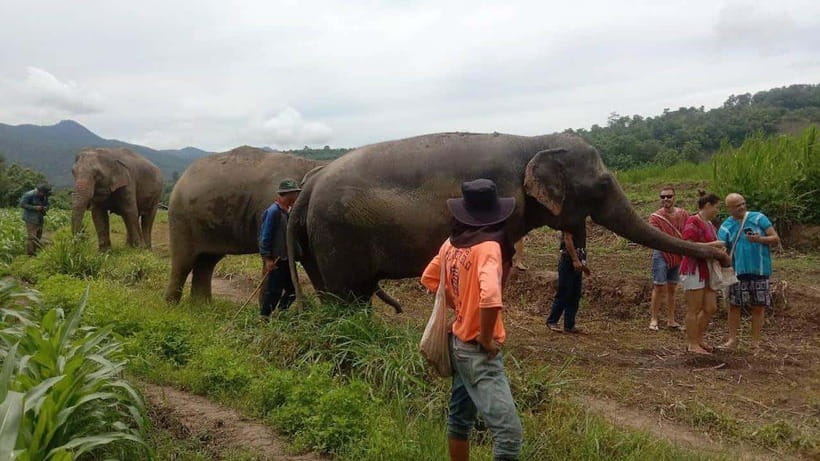
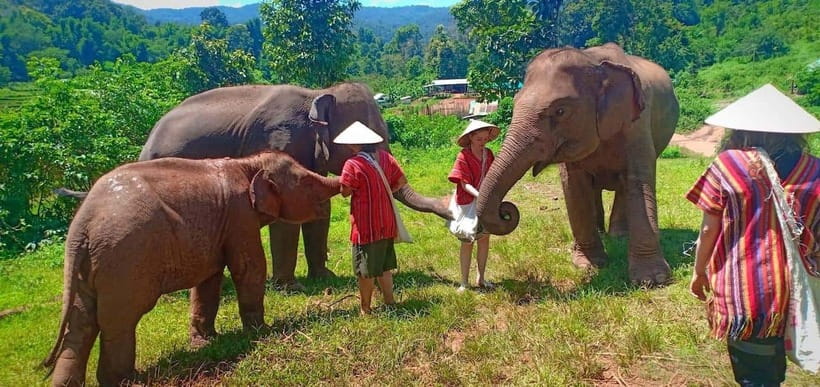
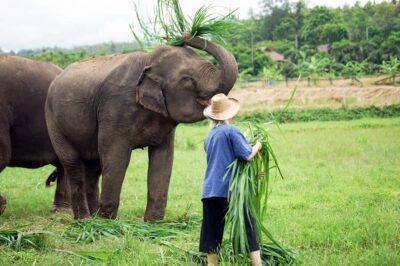
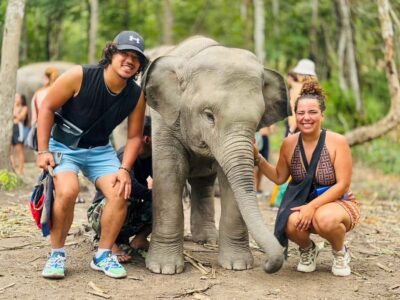
This is the core of the experience. You meet the elephants, learn the sanctuary mission, and then help with daily care tasks. You’ll prepare and feed the elephants while a guide explains behavior and how to approach calmly.
Feeding isn’t just a fun photo moment here. It’s part of learning how elephants react to people, routines, and surroundings. You’re basically learning to speak elephant without words: slow movements, patience, and awareness of space. That’s what turns a potentially chaotic activity into a controlled, low-stress one.
You’ll also join the elephants for a walk. This is where the “walk with elephants” headline becomes real. You’re not on a ride. You’re moving alongside them in a way designed to be respectful for the animal and safe for you.
One more detail that’s worth taking seriously: feeding animals is listed as not allowed in general tour rules. In your case, you’ll be feeding elephants as part of the staff-led care activity. The safe interpretation is simple: do not improvise. Follow what staff provides and instructs.
Mud Bath Cool-Down: Why This Part Matters
A mud bath might sound like a quirky extra, but it has a clear purpose. You’ll help the elephants enjoy a mud bath to cool off and protect their skin. In Thailand’s climate, sun and insects are real, and mud acts like both comfort and protection.
This is also one of the moments that makes the experience feel less commercial. If an operation is only there for rides or showy interactions, mud baths are rarely part of the story. Here it’s built into how elephants regulate their comfort.
For you, it’s also when you’ll want to be mentally ready to get splashed. Even if you don’t end up fully covered, plan on damp clothing and muddy surfaces around the care area.
Feed and bathe elephants, no riding involved
- Chiang Mai: Elephant Sanctuary, Waterfall & Bamboo Rafting
★ 4.9 · 9,160 reviews - Chiang Mai: Elephant Sanctuary & Waterfall Group Tour
★ 4.9 · 5,780 reviews - Chiang Mai: Elephant Sanctuary Feeding Program Half-Day Tour
★ 4.8 · 4,527 reviews
The Mae Wang River Bath: Be Ready for Real Water Time
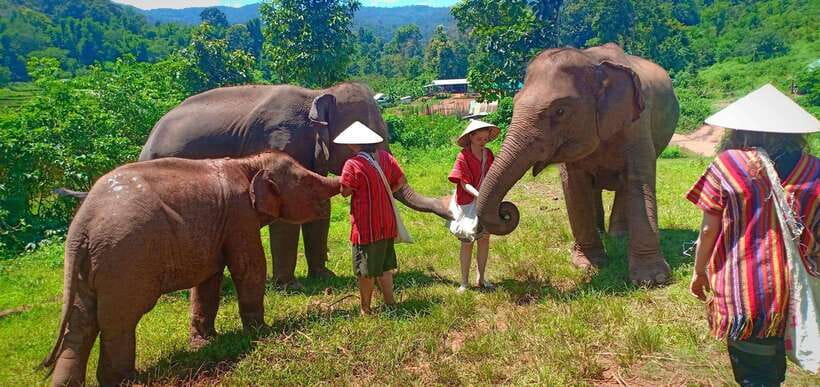
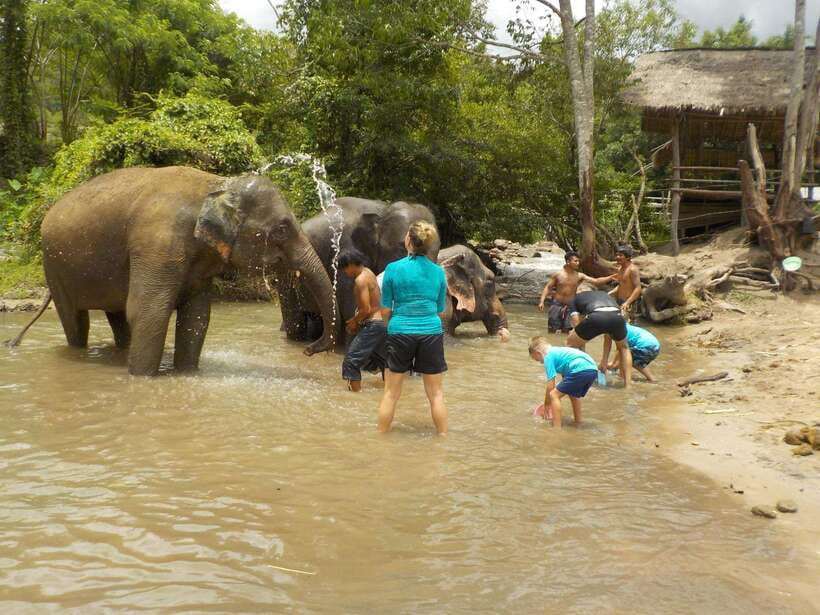
After the care activities, you join the elephants in the Mae Wang River for a bath. This is the part many people imagine first, and it lives up to the expectation if you come prepared. It’s described as playful and refreshing, and it’s led with guidance so you stay safe and follow the flow of what the elephants want.
This is also where you’ll feel the “day in nature” vibe. You’re not standing on a viewing platform. You’re in it, moving with the group and reacting to the water, the current, and the elephants’ natural behavior.
Bring the right setup and it’s a joy. Skip the basics and it turns into an uncomfortable shuffle. Swimwear matters, a towel matters, and flip-flops matter. More on that in the packing section.
Mae Wang Waterfall Trek: A One-Hour Forest Reset
The day isn’t only elephants. You also get a 1-hour jungle hike trek through forest to the Mae Wang Waterfall. This is a nice balance because it turns part of your morning into a calmer reset.
The hike is outdoors and active, with natural paths through green Chiang Mai scenery. Even without a big technical challenge mentioned, it’s still a trek. Your legs will feel it, especially if you did a wet river bath earlier or your body isn’t used to humid walking.
At the waterfall, you’ll have the kind of payoff that doesn’t require you to hunt for a viewpoint. The waterfall is the attraction, and you’re already in the right place to enjoy it. It’s a simple plan: walk, see, and breathe, then return to the rhythm of the sanctuary day.
Karen and Hmong Life: Learning Culture Without Turning It Into a Performance
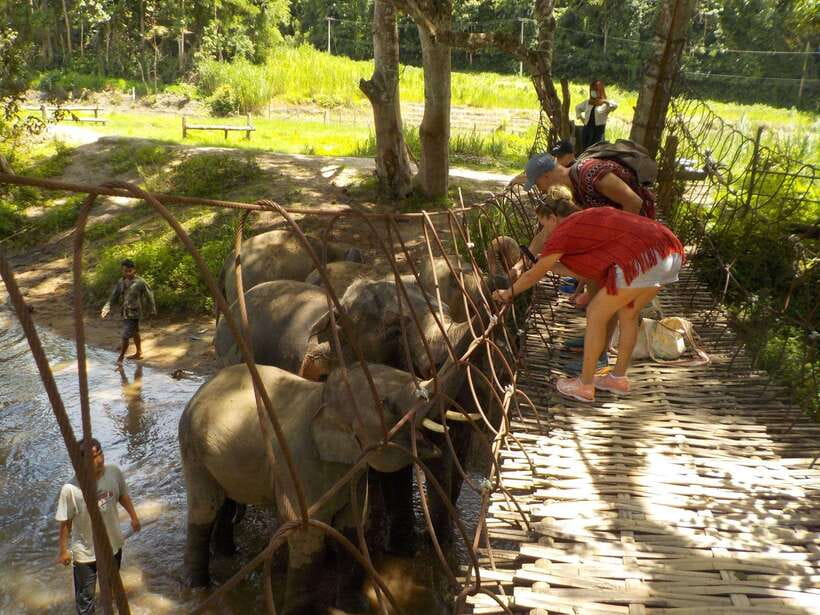
One of the highlights is exploring the way of life of local Karen and Hmong communities. This matters because elephant sanctuaries often get sold as wildlife-only days. Here, you get cultural context and you learn that the landscape has people, not just animals.
I like that the experience is described as non-commercialized, with no shows or rides. That same philosophy helps when culture is part of the program. If you approach it with curiosity and respect, this portion can feel like a meaningful exchange rather than a checklist.
The honest tip: be open-minded, listen carefully, and ask your guide questions. Your guide is there to translate not just language, but meaning.
Lunch in the Sanctuary Surroundings: A Calm Break in the Middle
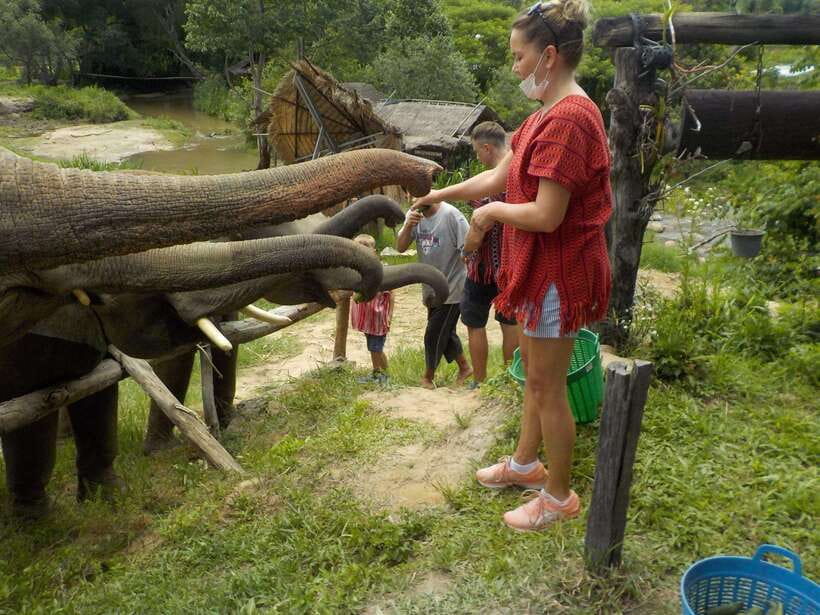
You’ll enjoy lunch in the peaceful sanctuary surroundings. You’re not eating in a rushed roadside stop. You’re taking a pause in the same environment where the day has been unfolding.
That matters more than it sounds. After time outdoors, wet time in the river, and a hike, a calm meal helps you reset. You’ll likely feel better for the next part of the day if you eat properly and avoid rushing.
Also note what’s not allowed: alcoholic drinks in the vehicle are listed as prohibited. That’s usually a sign the day is designed to keep everyone focused and safe while moving between stops.
What to Bring (So You Actually Enjoy the River Bath)
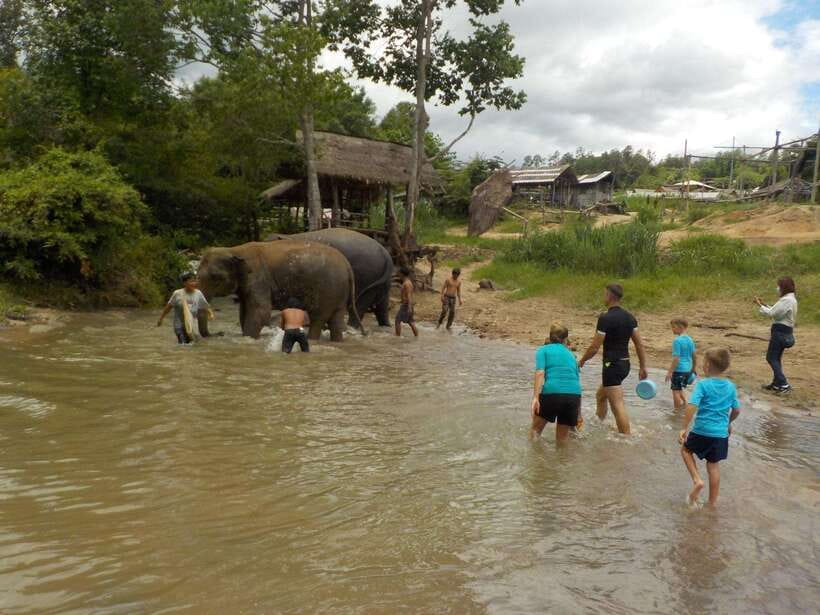
This tour is hands-on, and you’ll be wet. Pack like it’s a small outdoor adventure.
Bring:
- Swimwear
- Change of clothes
- Towel
- Camera
- Sunscreen
- Flip-flops
- Insect repellent
A quick reality check: flip-flops work for river areas, but they are not great for wet, slippery hiking conditions. You might find flip-flops fine for the river, then use other footwear if the hike feels muddy. The provided info only lists flip-flops, so if you have sturdier water shoes, you might find them more comfortable.
Also, plan for sun and insects. Sunscreen and repellent are not optional in this region. You’ll likely be outside enough that you notice the difference by mid-morning.
Price and Value: What $51 Buys You in Chiang Mai
At about $51 per person for a 4-hour experience, the big value question is what you get for your money. Here you’re paying for round-trip transport from Chiang Mai, a lunch, an English-speaking guide, and the chance to participate in staff-led elephant care with a river bath and a waterfall hike.
What makes it feel like good value is the structure. You’re not buying a single “photo moment.” You’re getting a sequence: elephants in a natural setting, care activities, a jungle trek, and time to learn about local communities. The day also avoids the typical paid attractions that can focus on riding or staged entertainment.
That said, check how your day will fit. If you’re hoping for a precise return time to make afternoon plans, build in buffer. One review reported their day ran longer than the expected 4 hours, which impacted a second program. It’s not the price that changes, it’s your personal schedule.
Who This Tour Fits Best, and Who Should Skip It
This experience is best for adults and families who want an ethical elephant encounter and don’t mind getting wet and walking outdoors.
It’s not suitable for:
- Children under 2 years
- Pregnant women
- People with back problems
If you fall into one of those groups, you’ll want to look for a different type of wildlife experience with less physical demand.
If you love nature and enjoy active days, you’re likely to have a great time. You’ll feed and walk with elephants, join the river bath, then hike to Mae Wang Waterfall. If you prefer a sit-down viewing experience with zero physical effort, this probably won’t match your style.
Practical Tips Before You Go (The Stuff That Saves Your Day)
Before you book, confirm pickup details. Pickup is available in Chiang Mai, but there’s a morning and midday window, and it matters that your hotel is in their service area. One unhappy experience involved a pickup location mismatch. To avoid stress, make sure your exact hotel address is within the pickup zone and that you understand the pickup time range.
Second, plan your wardrobe around water and mud. Bring your change of clothes for sure, not just in theory.
Third, follow staff instructions closely around feeding and animal contact. The tour rules list feeding animals as not allowed in general, so it’s smart to assume you should stick only to what the staff provides for the elephant care portion.
Finally, think of this as a cultural and conservation day, not an amusement park ride. When you match your expectations to that reality, the experience feels much better.
Should You Book This Chiang Mai Elephant Sanctuary Care Experience?
If your goal is an elephant encounter that leans ethical and avoids rides or shows, this tour is a strong choice. The combination of elephant care, a mud bath, and a river bath, plus the Mae Wang Waterfall hike, gives you more than a one-track wildlife visit. Add the Karen and Hmong community component, and you get a more complete picture of the region.
I’d book it if you can handle a wet, active morning and you want a responsible style of interaction. I’d pause if your schedule is extremely tight after 2:00 PM, or if the physical nature of the hike and river time could be an issue for you.
If you want my simple rule: if you’re ready to participate respectfully and you plan for a real half-day outdoors, you’ll likely feel it was worth every baht and more.
FAQ
How long is the Chiang Mai elephant sanctuary experience?
The duration is listed as 4 hours.
What time do I get picked up from my hotel?
Pickup from Chiang Mai is in the morning between 8:00 AM and 8:30 AM, or in the afternoon between 11:30 AM and 11:45 AM.
How long is the drive to the elephant camp?
The journey to the elephant camp takes approximately 1 hour.
What time does the tour return to Chiang Mai?
The tour returns to Chiang Mai around 2:00 PM.
What is included in the price?
Included are round-trip transportation from Chiang Mai and lunch.
Is lunch provided?
Yes, lunch is included.
What should I bring for the river bath and hike?
Bring swimwear, a change of clothes, a towel, a camera, sunscreen, flip-flops, and insect repellent.
What is not allowed during the tour?
Smoking and alcohol in the vehicle are not allowed, and feeding animals is listed as not allowed as a general rule.
Is the tour guided, and what language is it in?
There is a live tour guide in English.
Who is this tour not suitable for?
It is not suitable for children under 2 years, pregnant women, or people with back problems.
Fresh listings for Chiang Mai
- Skydive Chiang Mai★ 5.0 · 1 review
- One day hiking tour in Chaing Mai★ 5.0 · 1 review
- One Day Non Tourist Trek 100% Guarantee★ 5.0 · 1 review
- Chiang Mai to Chiang Rai (Private 3 day Tour)★ 5.0 · 1 review
- San Kamphaeng Hot Springs and Thai Handicraft Tour from Chiang Mai★ 5.0 · 1 review
- Half day Doi Suthep Temple & Mae Ping River cruise (Private)★ 5.0 · 1 review
Ethical Elephant Sanctuary Tours, compared.
Elephant Sanctuary, Waterfall & Bamboo Rafting
Read our review →
Elephant Sanctuary Feeding Program Half-Day Tour
Read our review →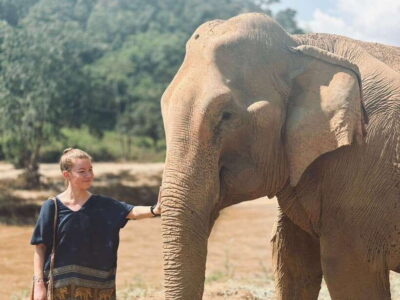
Elephant Sanctuary, Long Neck & Sticky Waterfall
Read our review →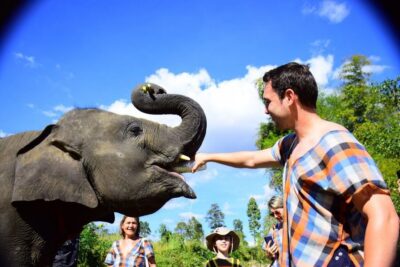

Browse the lists this tour appears in