
Reviewed · NORTHERN THAI COOKING CLASSES
Chiang Mai: Evening Cooking Class and Local Market Visit
A Thai cooking class sounds fun. The twist here is shopping like a local first, then cooking what you picked. You also get the calming add-on of an organic garden visit before you hit the stove.
What I like most is the hands-on pace, with clear instruction from English-speaking teachers like New and Aoy. I also love the practical payoff: you eat a satisfying meal you helped build, then take home a recipe book so you can cook again later.
The main consideration is how much food this class packs in. You are advised to come with an empty stomach, and the schedule is built around dinner timing, so expect to end the night full.
In This Review
- Key highlights to look for
- Why this Chiang Mai evening format makes sense
- Hotel pickup timing and how to avoid the stress
- Market shopping like you actually cook in Thailand
- The organic garden stroll and why it matters
- Inside the air-conditioned kitchen: what you learn hands-on
- Your menu choices: four dishes plus curry paste skills
- Dinner pacing: what 5 hours feels like
- Value and what your $28 actually buys
- Dietary needs and substitutions without drama
- Who should book this cooking class
- Small watch-outs that can affect your night
- Should you book the Chiang Mai evening cooking class with Galangal Cooking Studio?
- FAQ
- How long is the Chiang Mai evening cooking class?
- When does hotel pickup happen?
- What dishes can I choose to cook?
- Are vegetarian, vegan, halal, or gluten-free options available?
- What is included in the price?
- Can someone observe without joining the class?
Key highlights to look for
- Hotel pickup and drop-off in central Chiang Mai, timed for an evening start
- Market plus organic garden so you can select ingredients before cooking
- Make curry paste and Thai staples with real step-by-step coaching
- Air-conditioned indoor kitchen for comfortable cooking and dining
- Dietary options are available, including vegan, vegetarian, halal, and gluten-free needs
- Recipe book in PDF format so you can recreate your menu at home
Why this Chiang Mai evening format makes sense
Chiang Mai evenings are prime time for food. The city cools down, markets start to feel lively, and Thai dinner culture kicks in around 4 or 5 pm, which fits this class perfectly.
Instead of dropping you in front of a finished dish, this experience starts earlier with ingredients. That matters. When you learn why certain herbs, aromatics, and sauces work together, you stop copying recipes like a robot and start cooking with judgment.
Hotel pickup timing and how to avoid the stress
This class is set up with hotel pickup and drop-off in central Chiang Mai, including the old city and nearby areas. Pickup usually runs between 3:15 and 3:45 pm. Because traffic can hit in the evening and there can be multiple pickup points, pickup may start a bit earlier, and the driver waits no longer than 5 minutes after the scheduled time.
If you want this to feel smooth, plan like a local: be ready in the hotel lobby promptly. Late checkout, slow elevators, or a last-minute pharmacy stop can turn into a missed departure.
Market run first, then into the kitchen
- Half-Day Thai Cooking Class at Organic Farm in Chiang Mai★ 5.0 · 19,087 reviews
- Chiang Mai: Cooking Class, Market & Thai Herbs Garden Tour★ 4.9 · 4,824 reviews
- Chiang Mai: Authentic Cooking Class with Market & Farm Visit★ 4.9 · 4,546 reviews
- Thai and Akha Cooking Class in Chiang Mai★ 5.0 · 4,358 reviews
Market shopping like you actually cook in Thailand
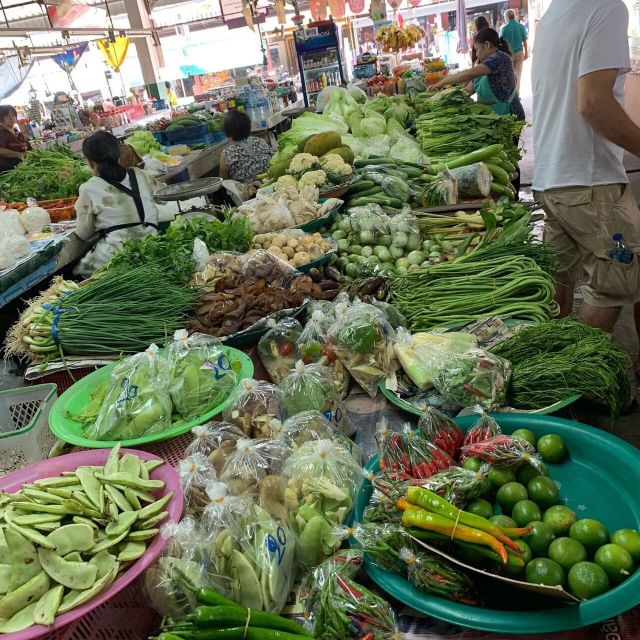
The market stop is where the class becomes more than just a cooking demo. You’ll see fresh vegetables and ingredients, learn what to look for, and then hand-pick what you want to cook from the menu categories.
One of the underrated benefits is confidence. Once you’ve seen what goes into Thai food and how ingredients are chosen at market level, ordering in a restaurant gets easier, and you get better at spotting quality. It also helps the cooking part, because you are working with ingredients you already understand.
You’ll typically get a short time to browse, so it does not feel like a rushed scavenger hunt. Still, keep your eye on what your chosen dishes require, especially for things like herbs, chilies, coconut milk, and paste components.
The organic garden stroll and why it matters
Before the kitchen, you visit an organic garden to see how herbs and vegetables are grown. It is a calm break from the pace of the market, and it gives you a visual connection to what you’re about to cook.
This is useful because Thai cuisine is herb-driven. Seeing plants in context makes it easier to remember what each dish is supposed to taste like. Even if your home kitchen cannot replicate Thai growing conditions, you’ll understand the flavor logic.
A few more ways to fill a day here
- Chiang Mai: Cooking Class with Market and Pickup
★ 4.9 · 1,365 reviews - Chiang Mai: Evening Local Street Food Market Tour
★ 4.8 · 604 reviews - Chiang Mai: Kalare Night Bazaar Boxing Stadium Muay Thai
★ 4.7 · 507 reviews
Inside the air-conditioned kitchen: what you learn hands-on
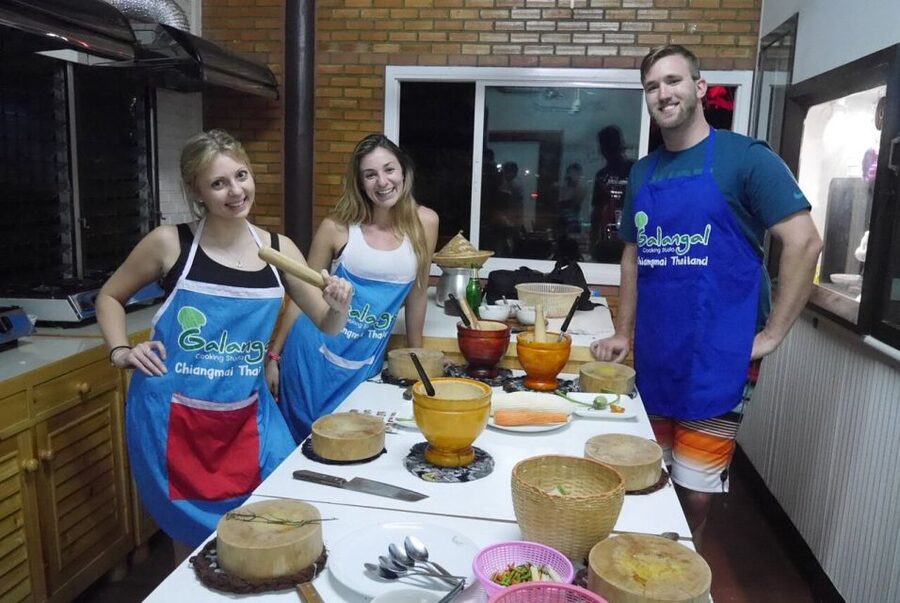
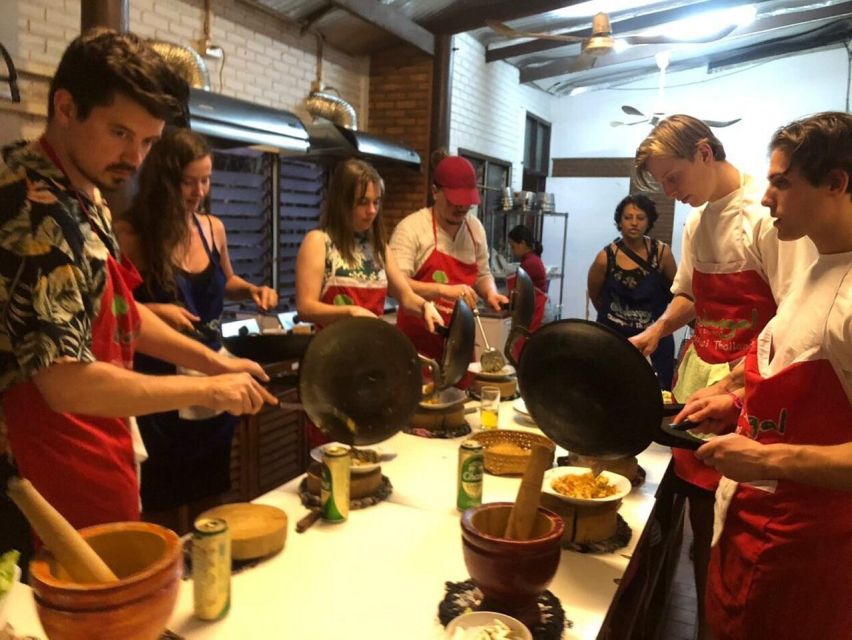
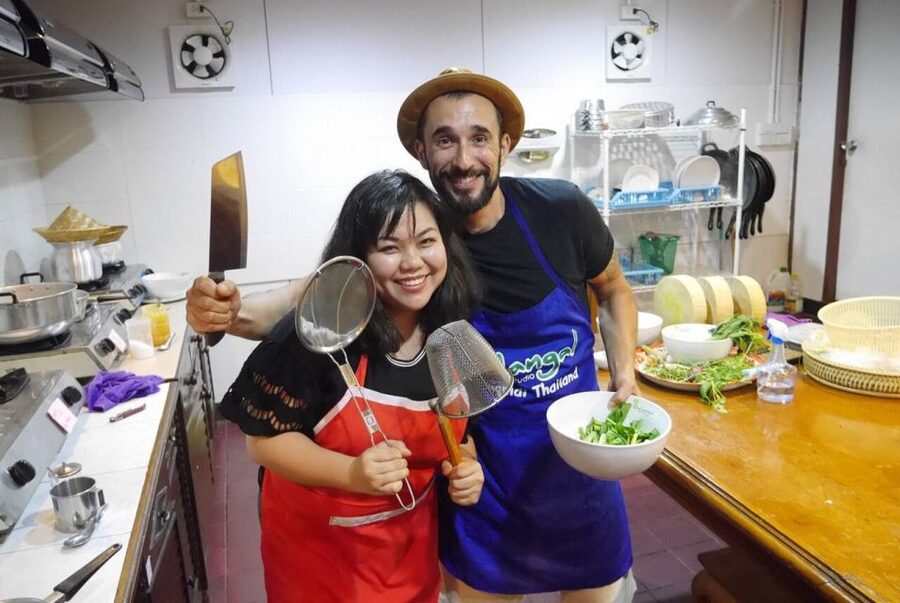
Back at Galangal Cooking Studio, you cook in an indoor air-conditioned kitchen and dining setup. The class is led by an English-speaking instructor, and the vibe is organized rather than chaotic. People like New and Aoy are repeatedly praised for staying on track and explaining ingredients in a way that beginners can follow.
The cooking isn’t just chopping and stirring. You learn technique, like how the order of adding ingredients changes the final flavor, and why Thai food relies on balance between salty, sour, sweet, spicy, and aromatic notes.
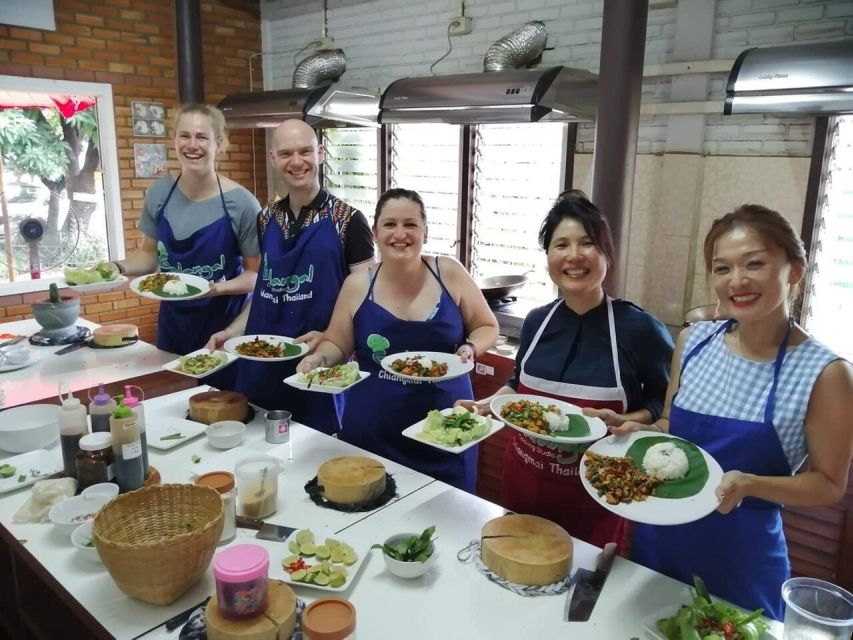
Also, you do not just make one dish. The class structure is designed around multiple courses and a menu you select ahead of time. The result is a night that feels like a complete meal, not a snack and a photo.
Your menu choices: four dishes plus curry paste skills
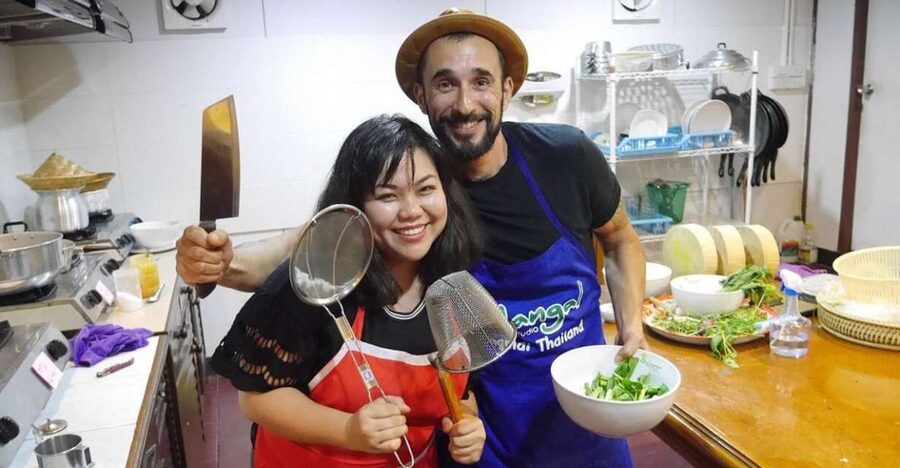
The class is built around choosing from categories such as stir-fried dishes, soup, an appetizer, and a curry/curry paste option. You then cook and eat what you select.
Here are the options you can pick from:
Stir-fried options
- Pad Thai (fried noodles Thai style)
- Pad See Ew (stir-fried chicken with fresh noodles)
- Kai Pad Med Mamuang Him Ma Pan (chicken cashew nut)
- Pad Kaphao Kai (minced chicken with holy basil)
Soup options
- Tom Yum Kung (hot and sour prawn)
- Tom Kha Kai (chicken in coconut milk)
- Tom Kha Je (vegetarian/vegan in coconut milk)
- Tom Zap Kai (hot and sour with chicken)
Appetizer options
- Som Tam (papaya salad)
- Por Pia Thod (spring roll)
- Larb Kai (chicken salad)
- Yam Woon Sen (glass noodle salad)
Curry or curry paste making options
- Kaeng Massaman (Massaman curry)
- Kaeng Kieaw Wan Kai (green curry)
- Kaeng Panaeng Kai (Panang curry)
- Khao Soi (Chiang Mai noodle with chicken)
- Kaeng Ped (red curry)
- Kaeng Karee (yellow curry)
- Pad Prik Kaeng (dry red curry)
In plain terms, you can build a very Chiang Mai menu with things like Khao Soi or Tom Kha, or go more classic with Pad Thai and a curry paste from scratch. The curry section is where you really start thinking like a Thai cook, because curry paste is the flavor engine.
Dinner pacing: what 5 hours feels like
The total duration is about 5 hours. Pickup starts in mid-afternoon, and the setup supports a big group schedule that runs roughly from 4 pm to 8:30 pm. If the group is smaller, the class finishes earlier, so it does not automatically mean you will be tied up until 8:30.
There is also a practical reason to time your dinner plan around this class. You’ll be eating what you cook at the end, and you are specifically asked to come with an empty stomach since Thai dinner culture starts around 4 or 5 pm. If you snack heavily beforehand, the later courses can feel like a chore instead of the main event.
The pacing usually feels steady: market, garden stroll, cooking setup, cooking rounds, then the shared meal.
Value and what your $28 actually buys
At $28 per person, this is not just a cooking lesson. You’re paying for hotel transfer, English instruction, ingredient shopping time, market context, the organic garden stop, and all ingredients and equipment for the class. Tea, coffee, and water are included too, which sounds small but matters in real life.
Most important, you get the practical deliverable: a PDF version of a recipe book. That turns the class from a one-night entertainment into something you can repeat at home.
If your budget is tight, the value here comes from combining several activities into one evening rather than paying separately for a market tour and a cooking class. If your budget is healthy, you’ll still appreciate that it feels efficient, not packed.
Dietary needs and substitutions without drama
This class explicitly notes support for different dietary needs. You can choose options for vegan, vegetarian, halal, and gluten-free needs, and accommodations are mentioned for allergies as well.
In real-world terms, this matters because Thai cooking can involve fish sauce, shrimp paste, and cross-contamination risks. When the class offers alternatives, you can actually enjoy the meal instead of picking at it or avoiding certain dishes.
The menu options are broad enough that you can often build a full set of courses even with restrictions. Just make your preferences clear during the selection process, and you’ll have the best chance of getting dishes that match your needs.
Who should book this cooking class
This is a great match if you:
- want a hands-on Thai cooking experience rather than watching from a distance
- enjoy markets and want to understand ingredients, not just see them
- like structured instruction but do not want to feel locked into complicated technique
- want a flexible menu, with choices across stir-fry, soup, appetizer, and curry
It can also work for people with mobility needs because the cooking school is described as wheelchair accessible and stroller accessible, and it is near public transportation.
If you have altitude sickness concerns, it is listed as not suitable for that. If that applies, check with your provider before booking.
Small watch-outs that can affect your night
A few details can make or break the experience if you ignore them.
- Come hungry. You are asked to arrive with an empty stomach because the class runs into dinner hours.
- Meet pickup on time. The driver waits no more than 5 minutes after the scheduled pickup time.
- No smoking indoors and no alcohol or drugs are allowed during the activity.
- Observer fees apply. Visitors who observe are welcome, but they pay a fee (separately from the class price).
These are not dealbreakers, just the kind of details that keep your evening running smoothly.
Should you book the Chiang Mai evening cooking class with Galangal Cooking Studio?
Yes, if your idea of a good night in Chiang Mai is practical. This class gives you a real market-and-garden introduction, then a structured cooking session where you create multiple courses and eat them. The format also makes it beginner-friendly because you can choose from a clear menu and follow step-by-step instruction.
Book it especially if you want something more than a generic food tour. The market ingredient selection plus curry paste skills is the kind of combo that sticks with you, and the included recipe book means you can bring Thai flavors home.
If you hate being committed for about 5 hours in the late afternoon and you plan to snack beforehand anyway, then consider adjusting your schedule. Otherwise, this is a solid, good-value way to eat well and learn real technique in Chiang Mai.
FAQ
How long is the Chiang Mai evening cooking class?
The class lasts about 5 hours, with pickup in the afternoon and return to your hotel afterward.
When does hotel pickup happen?
Pickup is offered between 3:15 and 3:45 pm in central Chiang Mai areas listed by the operator. The driver may arrive slightly earlier due to traffic, and they wait no longer than 5 minutes after the scheduled pickup time.
What dishes can I choose to cook?
You can select one dish from each category, including a stir-fried dish (such as Pad Thai or Pad See Ew), a soup (such as Tom Yum Kung or Tom Kha Kai), an appetizer (such as Som Tam or spring rolls), and a curry or curry paste option (such as Massaman curry or green curry).
Are vegetarian, vegan, halal, or gluten-free options available?
Yes. The activity lists options for vegan, vegetarian, halal, and gluten-free needs, as well as alternatives for certain allergies.
What is included in the price?
The price includes hotel pickup and drop-off, cooking instructions, water, tea and coffee, and all ingredients and equipment required for the class. A market tour and a PDF recipe book are also included depending on interest.
Can someone observe without joining the class?
Yes, observers are welcome, but they must pay a fee. The listed fees are 500 THB per person and 350 THB per child (age 6 to 12).
More Evening Experiences in Chiang Mai


More Markets in Chiang Mai

Fresh listings for Chiang Mai
- Skydive Chiang Mai★ 5.0 · 1 review
- One day hiking tour in Chaing Mai★ 5.0 · 1 review
- One Day Non Tourist Trek 100% Guarantee★ 5.0 · 1 review
- Chiang Mai to Chiang Rai (Private 3 day Tour)★ 5.0 · 1 review
- San Kamphaeng Hot Springs and Thai Handicraft Tour from Chiang Mai★ 5.0 · 1 review
- Half day Doi Suthep Temple & Mae Ping River cruise (Private)★ 5.0 · 1 review
Northern Thai Cooking Classes, compared.
Half-Day Thai Cooking Class at Organic Farm in Chiang Mai
Read our review →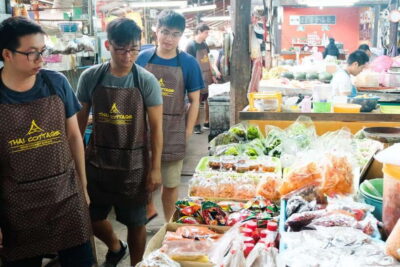
Cooking Class, Market & Thai Herbs Garden Tour
Read our review →
Authentic Cooking Class with Market & Farm Visit
Read our review →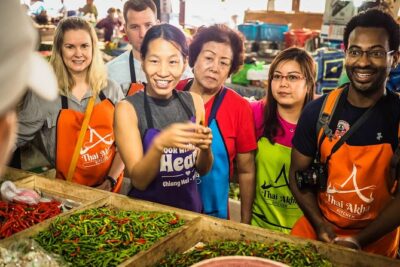
Full Day Thai Cooking at Farm (Chiang Mai)
Read our review →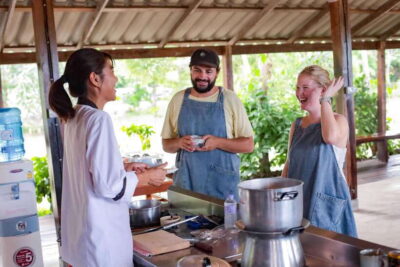
Browse the lists this tour appears in