
Reviewed · NORTHERN THAI COOKING CLASSES
Evening Cooking Class in Organic Farm with Local Market Tour
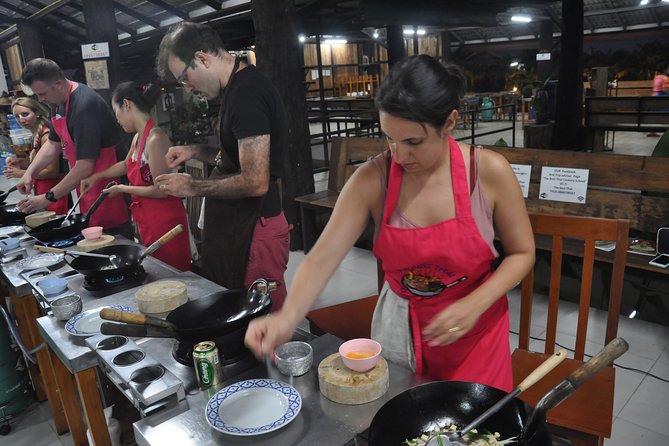
Thai cooking starts with a quick market walk. I love the combo of Somphet Market ingredient shopping and having my own individual cooking station to learn curry paste from scratch, then sit down and eat what I made. One thing to consider, the class starts at 3:30 pm, so you’ll want to hold off on a big early dinner.
The whole vibe is simple and practical: a small group (up to 10), a professional teacher, round-trip hotel transfers, and a real farm setting a short drive from Chiang Mai. It’s not a show where you watch and leave hungry, you cook, you taste, and you go back to your hotel feeling full.
In This Review
- Key Points to Know Before You Go
- Somphet Market, Not a Tourist Sprint
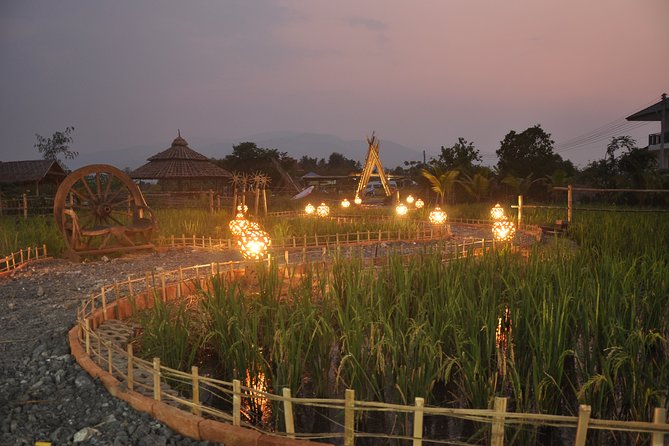
- The Short Drive to an Organic Farm Setting
- Your Teacher and the Smell Test That Actually Helps
- Building Curry Paste From Scratch (The Skill You Keep)
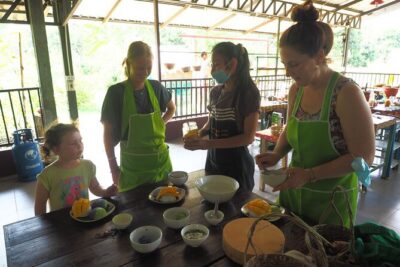
- The Six-Dish Cooking Session and Individual Stations
- Eating What You Cook, Plus a Group Photo
- Timing, Hotel Transfers, and Small-Group Attention
- Price and Value: Why $29 Feels Reasonable
- Who Should Book This Evening Class
- Should You Book This Chiang Mai Organic Farm Cooking Class?
Key Points to Know Before You Go
- Somphet Market stop: A focused 30-minute market visit with the admission ticket included
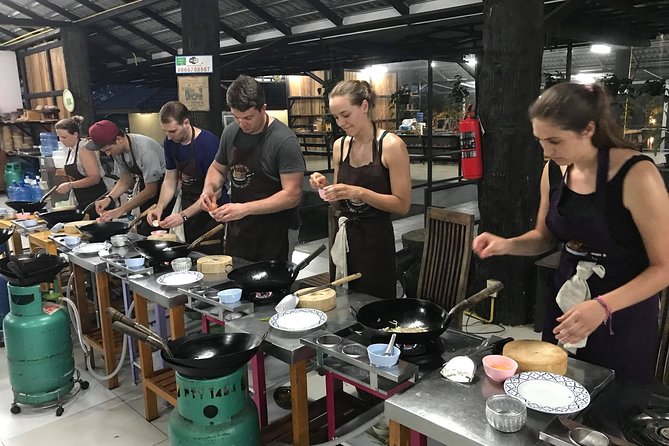
- Your own cooking station: Hands-on setup so you’re actually doing the work
- Organic farm ingredient picking: Choose fresh items before you start cooking
- Six-dish cooking session: You learn to make Thai flavors from scratch, including curry paste
- Papaya salad and mango sticky rice: Featured during the cooking teaching and meal
Somphet Market, Not a Tourist Sprint
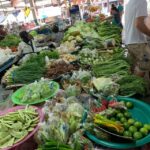
Your evening begins with a quick run through Somphet Market for about 30 minutes. This part matters more than it sounds. Market time sets you up to understand what you’re cooking with, why certain ingredients go together, and what “from scratch” really means in Thai food.
You’ll also get a taste of local shopping rhythms without needing to be a food expert. The market stop includes an admission ticket, so you can focus on using your time wisely: look for herbs and produce that smell strong and fresh, watch how vendors handle ingredients, and notice how many things are sold already portioned for cooking.
Practical tip: keep this stop light. You’re heading to a cooking class right after, and you’ll have food waiting for you at the end. If you snack too hard at the market, the farm meal can feel heavy.
The Short Drive to an Organic Farm Setting
After the market, you head to the farm area outside Chiang Mai for the cooking part. The tour is designed so the time shift makes sense: you shop first, then you cook where the ingredients come from.
The experience highlights an organic farming angle, including picking ingredients by hand. That step is valuable because it turns “Thai food” from an idea into a concrete workflow. When you choose the ingredient yourself, you pay more attention to how it’s prepared and how flavors change once they’re mixed, ground, and cooked.
This farm setting also changes the pace. It feels less like a classroom and more like a working food place. You’re there to learn techniques, then apply them immediately.
Market run first, then into the kitchen
- Half-Day Thai Cooking Class at Organic Farm in Chiang Mai★ 5.0 · 19,087 reviews
- Chiang Mai: Cooking Class, Market & Thai Herbs Garden Tour★ 4.9 · 4,824 reviews
- Chiang Mai: Authentic Cooking Class with Market & Farm Visit★ 4.9 · 4,546 reviews
- Thai and Akha Cooking Class in Chiang Mai★ 5.0 · 4,358 reviews
Your Teacher and the Smell Test That Actually Helps
The class is led by a professional teacher, and the teaching style seems built for real learning, not just repeating steps. In particular, one teacher mentioned in participant feedback is Chef Perm, and he’s known for being both funny and hands-on.
A standout element from the teaching approach is the way you’re guided to interact with ingredients. You don’t only look at herbs and plants, you’re encouraged to smell them. That might sound small, but it’s one of the fastest ways to upgrade your cooking at home. Smell gives you instant clues about what’s going to taste bitter, bright, grassy, or warming once it’s in your food.
If you’ve ever cooked from a recipe and wondered why your dish doesn’t taste the same, this is the missing piece. Thai cooking relies heavily on fresh aromatics and spice balance, and the class helps you train that sense.
Building Curry Paste From Scratch (The Skill You Keep)
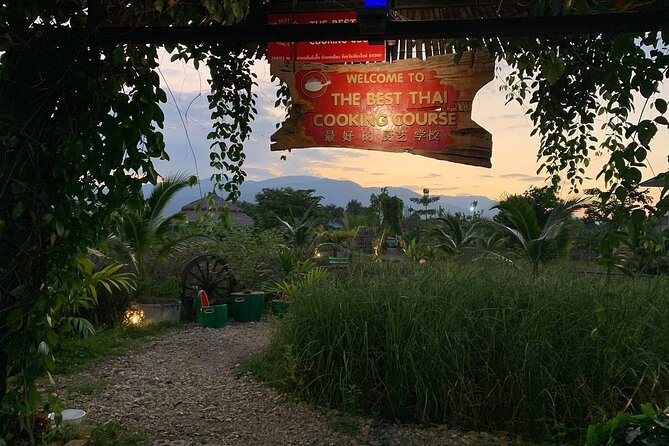
One of the core lessons is making authentic curry paste from scratch. This is the step that separates “tastes Thai” from “tastes like your Thai neighbor cooked it.”
When you make curry paste yourself, you learn what matters most:
- Freshness of herbs and aromatics
- Grinding and mixing so flavors distribute evenly
- How the paste changes as ingredients combine
Even if you don’t memorize every ratio perfectly, you leave with the technique and the logic. That makes future cooking easier, because you’ll know what to look for in texture, aroma, and intensity.
Also, curry paste shows up across lots of Thai dishes, so this lesson gives you more than one recipe. It’s a foundation skill.
A few more ways to fill a day here
- Chiang Mai: Cooking Class with Organic Farm at Mama Noi
★ 4.9 · 1,151 reviews - Full Day Thai Cooking at Farm (Chiang Mai)
★ 5.0 · 1,127 reviews - Chiang Mai: 2-Day Jungle Trek with Elephant Farm & Raft Ride
★ 4.7 · 881 reviews
The Six-Dish Cooking Session and Individual Stations
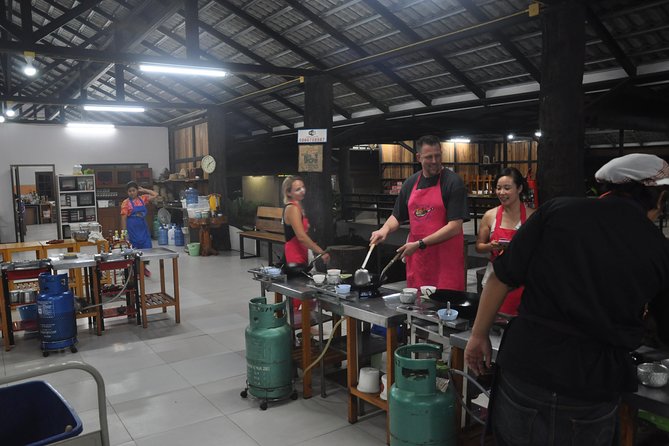
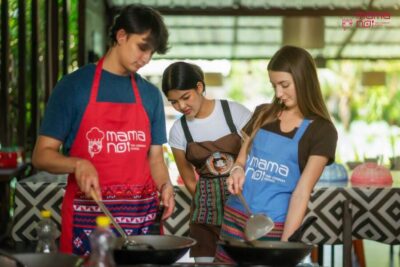
You cook at individual cooking stations, which is a big deal. In many cooking classes, half the group ends up waiting while someone else chops. Here, the format is set up so you’re actively working.
The cooking session centers on making six dishes, so you get variety in one evening. You’ll also experience a teaching demonstration that includes papaya salad and mango sticky rice. Those two are classic, and they’re also a great way to understand Thai flavor contrast: fresh, tangy, spicy, and sweet all in one meal arc.
What I like about a six-dish structure is that it keeps you engaged. You’re not stuck doing the same task for hours. You get technique switches, taste checks, and the satisfaction of completing a plate that goes beyond a single appetizer.
Practical tip: wear comfortable clothes you can move in. You’ll be doing hands-on work at your station, and it’s easier if you’re not worried about getting splashed.
Eating What You Cook, Plus a Group Photo
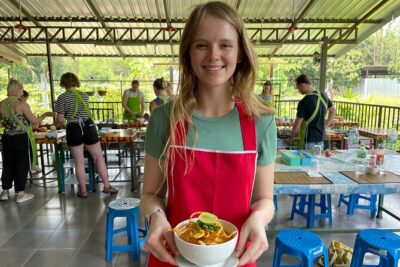
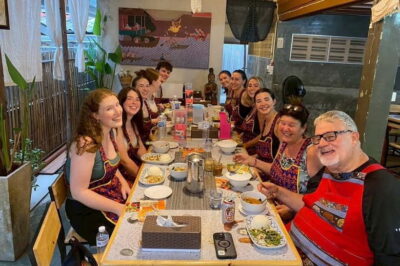
After the class, you sit down to eat the food you made. This is one of the best ways to tell if your learning actually stuck. You don’t just take notes, you taste the results in a shared meal.
And yes, there’s a group picture, which is a nice extra if you want a souvenir besides memory. It also gives you a quick end-of-class moment before you get back to your hotel.
If you’re worried about getting enough food, you shouldn’t be. The structure is built around you leaving full. One common theme from feedback is that people come hungry, then leave happy and satisfied. That lines up with the meal being part of the experience, not an afterthought.
Timing, Hotel Transfers, and Small-Group Attention
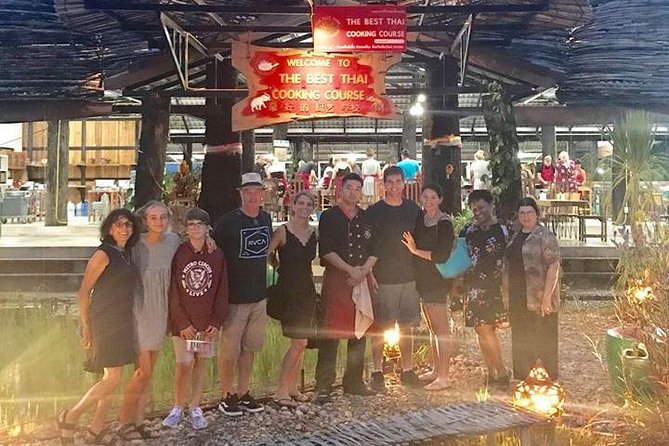
This is an evening tour that starts at 3:30 pm and runs about 5 hours. That timing works well if you like daytime exploring Chiang Mai and want one focused food experience later. It also means you won’t spend your whole day tied up in cooking.
The tour includes round-trip hotel transfers, which is key for convenience. Chiang Mai traffic can be unpredictable, and food classes work best when you’re not rushed to get there on your own. Pickup removes that stress.
Group size is capped at 10 travelers, and that small number makes the teaching feel more responsive. You’re more likely to get help when you need it, whether it’s about ingredient prep or getting the paste to the right feel.
One drawback to consider: because it’s a short evening window, you may not have time to explore the farm area like a slow countryside visit. This is a cooking experience first. If you want lingering photo stops and long walks, you might prefer a different type of outing.
Price and Value: Why $29 Feels Reasonable
At $29 for about 5 hours, this class stands out for what’s included. You’re paying for:
- A professional teaching experience
- Individual cooking stations and hands-on practice
- A market stop (Somphet Market) with the admission ticket included
- Organic farm ingredient picking
- A full meal made from your cooking
- Round-trip hotel transfers
In other words, it’s not just the class itself. The market component and the transportation are built into the price, and that often costs extra when booked separately.
Is it “cheap” in a budget sense? It is fairly low for the amount of included value. But it only feels like a great deal if you actually want to cook and eat, not just watch. If your goal is to be a spectator, you’ll get less out of it.
Best value for people who:
- Want to learn a foundational Thai skill like curry paste
- Prefer hands-on cooking over demonstrations only
- Appreciate being picked up and dropped off
- Like evening activities that end with a sit-down meal
Who Should Book This Evening Class
I think this is a strong fit if you want practical Thai cooking without the guesswork.
It’s especially good for:
- First-timers to Thai cooking who want a guided start
- Food lovers who learn best by doing
- Couples and small groups who like a calmer class size
- Travelers who want convenience, pickup included
If you’re someone who needs very specific dietary accommodations, you should double-check what’s possible before booking, since the available details focus on the core dishes and cooking flow rather than ingredient swaps.
Also, if you’re the type who loves long, slow cultural wandering, the market stop is brief. You’ll enjoy it, but it’s not a full day of market exploration.
Should You Book This Chiang Mai Organic Farm Cooking Class?
If you want an evening activity that’s genuinely hands-on and ends with the meal you made, I’d book it. The combination of Somphet Market, curry paste from scratch, individual stations, and the chance to eat right there on site makes it feel efficient and rewarding.
The only real “don’t book” scenario is if you dislike structured schedules or prefer to learn by watching instead of cooking. If you’re ready to get your hands working and your stomach ready for Thai classics, this one checks a lot of boxes for the price.
More Markets in Chiang Mai


More Shopping Tours in Chiang Mai
Fresh listings for Chiang Mai
- Skydive Chiang Mai★ 5.0 · 1 review
- One day hiking tour in Chaing Mai★ 5.0 · 1 review
- One Day Non Tourist Trek 100% Guarantee★ 5.0 · 1 review
- Chiang Mai to Chiang Rai (Private 3 day Tour)★ 5.0 · 1 review
- San Kamphaeng Hot Springs and Thai Handicraft Tour from Chiang Mai★ 5.0 · 1 review
- Half day Doi Suthep Temple & Mae Ping River cruise (Private)★ 5.0 · 1 review
Northern Thai Cooking Classes, compared.
Half-Day Thai Cooking Class at Organic Farm in Chiang Mai
Read our review →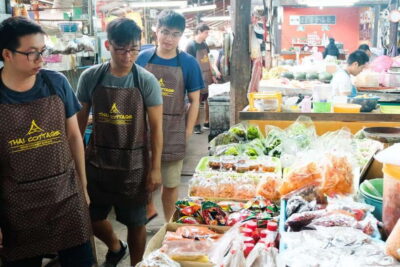
Cooking Class, Market & Thai Herbs Garden Tour
Read our review →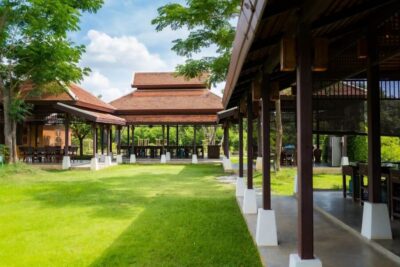
Authentic Cooking Class with Market & Farm Visit
Read our review →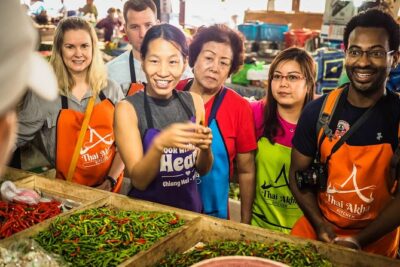
Full Day Thai Cooking at Farm (Chiang Mai)
Read our review →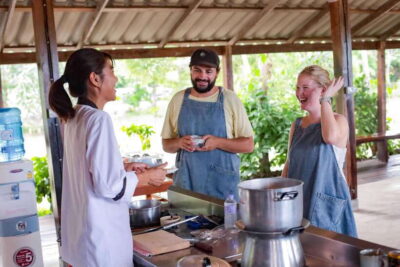
Browse the lists this tour appears in