
Reviewed · CHIANG MAI
Chiang Mai : Traditional Lanna Bamboo Fan Weaving
Bamboo fans in Chiang Mai feel instantly personal. This traditional Lanna craft teaches you how bamboo is harvested, stripped, split, and woven into a working hand fan with Northern Thai design patterns. I like that the pace stays relaxed, and the instructors are ready to help when your hands get stuck.
I also like the cultural side that shows up in the details. Each fan reflects Lanna-inspired motifs, and the process makes you pay attention to how precision turns into something you can actually use in real life. One thing to consider is that this is a hands-on workshop, so if you expect lots of sightseeing, this is more about craft than temples.
In This Review
- Key things to know
- A Calm Workshop Where Lanna Fans Become Your Own
- Where the Class Starts at HangTuengFarm’s Yellow Door
- Preparing Bamboo: The Quiet Work Behind a Flexible Fan
- Weaving Lanna-Inspired Patterns With Symbolic Motifs
- Shaping the Fan and Adding Finishing Touches
- Price and Value: What $22 Really Buys You
- Private Group, English and Thai Guidance, and an Included Audio Guide
- What To Do Before You Go (And What To Leave Alone)
- Who This Fan Weaving Class Suits Best
- Should You Book This Chiang Mai Bamboo Fan Weaving Class?
- FAQ
- How long is the Chiang Mai traditional Lanna bamboo fan weaving experience?
- Where is the meeting point?
- How much does it cost?
- What languages are used during the class?
- Is this activity a private group?
- Do I get to make the fan myself?
- Are embellishments available?
- Is there free cancellation?
Key things to know
- You’re learning the full workflow, from prepared bamboo strips to a shaped fan you can use right away.
- Lanna-inspired patterns and symbolic motifs show up in the geometry as you weave.
- Optional embellishments let you customize the fan with extra color or traditional-style adornment.
- A calm workshop vibe comes from small, guided attention rather than a rush-through demonstration.
- Private group setup keeps it flexible, especially if you want more time with questions.
A Calm Workshop Where Lanna Fans Become Your Own
If you want a break from the usual Chiang Mai circuit, this weaving session is a great choice. You trade crowded streets for a quieter setting where the work is tactile and the learning is step-by-step. The result is satisfying too, because your fan is something you finish and take home.
What makes it genuinely appealing is the combination of craft and practicality. This is not just a craft lesson where you watch and clap. You’ll work through the process that turns bamboo into a flexible, functional fan, so you understand why it looks the way it does.
The atmosphere matters here, and the experience is described as calm and serene. That kind of setting helps you focus, and it also makes the class feel less like a checklist and more like a gentle skill you can build.
Where the Class Starts at HangTuengFarm’s Yellow Door
Meeting point details are straightforward, which I appreciate when you’re in a new place. You meet in front of the yellow door of HangTuengFarm. That simple landmark approach is useful, especially if you’re arriving on your own or with limited time.
Because it’s a short activity, plan to arrive a few minutes early so you don’t feel rushed getting settled. Once you’re in the workshop space, the session moves at a steady pace for a 2-hour class window.
Also note that the instructors work in English and Thai. If you speak either language, you should feel supported right away, and you won’t have to guess what comes next.
Elephants aren't the only reason to stay longer:
- Half-Day Thai Cooking Class at Organic Farm in Chiang Mai★ 5.0 · 19,087 reviews
- Chiang Mai: Elephant Sanctuary, Waterfall & Bamboo Rafting★ 4.9 · 9,160 reviews
- Chiang Mai: Doi Inthanon National Park Eco-Friendly Tour★ 4.6 · 6,667 reviews
- Chiang Mai: Elephant Sanctuary & Waterfall Group Tour★ 4.9 · 5,780 reviews
Preparing Bamboo: The Quiet Work Behind a Flexible Fan
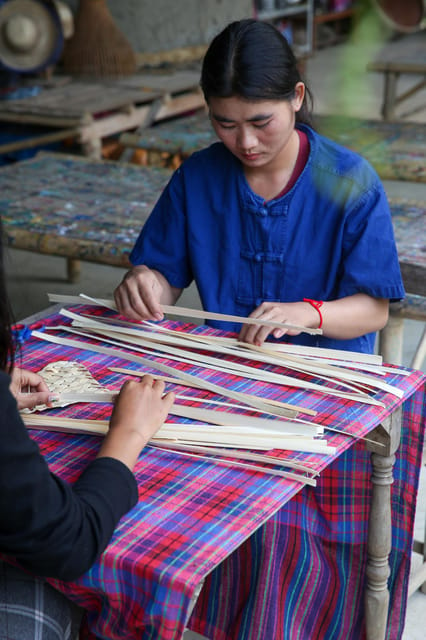
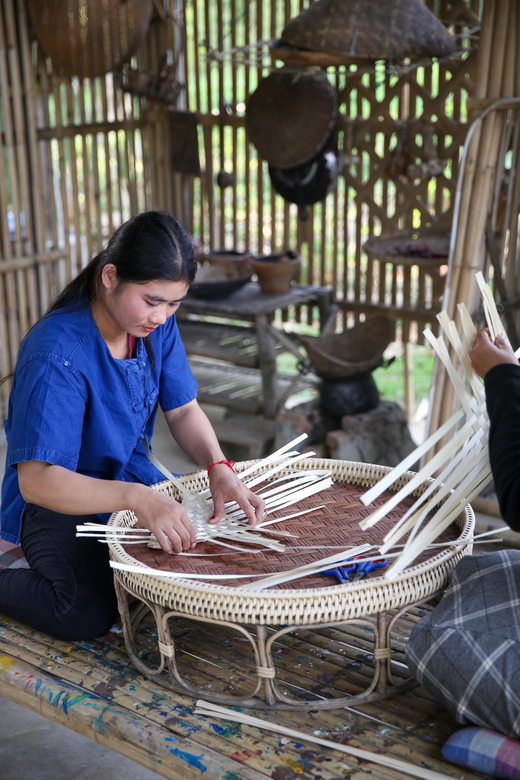
The heart of this activity is the bamboo preparation process. You learn that it starts with harvesting bamboo, then comes stripping and splitting it into strips that are flexible enough to weave. That step matters, because the quality of the strips affects everything downstream.
You’ll hear how artisans create usable pieces by preparing the bamboo carefully, not by forcing it into shape later. In other words, good fans come from good prep. That’s a helpful lesson even if you never make another fan at home.
This is one of the most satisfying parts for me, because it’s where the craft turns from materials into form. You can see the difference between raw material and ready-to-weave strips, and it helps you understand why the finished fan feels sturdy but light.
Weaving Lanna-Inspired Patterns With Symbolic Motifs
Once you start weaving, the experience becomes more than just technique. The fan designs are inspired by Lanna culture, with geometric precision and symbolic motifs woven into the pattern. You’re not memorizing someone else’s work. You’re building a structure, and you can watch the design take shape as you go.
I like this part because it gives you a sense of meaning without requiring you to be an expert. Even if you only catch fragments of the pattern logic, you still learn to respect the method. The weave is regular for a reason, and that regularity is what makes the fan look crisp when it’s finished.
If you’ve ever wondered why handcrafted objects look “alive,” this is where the answer shows up. The small choices you make while weaving help create the look, and you can actually feel the structure forming under your hands.
Add a day trip while you're up north:
- Chiang Mai: Chiang Rai Temples, Karen Tribe and Hot Springs
★ 4.7 · 5,401 reviews - Chiang Mai: Cooking Class, Market & Thai Herbs Garden Tour
★ 4.9 · 4,824 reviews - Chiang Mai: Authentic Cooking Class with Market & Farm Visit
★ 4.9 · 4,546 reviews
Shaping the Fan and Adding Finishing Touches
After the woven section comes the shaping and finishing stage. You apply the final form to turn the woven work into a real hand fan, not just a flat weave. This is where attention to detail pays off, because the final shape affects how the fan folds and feels in use.
Finishing is also where pride kicks in. You’re not waiting for someone else to do the last step, and that helps the finished piece feel like yours. Even if you’re not a crafty person, this is a good workshop format, because each stage has a clear purpose.
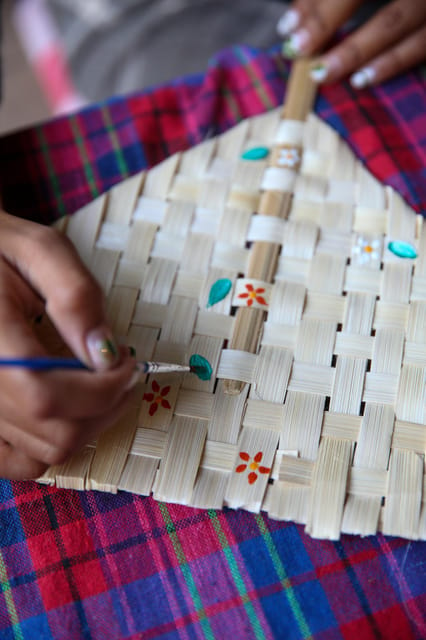
And then there’s the optional customization. You can add embellishments, such as vibrant threads or traditional-style adornment. That’s a fun way to personalize the fan while still staying within the craft tradition.
Price and Value: What $22 Really Buys You
At $22 per person for a 2-hour experience, the value is strong if you care about doing something with your hands. You’re paying for more than a souvenir. You’re paying for instruction in a craft process and the materials that go into making a finished fan.
A big part of the value is that you keep the result. Many short activities are “watch and move on.” This one is about taking ownership of a functional art object, and that changes how the time feels.
The private group format also adds value, because it tends to reduce the pressure of a large class pace. Your questions are more likely to get answered in the moment, and you can spend a little longer on the steps that trip you up.
If you’re on a strict schedule, the 2-hour duration is another plus. You get a meaningful cultural activity without losing most of a day.
Private Group, English and Thai Guidance, and an Included Audio Guide
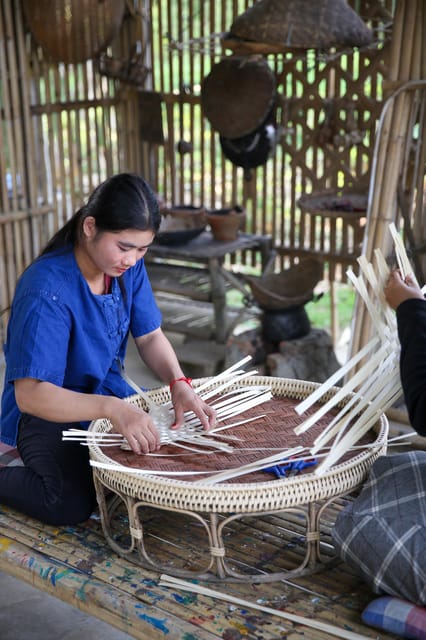
This activity is run as a private group, which I find helps with focus. Instead of being squeezed into a shared flow, you get a calmer learning space, and that supports the hands-on nature of weaving.
Instruction is available in English and Thai. The inclusion of an audio guide in English and Thai is also a practical bonus, because it supports your understanding while you’re working through steps. It’s easier to remember what you’re doing when you can reference information in the language you prefer.
One small but important detail for expectations: a private group doesn’t mean the session turns into a lecture. It still centers on your hands-on weaving, with the teaching style adjusting to keep you moving confidently.
What To Do Before You Go (And What To Leave Alone)
This is a short craft workshop, so pack your expectations accordingly. Wear something comfortable, because you’ll be working with materials that are handled carefully, and you’ll want to move your hands freely.
You also might want to come in with a mindset of learning, not perfecting. The whole point is that you’re doing the weaving process step by step, and the finished fan is the proof of effort, not a test.
If you like quiet cultural experiences, you’ll probably enjoy this more than a performance or a museum stop. The atmosphere described as calm and serene is exactly what makes it work. You get time to concentrate.
Who This Fan Weaving Class Suits Best
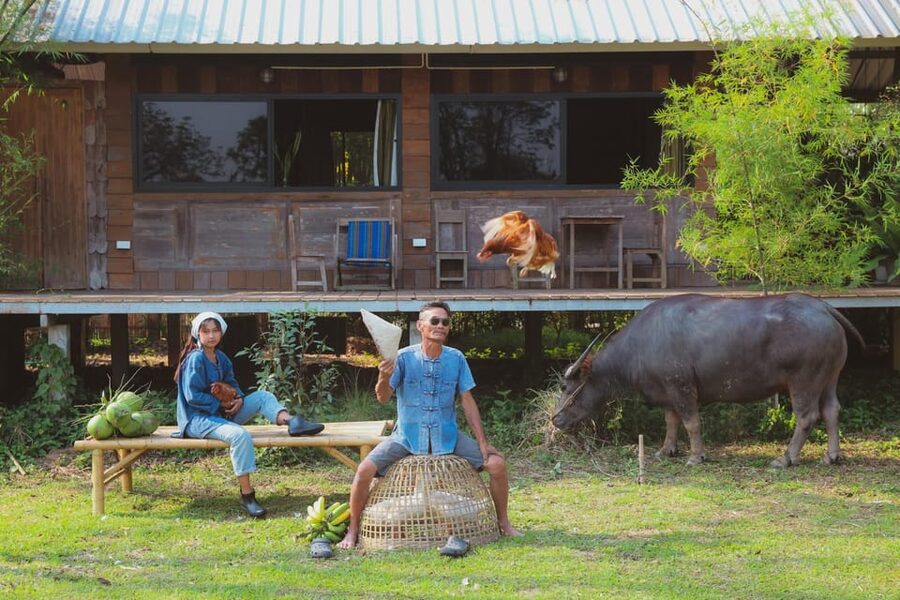
This is a great match if you want a hands-on Chiang Mai activity that feels authentic and grounded. If you enjoy crafts, traditional techniques, or simply like making something you can actually use, this class fits well.
It’s also a good choice if you’re traveling with someone who doesn’t want intense touring. The workshop format is approachable, and the private group setting helps keep the experience comfortable.
On the other hand, if your trip is built around big scenic stops and long guided sightseeing, you may view this as a break rather than a main event. For the right traveler, though, it becomes a highlight because it gives you a tangible memory.
Should You Book This Chiang Mai Bamboo Fan Weaving Class?
If you want a calm, hands-on cultural workshop, I’d book it. The craft itself is the point, and you get both the learning and a finished fan, with optional embellishments if you want extra flair.
I’d especially recommend it if you like practical souvenirs. This is not just a decorative item you hang up. It’s a functional fan shaped by the technique you learn during the class.
Only skip it if you’re expecting a heavy sightseeing day or you dislike activities that require patience with your hands. Otherwise, the combination of Lanna-inspired designs, helpful instruction in English and Thai, and a relaxed atmosphere makes it a very satisfying use of 2 hours.
FAQ
How long is the Chiang Mai traditional Lanna bamboo fan weaving experience?
The experience lasts 2 hours.
Where is the meeting point?
Meet in front of the yellow door of HangTuengFarm.
How much does it cost?
It costs $22 per person.
What languages are used during the class?
The instructor uses English and Thai, and an audio guide is also provided in English and Thai.
Is this activity a private group?
Yes, it is a private group.
Do I get to make the fan myself?
Yes, the activity involves learning the bamboo weaving process and making the Lanna bamboo fan that you keep.
Are embellishments available?
Optional embellishments are available, such as vibrant threads or traditional adornment.
Is there free cancellation?
Yes, you can cancel up to 24 hours in advance for a full refund.
Fresh listings for Chiang Mai
- Skydive Chiang Mai★ 5.0 · 1 review
- One day hiking tour in Chaing Mai★ 5.0 · 1 review
- One Day Non Tourist Trek 100% Guarantee★ 5.0 · 1 review
- Chiang Mai to Chiang Rai (Private 3 day Tour)★ 5.0 · 1 review
- San Kamphaeng Hot Springs and Thai Handicraft Tour from Chiang Mai★ 5.0 · 1 review
- Half day Doi Suthep Temple & Mae Ping River cruise (Private)★ 5.0 · 1 review