
Reviewed · CHIANG MAI
Chiang Mai : Traditional Lanna Bamboo Fan Weaving
Bamboo work has a calming effect fast. In a local workshop near Wat Gate, you learn Lanna bamboo fan weaving hands-on, building a wave-like fan with patient help and clear steps. I especially liked how practical it felt, you’re not just watching, you’re making something real.
One thing to plan around: food and pick-up are not included. If you arrive hungry or you need transportation, you’ll want to handle that before you go.
In This Review
- Key things I’d focus on before you book
- A quiet workshop near Wat Gate, led by Baannoi Nornmuan
- Bamboo fan weaving 101: what Lanna craft means in real life
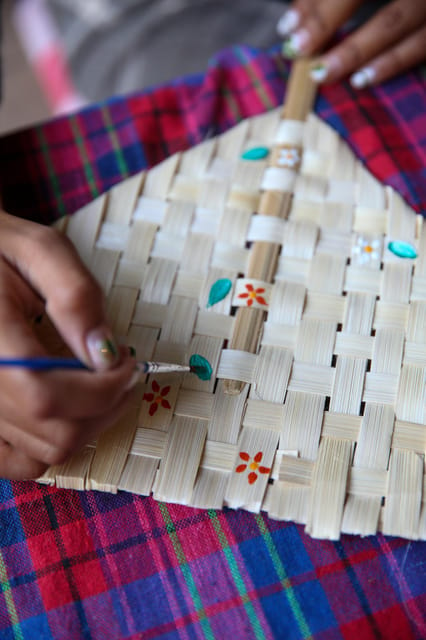
- Building your wave-like fan: the hands-on part that’s actually satisfying
- Cultural insights at a local home: where the conversation matters
- What’s included, and the butterfly pea drink you’ll remember
- Price and value: is $22 worth 90 minutes of bamboo work?
- Who this suits best in Chiang Mai, and who should skip it
- Should you book the Chiang Mai traditional Lanna bamboo fan workshop?
- FAQ
- Where does the bamboo fan weaving workshop take place?
- How long is the workshop?
- How much does it cost?
- What is included in the workshop?
- Is food included?
- Do I need to bring materials or tools?
- What languages do the instructors speak?
- Is transportation included?
- Can I cancel and get a full refund?
Key things I’d focus on before you book
- A real home-style workshop near Chiang Mai’s Wat Gate area, not a tourist factory.
- Hands-on weaving with an English and Thai instructor while you build your own fan.
- A take-home bamboo creation that actually looks like the wave-motion design.
- Butterfly pea with lime and honey included, a nice pause during the session.
- Great for families and mixed ages, with attention for everyone in the group.
- Private group format, so questions and pacing feel more comfortable.
A quiet workshop near Wat Gate, led by Baannoi Nornmuan
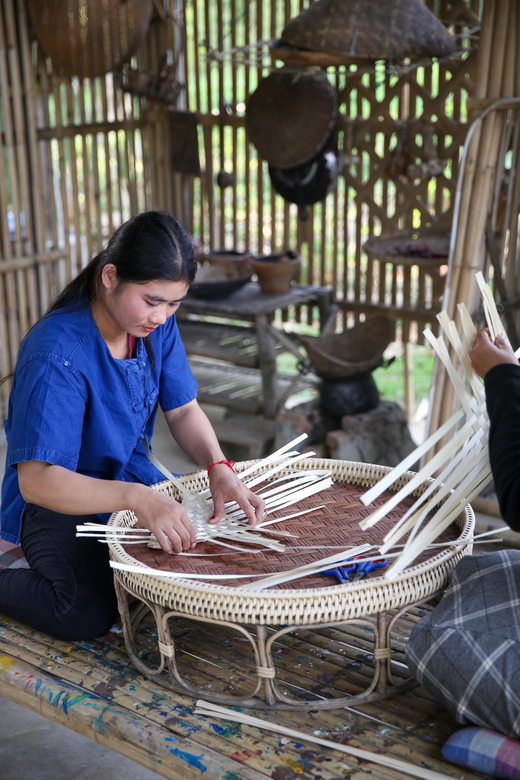
Chiang Mai can feel like nonstop movement, temples, markets, rides between neighborhoods. This workshop gives you the opposite rhythm. You settle into a calm, family-style setting and spend about 90 minutes turning bamboo strips into a fan you can use later, or keep as a souvenir that does not look mass-produced.
The session is hosted by Baannoi Nornmuan at 7/6 Rat-U-Thit rd. Soi 4, in the Wat Gate area (A. Muang, Chiang Mai). That address matters because it signals what kind of experience this is. You’re not trekking across the city for a “craft show.” You’re going to a local part of town where weaving is simply a skill people practice.
Because it’s a private group, the atmosphere tends to be relaxed. I like that. In a craft setting, time and attention make a difference, and that matches what you want when your hands are learning something new.
Practical note: you’ll likely need to get yourself there. There’s no pick-up included, so plan for local transport or a short ride, and give yourself a little buffer if you are juggling other Chiang Mai plans.
Bamboo fan weaving 101: what Lanna craft means in real life
Before anyone hands you bamboo, you start with context. You get an intro to bamboo weaving and why it matters in the Lanna world. The workshop doesn’t try to lecture for an hour. It explains significance in plain terms, then connects that meaning directly to the object you’ll build.
Here’s what I find useful about this approach: you understand the tool before you use the tool. Bamboo weaving is not random. The material is flexible but not forgiving. The fan structure is designed to create that gentle wave-like motion. When you grasp that, your weaving stops being a guessing game.
You’ll learn about:
- How bamboo weaving fits local culture, not as a performance, but as a functional craft.
- How fan construction works, so you know what you’re aiming for instead of just repeating steps.
- Why technique matters, especially for the wave effect that makes the finished fan look lively.
And yes, bamboo fan weaving is also a practical skill in a hot climate. Even if you do not plan to fan yourself on arrival home, you’ll appreciate how a simple object can be both art and utility.
At some point, you’ll be guided to roll up your sleeves and start. That’s where the real value kicks in. This is the difference between buying a fan and learning how it’s made.
Elephants aren't the only reason to stay longer:
- Half-Day Thai Cooking Class at Organic Farm in Chiang Mai★ 5.0 · 19,087 reviews
- Chiang Mai: Elephant Sanctuary, Waterfall & Bamboo Rafting★ 4.9 · 9,160 reviews
- Chiang Mai: Doi Inthanon National Park Eco-Friendly Tour★ 4.6 · 6,667 reviews
- Chiang Mai: Elephant Sanctuary & Waterfall Group Tour★ 4.9 · 5,780 reviews
Building your wave-like fan: the hands-on part that’s actually satisfying
The core of the experience is your bamboo fan workshop. The instructor walks you through the steps to create a fan with a wave-like motion. That design detail sounds small until you’re making it. Then you realize it’s the whole point.
The process typically moves like this:
- You get acquainted with the bamboo materials.
- You learn the weaving technique used to form the fan structure.
- You practice the movements that create the wave-like rhythm.
- You continue until your fan takes shape.
- You finish and take your creation home.
The best part is that you are never fully on your own. The instructor is there, and the session runs long enough for you to make progress rather than “just start.” For me, that’s the difference between a 30-minute craft and a 90-minute one. You have time to correct mistakes and actually see your fan improve as you go.
A couple of tips from the practical side:
- Wear something you can move in. Bamboo work can be a little fiddly, and you may lean forward for close work.
- Expect to use your hands more than you think. Even if you are not crafty, the steps are guided and you’ll get it.
- Ask questions early. If you wait until the wave part, you may feel rushed later.
If you’re traveling with kids, this is one of the better types of activities. It keeps hands busy and gives a clear end product. And if you have grandparents or a group with different comfort levels, the private-group feel helps because the instructor can adjust pacing.
Cultural insights at a local home: where the conversation matters
One reason I like this kind of workshop is that it tends to feel human, not scripted. You’re learning with a local host, Baannoi Nornmuan, and with an instructor who speaks both English and Thai. Even if language is not your strongest skill, the interaction still works because weaving is visual and repetitive.
The location also helps. This is in Chiang Mai’s Wat Gate area, in a more residential neighborhood. That means you get a glimpse of everyday life rather than just a tourist district route. The “different part of the city” effect is real. You spend your time where local routines happen, and that alone can make the session feel more grounded.
The workshop also includes cultural insights tied to the craft. You’ll hear about the history and significance of bamboo fan weaving, and how the technique reflects regional identity. Since the teaching is connected to what you are building, the cultural context does not feel like random trivia.
It’s basically craft education with a calm pace. That’s a nice change from fast-paced temple hopping.
Add a day trip while you're up north:
- Chiang Mai: Chiang Rai Temples, Karen Tribe and Hot Springs
★ 4.7 · 5,401 reviews - Chiang Mai: Cooking Class, Market & Thai Herbs Garden Tour
★ 4.9 · 4,824 reviews - Chiang Mai: Authentic Cooking Class with Market & Farm Visit
★ 4.9 · 4,546 reviews
What’s included, and the butterfly pea drink you’ll remember
You’re paying for a specific outcome: you leave with a bamboo fan you made. That means the materials are included, and you are not expected to bring your own bamboo or tools.
Included items:
- Materials: bamboo
- Drink: butterfly pea with lime and honey
- Workshop time: about 90 minutes
That butterfly pea drink is not just a free beverage. It’s a “pause.” When you’re focused on fine handwork, a warm or cooling drink helps reset your brain without breaking the flow of the workshop.
What’s not included:
- Food
- Pick-up car
So if you are doing this after a morning market or before a night out, eat something first. Even a light snack can prevent the small distraction of hunger while you concentrate on weaving.
The fact that a drink is included is also a nice value signal. It means the workshop is designed as an experience, not just a material handoff.
Price and value: is $22 worth 90 minutes of bamboo work?
At $22 per person for about 90 minutes, this is priced like a serious craft workshop rather than a quick novelty activity. The value comes from a few concrete things.
You get:
- a guided lesson in techniques for constructing a fan with wave motion
- all bamboo materials
- a take-home creation
- an included drink
In Chiang Mai, you’ll find plenty of tours. Many of them give you a story, a photo, maybe a meal. This one gives you something you can hold in your hand and show later. That’s a different kind of travel souvenir, and it tends to feel more personal.
The private-group format is also a value lever. If you prefer not to learn in a big crowd, this type of small setting makes the whole thing more comfortable. It’s easier to ask for help when your fan needs one extra correction.
The main “cost” to consider is your energy. Bamboo weaving asks for patience. If you want zero effort and maximum sightseeing, you may feel like the hour passes too slowly. If you like hands-on activities, you’ll likely think the time is just right.
Who this suits best in Chiang Mai, and who should skip it
This workshop is a strong fit if you:
- enjoy making things with your hands
- want a calm break from temple and market crowds
- travel as a family, including mixed ages
- like local, home-based experiences with friendly instruction
- want an authentic-looking souvenir you made yourself
It may not be ideal if you:
- need a pick-up and you do not want to plan transport
- expect food to be included
- dislike hands-on activities or find craftwork stressful
Also, if you’re the kind of traveler who only wants “big sights,” this is probably not your main event. Think of it as a meaningful pause. A mini reset for your trip.
Should you book the Chiang Mai traditional Lanna bamboo fan workshop?
I’d book it if you want one solid skill, a tangible souvenir, and a friendly local setting in Chiang Mai. The combination of English or Thai instruction, bamboo materials provided, and the included butterfly pea drink makes this feel complete, not improvised.
I’d skip it if you’re pressed for time, need transportation handled for you, or you know you will hate the hands-on part. You are not watching a show. You are doing the weaving.
If you fall in the middle, book it anyway. The 90-minute length is long enough to learn something real, and the private-group vibe keeps it from feeling chaotic.
FAQ
Where does the bamboo fan weaving workshop take place?
The workshop location is at 7/6 Rat-U-Thit rd. Soi 4, T. Wat gate, A. Muang Chiang Mai 50000.
How long is the workshop?
The duration is about 90 minutes, listed as roughly 1 to 1.30 hours.
How much does it cost?
The price is $22 per person.
What is included in the workshop?
It includes bamboo materials, a drink (butterfly pea with lime and honey), and the weaving workshop itself.
Is food included?
No, food is not included.
Do I need to bring materials or tools?
No, bamboo materials are included in the workshop.
What languages do the instructors speak?
The instructor speaks English and Thai.
Is transportation included?
No pick-up car is included.
Can I cancel and get a full refund?
Yes, free cancellation is available up to 24 hours in advance for a full refund.
Fresh listings for Chiang Mai
- Skydive Chiang Mai★ 5.0 · 1 review
- One day hiking tour in Chaing Mai★ 5.0 · 1 review
- One Day Non Tourist Trek 100% Guarantee★ 5.0 · 1 review
- Chiang Mai to Chiang Rai (Private 3 day Tour)★ 5.0 · 1 review
- San Kamphaeng Hot Springs and Thai Handicraft Tour from Chiang Mai★ 5.0 · 1 review
- Half day Doi Suthep Temple & Mae Ping River cruise (Private)★ 5.0 · 1 review