
Reviewed · CITY TOURS
Guided Chiang Mai City Night Tour by EV Tram
Chiang Mai feels different after dark. This EV tram tour is a relaxed way to get your bearings at night, with an English-speaking guide and stops that explain how Lanna culture shapes everyday life. I especially like the quiet, low-hassle electric tram and the way the route mixes temples with real neighborhood areas and markets. One heads-up: it is a short, structured evening, so if you want long temple wandering or lots of free time to roam on your own, this may feel a bit tight.
You start near the Three Kings Monument and then move through iconic temples, city-gate ruins, and food markets, all at an unhurried pace. The payoff is practical: you learn what you are seeing, not just where it is, and you still get to eat and take photos in the lively night atmosphere.
In This Review
- Key highlights at a glance
- Why an electric tram makes Chiang Mai night feel calmer
- The 6:00 pm start and what two hours really means
- Stop 1: Three Kings Monument and the city pillar story
- Stop 2 and 3: Wat Chiang Man and Wat Lok Molee
- Chang Puek Gate at night: street food dinner pressure, in a good way
- Stop 4: Wat Pa Pao and Wat Nong Kham, for the “Tai Yai” and Burmese-Shan styles
- Warorot Market and Tha Phae Gate: where the city does daily life and events
- Chiang Mai Gate Night Market, plus Wat Chedi Luang’s big stupa moment
- Price and value: what $27.43 buys you for an evening loop
- Who should book this EV tram night tour
- Tips to make the most of your evening
- Should you book this EV tram night tour?
- FAQ
- What time does the Chiang Mai City Night Tour by EV Tram start?
- How long is the tour?
- Where is the meeting point?
- Do I need to buy admission tickets?
- Is an English-speaking guide included?
- Is the EV tram included in the experience?
- What food and drinks are included?
- Is pickup and drop-off available?
- FAQ
- How many people are in the group?
- What is the dress code?
- Is cancellation free?
- What happens if I cancel less than 24 hours before?
- Are children allowed?
- Is a minimum number of adults required to run the tour?
- Does the tour include travel insurance?
- Do I have to return to the meeting point?
Key highlights at a glance
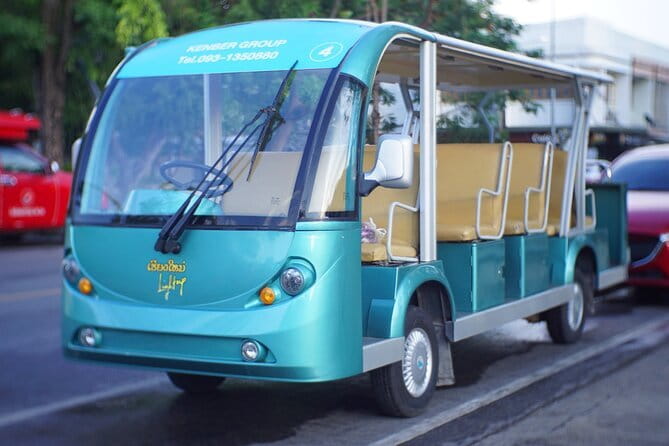
- EV tram transport: quieter ride and easier movement between evening stops
- Temples with clear context: Lanna-style details explained in plain language
- Night markets for dinner energy: Chang Puek Gate and Chiang Mai Gate Night Market
- Market time that feels local: Warorot Market plus gate-area street food
- Small group size: maximum 12 travelers, so you get better attention
- Thoughtful inclusions: snacks, drinks during foodie time, bottled water, and admissions listed
Why an electric tram makes Chiang Mai night feel calmer
Night touring in Chiang Mai can go one of two ways. You either sprint from one highlight to the next, or you slow down and start understanding how the city actually works after the sun drops.
This EV tram approach leans toward the second option. The tram helps cut noise and stress, and it also means you spend more time listening and looking, less time working out transport. It is also a good fit for an evening route where the light changes fast, and the air can feel cooler and steadier than during the day.
The guide sets the tone too. Instead of lecturing, the explanations aim to help you connect dots: why temples look the way they do, what certain symbols mean, and how beliefs show up in everyday places like gates, markets, and neighborhood stops. I like that it is orientation-focused, so you leave with a mental map for your next days.
One more benefit I really appreciate: the pacing feels built for photos. Several key sights look completely different at night, and you get enough time at each place to take in details without feeling rushed.
The 6:00 pm start and what two hours really means
The tour starts at 6:00 pm at Three Kings Monument. It ends back at the meeting point, so you do not have to figure out night transit on your own. Expect around 2 hours for the full loop, and in practice it can feel quick because the stops are short and varied.
This is also a small group experience, with a maximum of 12 travelers. That matters more than you might think. In a big group, you spend time waiting and re-grouping. Here, you can actually hear the guide and keep up at the pace of the walking and tram boarding.
You will do some walking. Several stops include brief foot movement, and market areas naturally have crowds and foot traffic. If you are comfortable with short walks and standing, you should be fine.
Dress code is listed as smart casual. I would treat that as practical. You want clothes that look neat enough for temple areas, but you also want something you can move in for night markets and gate-area streets.
A few more ways to fill a day here
- Chiang Mai: Doi Suthep and Wat Umong Enchanting Evening Tour★ 4.6 · 1,811 reviews
- Small-Group Chiang Mai Evening Street Food Tour★ 4.5 · 826 reviews
- Chiang Mai: Evening Cooking Class and Local Market Visit★ 4.9 · 648 reviews
- Chiang Mai: Evening Local Street Food Market Tour★ 4.8 · 604 reviews
Stop 1: Three Kings Monument and the city pillar story
You begin at Three Kings Monument, where the guide gives you a quick origin anchor for Chiang Mai. This is not just a statue stop. It is a fast way to understand why Chiang Mai exists as a city with distinct identity in northern Thailand.
In the area around here, the city pillar called Inthakin is linked to 1296, credited to King Mangrai. The detail matters because the city pillar comes up again later at major temple sites. So even though this is the first stop and you only get a brief moment on foot, it sets up what you will notice later when you see certain temple structures.
Then you hop on the tram to start moving through the evening. That transition is useful. It prevents the start from feeling chaotic, and it gets you in the mindset of a guided loop rather than a scavenger hunt.
Stop 2 and 3: Wat Chiang Man and Wat Lok Molee
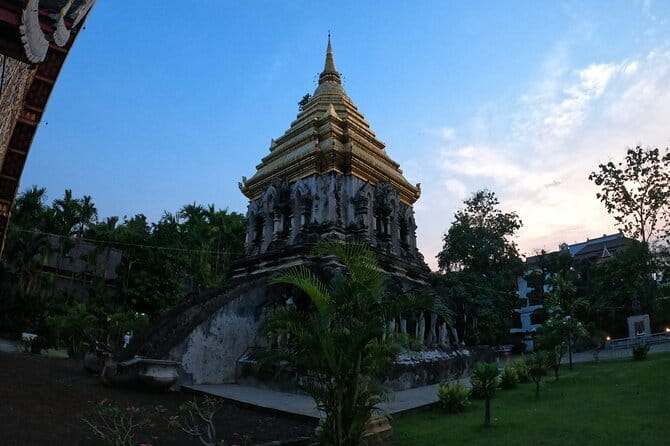
Next up is Wat Chiang Man, described as the oldest temple in the Lanna-style chedi tradition. The architecture includes rows of elephant-shaped buttresses supporting the chedi. Even if you are not an architecture person, those elephant forms are eye-catching, and having them pointed out at night makes them easier to spot.
What I like about this stop is the way it teaches you to look. When a guide points to specific features, you start seeing patterns. Instead of just thinking, That is a temple, you understand it is a Lanna-style chedi with a specific kind of support and design logic.
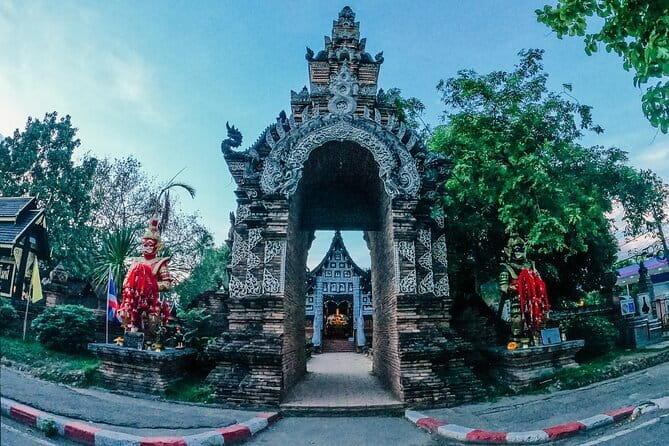
Then the tour goes to Wat Lok Molee, known for a wooden temple complex and terracotta sculptures. It is also described as one of the most attractive wát outside the city walls, and it is believed to have been founded in the 14th century for monks from Burma. That Burma connection is a nice reminder that Chiang Mai has always been more than a closed local story. Northern Thailand has long had cultural movement across regions.
A small caution, though. These early temple stops are often the easiest moments for quiet viewing. As you get later into the route, the markets and gate areas bring more noise and crowd energy. If you love calm photos, soak up the temple time here.
Add a day trip while you're up north:
- Half-Day Thai Cooking Class at Organic Farm in Chiang Mai
★ 5.0 · 19,087 reviews - Chiang Mai: Elephant Sanctuary, Waterfall & Bamboo Rafting
★ 4.9 · 9,160 reviews - Chiang Mai: Doi Inthanon National Park Eco-Friendly Tour
★ 4.6 · 6,667 reviews
Chang Puek Gate at night: street food dinner pressure, in a good way
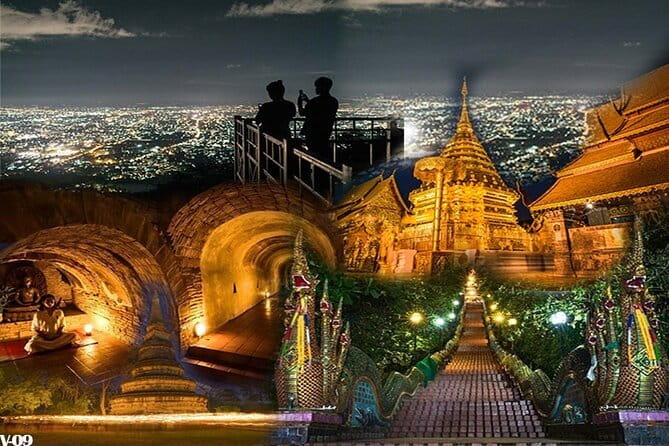
After the temple phase, you reach Chang Puek Gate, the northern gate of the old city. The route description notes ruins of the city wall here, and it is also where the night market runs strong.
This is a key shift in the experience. The tour keeps you moving, but this stop is about atmosphere and dinner logic. You get a place where street food is front and center, and you can use the guide’s context to pick what fits your tastes.
The practical value here is huge. Night markets can be overwhelming if you do not know where to start. With a guided orientation, you can eat without playing guesswork roulette.
If you are not into crowds, you will still be surrounded by people at a gate night market. But because the tour is structured, you will not feel like you have to wander alone and hope you are going the right direction.
Stop 4: Wat Pa Pao and Wat Nong Kham, for the “Tai Yai” and Burmese-Shan styles
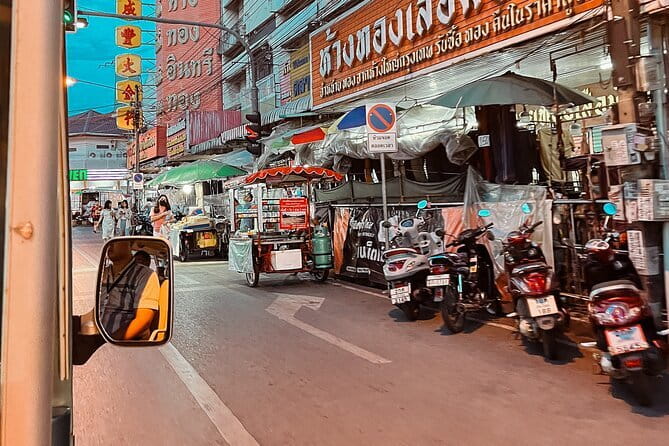
Temples can blend together if you only see the exterior silhouettes. This part of the route tries to avoid that by pointing out identity differences.
Wat Pa Pao is described as the first temple of the Ngiaw or Tai Yai in Chiang Mai. That specific identity label helps you understand why temple styles can vary from place to place. It is not random decoration. It reflects who a community is and where its traditions came from.
Then you go to Wat Nong Kham, described as special and noted for Burmese-Shan temple styles. In other words, the guide is showing you that Chiang Mai’s religious architecture is not one single look. It is a mix shaped by routes of people, ideas, and historical ties.
Here is where I think this tour scores in a way that matters for real travel. Instead of calling every temple simply beautiful, the stops are giving you categories: Lanna-style chedi, Tai Yai association, Burmese-Shan influence. Once you have those labels in your head, you can compare what you see on your own later.
Warorot Market and Tha Phae Gate: where the city does daily life and events
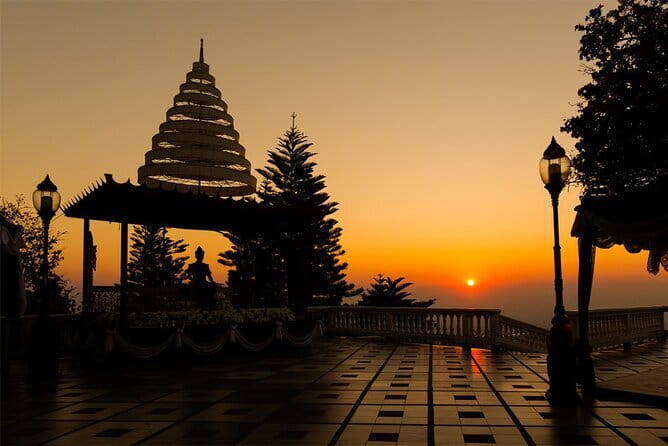
Then the tour turns toward two major “living city” areas: Warorot Market and Tha Phae Gate.
Warorot is described as the biggest local fresh market in Chiang Mai. The point is not only browsing. It is seeing what locals buy and the kind of products that show up in daily routines. If you want a market experience that feels like more than souvenirs, this stop is useful.
After Warorot, you reach Tha Phae Gate, described as the main center of public city activities and festivals. That means you get a sense of where celebrations and communal gatherings tend to happen. Even if you are not there during a festival date, the location still tells you a lot about how the city organizes itself.
This is also a good moment to remind yourself what the guide is doing overall. You are not just collecting landmarks. You are learning city structure: gates, temple nodes, and market centers.
Chiang Mai Gate Night Market, plus Wat Chedi Luang’s big stupa moment
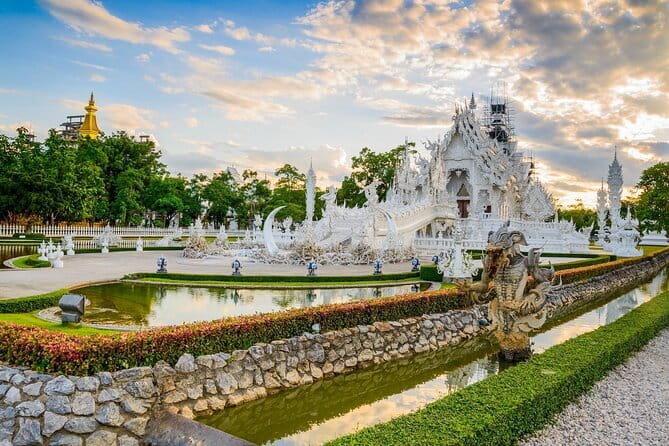
Next is Chiang Mai Gate Night Market, with a focus on street food and a local-foodie feel. The stop includes admission per the tour details, so you can treat it as a planned part of the evening, not a random detour. It is also your later chance to eat after you have already built up context from the earlier market and gate area.
From a practical standpoint, I like that you do not jump straight to street food with zero orientation. You learn what neighborhoods and gates are about, then you use that understanding while picking dinner options.
Then you visit Wat Chedi Luang Varavihara, described as the temple of the biggest stupa. This is one of the architecture-heavy stops in the evening, and it includes admission. The description also notes that the city pillar is housed here, along with the Tripiṭaka, the Buddhist scriptures. That is a lot of significance in one place, and it explains why the stupa and the surrounding features hold special meaning.
If you care about spiritual history, this is the kind of stop where you can feel how deep certain symbols go. Even if you are not religious, the guide’s context helps you understand why this site matters to locals.
Finally, Wat Phra Singh is part of the route too, noted as one of the most beautiful northern-style architecture scenes. You get a chapel reflected in northern style details, which is a good way to end the evening with something visually distinctive.
Price and value: what $27.43 buys you for an evening loop
At $27.43 per person, this tour sits in the affordable-to-mid range for guided night experiences in Chiang Mai. The real value comes from what is included, not the sticker price.
You get:
- EV tram during the trip
- a professional English-speaking guide
- all admission fees as mentioned
- some snack and drinks during foodie time
- bottled water
- travel accident insurance
You also get a structured path through major sites and two market moments. That means less time figuring out transport, less time researching where to eat, and more time actually understanding what you are seeing.
Not everything is covered. Extra food and drinks are not included, and alcohol is excluded. Also, pickup and drop-off service is optional at THB 500 for a location within 5 km from the city center. Extra pick up/drop off within 5 km is listed as THB 500 per way per group. So if you are staying in the core area, you might skip pickup and save money.
Is it expensive compared to DIY? Sure, you could spend less if you plan your own route. But if you factor in tram use, guide interpretation, and admissions, it becomes a smart value for an evening when you want to move efficiently and still feel grounded.
Who should book this EV tram night tour
This tour is a good match if you want:
- a first night in Chiang Mai that gives you orientation fast
- an evening plan that mixes temples with food markets
- a calm, responsible-feeling approach rather than a sprint between highlights
- a guide-led explanation of cultural and historical connections
It is also a strong choice if you like short stops with clear takeaways. Each temple visit is timed, so you are not stuck in long ticket lines or lost in open-ended wandering.
Who might skip it? If you hate crowds, especially around market gate areas, this route may feel too busy for your taste. If you want long sits inside temples or a slow personal pace for photos, you may want a more flexible option.
Tips to make the most of your evening
Start by dressing smart casual and planning for night walking. You will see temples and market streets, so choose clothes you can move in without feeling sloppy.
Bring your phone camera habits, but do not treat this like a pure photo mission. The biggest value is the context the guide provides. If you listen for the architectural or historical details, you get a lot more out of the same sights.
For food, take the snack and drinks included during the foodie portion as your warm-up, then decide what you want next at the night markets. Extra meals are on you, so it helps to have a simple plan like, try one hot dish plus one sweet or fruit option.
Finally, be realistic about pace. The tour runs about two hours, and the stop times are tight. Think of it as a guided orientation loop. If you want to go back later to one temple or one market, this tour will actually help you pick the right places.
Should you book this EV tram night tour?
If you want an easy first evening in Chiang Mai that pairs temples with markets and gives you real orientation, I would book it. The EV tram reduces the friction of night logistics, the group is capped at 12, and the inclusions are practical: guide, admissions, water, and snacks.
I would only hesitate if you need maximum free time, or if you dislike night markets and crowds. But for most people who want a smart overview without rushing, this is a solid, value-driven way to see Chiang Mai after dark.
FAQ
What time does the Chiang Mai City Night Tour by EV Tram start?
The tour starts at 6:00 pm.
How long is the tour?
The duration is about 2 hours.
Where is the meeting point?
You meet at Three Kings Monument, Prapokklao Road, Si Phum, Mueang Chiang Mai, Chiang Mai 50200, Thailand.
Do I need to buy admission tickets?
Admission fees are included for the stops where the tour lists admissions, and bottled water and the EV tram are included as well.
Is an English-speaking guide included?
Yes. The tour includes a professional English speaking guide.
Is the EV tram included in the experience?
Yes, EV tram is included during the trip.
What food and drinks are included?
Some snacks and drinks are included during the foodie portion, and bottled water is also included. Extra food and drinks are not included, and alcohol is excluded.
Is pickup and drop-off available?
Pickup and drop-off is not included, but it is optional. The cost is THB 500 for a location within 5 km from the city center, per way per group (and extra charge details are stated for this area).
FAQ
How many people are in the group?
The tour has a maximum of 12 travelers.
What is the dress code?
The dress code is smart casual.
Is cancellation free?
Free cancellation is available. You can cancel up to 24 hours in advance for a full refund.
What happens if I cancel less than 24 hours before?
If you cancel less than 24 hours before the experience starts, the amount you paid will not be refunded.
Are children allowed?
Child rate applies only when sharing with 2 paying adults.
Is a minimum number of adults required to run the tour?
Yes, the booking requires a minimum of 2 adults per booking.
Does the tour include travel insurance?
Yes, travel accident insurance is included.
Do I have to return to the meeting point?
Yes, the activity ends back at the meeting point.
Fresh listings for Chiang Mai
- Skydive Chiang Mai★ 5.0 · 1 review
- One day hiking tour in Chaing Mai★ 5.0 · 1 review
- One Day Non Tourist Trek 100% Guarantee★ 5.0 · 1 review
- Chiang Mai to Chiang Rai (Private 3 day Tour)★ 5.0 · 1 review
- San Kamphaeng Hot Springs and Thai Handicraft Tour from Chiang Mai★ 5.0 · 1 review
- Half day Doi Suthep Temple & Mae Ping River cruise (Private)★ 5.0 · 1 review
City Tours, compared.
3 Hour Old City and Temples Guided Walking Tour
Read our review →
Chiang Rai Day Trip from Chiang Mai City with Golden Triangle
Read our review →
The Best City Tour View Points Wat Doi Suthep, Wat Chedi Luang and Wat Pha Lat
Read our review →
Private Chiang Mai Old City Half Day Tuk Tuk Tour
Read our review →Browse the lists this tour appears in