
Reviewed · CHIANG MAI
Inherited Craftsmanship
Craft time in Chiang Mai is surprisingly eye-opening. You’ll spend a half day in Sankampaeng watching artisans work, then you can shop with way less guesswork than wandering on your own. The whole thing runs about 3 hours and is built around small workshops and factory showrooms, so you get the story behind the souvenir.
I especially like the mix of hands-on craft watching and plain talk from an English speaking licensed guide. I also like that you get a real sense of how many crafts connect, from textiles and paper to silver, lacquerware, and woodwork, in one tight route. One possible drawback: this is a shopping-forward tour, and many stops are set up to sell, even though it does not feel pushy.
If you want a quick cultural hit with useful buying advice, this tour is a good match. Just go in with a plan for what you actually want, so you enjoy the workshops more than the temptation.
In This Review
- Key things you will notice on this Chiang Mai craft tour
- Price and logistics that matter in real life
- Why Sankampaeng craftsmen are the point of the tour
- Stop: Sankampaeng Hot Springs, plus the craft corridor
- Wood and furniture factory: how raw becomes real
- Handicrafts center: native costumes, jewelry, and home novelties
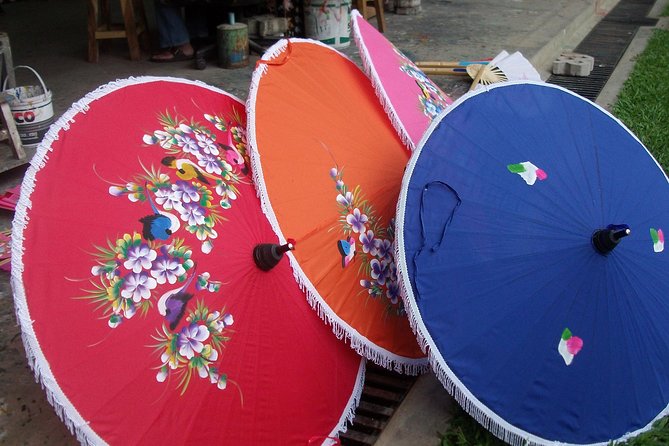
- The Saa-paper umbrella moment, made from scratch
- Wandering the district and shopping without panic
- What’s included, what to budget for, and how to plan your day
- Who this tour suits best
- A fair look at the experience pace
- Should you book this Chiang Mai craft tour?
- FAQ
- How long is the Chiang Mai craft tour?
- Do I get a choice between morning and afternoon?
- Is hotel pickup and drop-off included?
- What if my hotel is not in the Chiang Mai City area?
- What is the maximum group size?
- What is included in the price?
- What is not included?
- What is the cancellation policy?
Key things you will notice on this Chiang Mai craft tour
- Choice of morning or afternoon timing, so you can match the day to your energy and other plans
- Sankampaeng artisan cluster in one loop, meaning less transportation hassle and more time watching work
- Saa-paper umbrellas from scratch, a craft story you can actually picture, step by step
- Textiles plus metal and wood, including silk and cotton goods, silver items, and teak or wood products
- Free admission ticket listed for the hot springs stop, so you can enjoy a break without extra cost
- Small groups up to 15, which keeps questions and interactions more natural
Price and logistics that matter in real life
At $28.18 per person for about 3 hours, this is the kind of tour that competes well with self-guided wandering. You are paying for transportation, an English speaking guide, and access to multiple workshops in one managed route. In Chiang Mai, that convenience can be worth a lot, because good craft destinations are scattered.
You also get hotel pickup and drop-off for selected hotels, and the ride is in an air-conditioned vehicle. If you stay in places outside the listed Chiang Mai City hotel zone, there is a 500-baht per person surcharge. If your hotel is on the edge, it is worth checking early, because that one detail can swing the value.
The tour uses a mobile ticket and offers a choice of morning or afternoon departures. That matters if you are visiting temples earlier in the day or if you like a slower start. It is also a tour that only operates with a minimum of two passengers, so if you book late, you might see a chance of cancellation unless they can run with enough people. The upside is that you should get either an alternative or a full refund if it does not run.
Group size is capped at 15 travelers, which helps. Big buses can flatten the experience. Smaller groups are more likely to let you ask questions and actually hear what is being explained.
Why Sankampaeng craftsmen are the point of the tour
The route is built around Sankampaeng’s craft scene, where you can watch traditional making processes that many visitors only see as finished products on a shelf. The tour centers on observing workshops producing items like silk and cotton products, ceramics, silver goods, lacquerware, jewelry, and more. Even when you are not planning to buy a full set of anything, it helps to understand what goes into quality.
This is also one of those tours where context makes shopping better. When you know what materials take time, what techniques are labor-heavy, and what finishing details are signs of care, you can spot better souvenirs fast. The shop windows stop being random. They become evidence.
And the guide’s commentary is not just history class. It is practical. You learn what each workshop is known for, why certain items look the way they do, and what you are seeing when you walk through the showrooms.
Elephants aren't the only reason to stay longer:
- Half-Day Thai Cooking Class at Organic Farm in Chiang Mai★ 5.0 · 19,087 reviews
- Chiang Mai: Elephant Sanctuary, Waterfall & Bamboo Rafting★ 4.9 · 9,160 reviews
- Chiang Mai: Doi Inthanon National Park Eco-Friendly Tour★ 4.6 · 6,667 reviews
- Chiang Mai: Elephant Sanctuary & Waterfall Group Tour★ 4.9 · 5,780 reviews
Stop: Sankampaeng Hot Springs, plus the craft corridor
The itinerary starts at Sankampaeng Hot Springs, with about 1 hour there. The schedule lists an admission ticket as free, so you do not have to factor in another entry cost for that segment. Even if you skip soaking and focus on a quick look around, it gives you a nice shift from pure factory viewing.
More importantly, the hot springs stop acts like a gateway into the craft corridor. The tour frames what you will see afterward by explaining Chiang Mai’s local handicraft industry, and how these workshops fit together. That framing changes the way you move through factories later, because you understand that they are not random industries. They are part of a chain of skills.
Wood and furniture factory: how raw becomes real
Next, you visit a renowned wood and furniture factory. This is one of the most useful stops if you have ever bought wooden items and wondered how they were made. You get to see the processes that move items from raw material to finished pieces.
What I like about this stop is that it turns woodworking from a vague idea into a sequence. You can watch where the effort is, and you can also spot what is likely to be decorative versus what is structural. That matters if you plan to buy things like small carved pieces, home decor, or furniture accents.
Possible drawback? If you are traveling with zero interest in wood goods, this part can feel slower than the more visually dramatic crafts. But even then, it can help you understand how to evaluate craftsmanship in other categories too, since you start asking the same quality questions across materials.
Add a day trip while you're up north:
- Chiang Mai: Chiang Rai Temples, Karen Tribe and Hot Springs
★ 4.7 · 5,401 reviews - Chiang Mai: Cooking Class, Market & Thai Herbs Garden Tour
★ 4.9 · 4,824 reviews - Chiang Mai: Authentic Cooking Class with Market & Farm Visit
★ 4.9 · 4,546 reviews
Handicrafts center: native costumes, jewelry, and home novelties
After the wood factory, you go to a local handicrafts center with an exhibit focused on native costumes, jewelry, and home novelties. This stop is a mood change. Factories often focus on production. An exhibit pulls you toward culture and personal meaning.
This is a nice moment to slow down and look at the design details. Native costumes and jewelry tend to show how patterns, materials, and color choices work together. Even if you do not buy, you leave with better eyes for what style elements are traditional versus trendy.
If you are traveling with kids, this kind of stop often lands well because it is visual and story-driven. The one clear downside to expect is that these centers can be more showroom-like, meaning you will likely see more items displayed and less work happening in real time.
The Saa-paper umbrella moment, made from scratch
One of the most memorable parts is the demonstration of Saa-paper umbrellas made from scratch. Seeing the process is a big deal because umbrellas are easy to judge only by how they look on the rack. When you watch the making, you understand why the surfaces, structure, and finishing matter.
The umbrella craft also connects to something important for buyers: paper quality and construction details. If you have ever wondered why some umbrellas look fragile or inconsistent, this kind of step-by-step viewing helps you separate artistic variation from poor workmanship.
This stop also tends to be the sweet spot for photos and interest. It is visual work with clear stages, and it is easier to remember than a general tour of a workshop with lots of machines and no obvious story.
Wandering the district and shopping without panic
At the end, you wander around the district and get time to mingle and interact with locals. You also get a clear window for purchasing mementos before heading back to your hotel.
This is where the guided part pays off. You are not just dropped off in the chaos of a market and told good luck. You already know what you learned earlier, so your shopping becomes more intentional. You can compare what each place does best, and you can ask more pointed questions based on what you saw.
The shopping-forward setup is worth acknowledging. Factory and showroom visits often want you to buy, and the displays can be persuasive. The good news is that, based on the experience people describe, it does not have to feel intimidating. You can look first, take your time, and only buy if it matches what you want.
Practical advice: if you plan to buy larger items, think about transport and packing before you fall in love. If you are bringing umbrellas or fragile paper goods, confirm how they are packed on the spot.
What’s included, what to budget for, and how to plan your day
Your tour includes an English speaking licensed guide, hotel pickup and drop-off at selected hotels, and transport by air-conditioned vehicle. Items of a personal nature are not included. Tips or gratuities for guides or drivers are customary but not required.
Price value check: for $28.18, you are covering the guide, multiple workshop stops, and the convenience of being carried between sites in a single loop. If you were to DIY this route, you would likely spend time figuring out transit, tracking down similar workshops, and coordinating entry into certain showrooms. You might find it cheaper, but you would also lose the time-saving structure.
For timing, plan for about 3 hours total. If you book the afternoon option, it can be a good bridge between temple time and dinner. If you book the morning option, it can help you see crafts before the heat builds later.
Who this tour suits best
This half-day craft tour is a strong fit for:
- First-timers in Chiang Mai who want a concentrated craft introduction without hunting
- Families who like educational stops that are still fun and visual
- People who plan to buy souvenirs and want better quality instincts
- Anyone curious about how everyday items, like umbrellas and textiles, are actually made
It is less ideal if:
- You hate shopping and showrooms and want only hands-on activities
- You want a long experience with no factory time
- You are only interested in one single craft type, because the tour spreads time across several categories
A fair look at the experience pace
This tour moves in a smooth, structured way. You are not stuck in one place for hours, but you also are not rushed nonstop. The stops are chosen to cover multiple craft domains in a short duration.
The most noticeable pattern is that you will likely see a mix of:
- Watching artisans or processes
- Touring showrooms
- Learning through the guide’s commentary
The balance is usually what makes the tour work. Even when a stop is more showroom-focused, you still have the earlier context, so you know what to look for.
Should you book this Chiang Mai craft tour?
If you want a short, organized route through Chiang Mai craftmaking, I think this is an easy yes. The biggest strength is the way it compresses several craft worlds into one half-day. You get textile crafts, metal and ceramic or lacquer style categories, wood and furniture processes, and a standout Saa-paper umbrella demonstration.
Book it if you:
- Want a useful souvenir route with less guesswork
- Like seeing how items are made, not just buying the finished object
- Prefer a small group experience with a licensed guide
Consider skipping or choosing a different option if:
- You do not want any shopping component at all
- You are sensitive to showroom pressure
- You already have a specific craft plan and want only one workshop type
If you are on the fence, here is my simple decision tool: if you can name two crafts you care about, you will probably enjoy this route. If you care about only one, you might get more satisfaction from a single-discipline workshop.
FAQ
How long is the Chiang Mai craft tour?
It runs for about 3 hours.
Do I get a choice between morning and afternoon?
Yes. You can choose either a morning or an afternoon tour.
Is hotel pickup and drop-off included?
Hotel pickup and drop-off is included for selected hotels in Chiang Mai City.
What if my hotel is not in the Chiang Mai City area?
A surcharge of 500 baht per person applies for hotels outside the Chiang Mai City hotel rates.
What is the maximum group size?
The tour has a maximum of 15 travelers.
What is included in the price?
Included are an English speaking licensed guide, hotel pickup and drop-off for selected hotels, and transport by air-conditioned vehicle.
What is not included?
Items of a personal nature and tips or gratuities to guides or drivers are not included.
What is the cancellation policy?
You can cancel for a full refund up to 24 hours in advance of the experience start time.
Fresh listings for Chiang Mai
- Skydive Chiang Mai★ 5.0 · 1 review
- One day hiking tour in Chaing Mai★ 5.0 · 1 review
- One Day Non Tourist Trek 100% Guarantee★ 5.0 · 1 review
- Chiang Mai to Chiang Rai (Private 3 day Tour)★ 5.0 · 1 review
- San Kamphaeng Hot Springs and Thai Handicraft Tour from Chiang Mai★ 5.0 · 1 review
- Half day Doi Suthep Temple & Mae Ping River cruise (Private)★ 5.0 · 1 review