
Reviewed · CHIANG MAI
Meditation Retreat and Self-Care in Nature
Quiet helps fast when you move slowly. This 3-hour Chiang Mai retreat in the Doi Saket area blends mindful walking and guided sitting in nature, then closes with simple self-care. It is built for people who want calm without the mystery.
What I like most is the structure, you get a guided start, a body warm-up with yoga or gentle stretches, and a finish that feels like exhale time. The other big win is how instruction is explained in plain language, with extra clarity so you know what to do next, not just what to feel. One thing to plan for, private transportation is not included, so you may need a taxi to and from the meeting point.
In This Review
- Key things to know before you go
- A Doi Saket reset that fits into your Chiang Mai week
- How the late-afternoon flow works, and why it feels good
- Mindful walking in nature, a meditation you can actually do
- Guided sitting meditation with Amori: clear instruction beats guesswork
- Yoga or gentle stretches, adapted so you still feel like you
- Tea or coffee in the garden: the quiet finish that makes it stick
- Price and value in Chiang Mai: what $47.20 actually buys
- Logistics that matter: meeting point, duration, and mobile ticket
- Who should book this meditation and self-care retreat
- Tips to get the most out of your 3-hour retreat in Chiang Mai
- Should you book this retreat?
- FAQ
- How long is the retreat?
- What time does the experience start?
- Where do we meet, and where does it end?
- Is transportation included?
- What is included in the retreat fee?
- How big is the group?
- Is a mobile ticket used?
- Can I bring a service animal?
- Is free cancellation available?
Key things to know before you go
- Small group size (max 5): You get room to focus and ask questions if you want.
- Mindful walking in nature: It is not just sitting meditation, you practice with your feet.
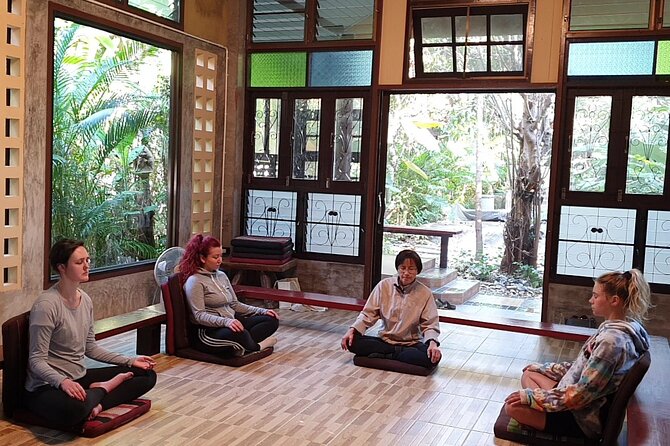
- Guided sitting meditation: The pace is paced with instruction, so you are not guessing.
- Yoga or gentle stretches adapted to you: Your practice should match your comfort level.
- Tea or coffee in a garden setting: You end with a quiet, comfortable moment.
- All the basic gear included: Cushions and a yoga mat are provided.
A Doi Saket reset that fits into your Chiang Mai week
Chiang Mai can be a lot, temples, markets, scooters, heat, and constant motion. This meditation and self-care retreat gives you a different kind of schedule. You are meeting at 3:30 pm in the Doi Saket District and spending about three hours total, then you are back at the same meeting point. That timing matters because you can fit it into the calmer part of the day without sacrificing your whole evening.
The other reason I think this retreat is a smart value is that it is intentionally simple. You are not signing up for a full day of chanting or complicated rituals. You are doing a focused “here and now” practice, then pairing it with gentle body work. People come away feeling clearer minded and more energized, and they also talk about leaving with ideas to keep practicing on their own.
How the late-afternoon flow works, and why it feels good
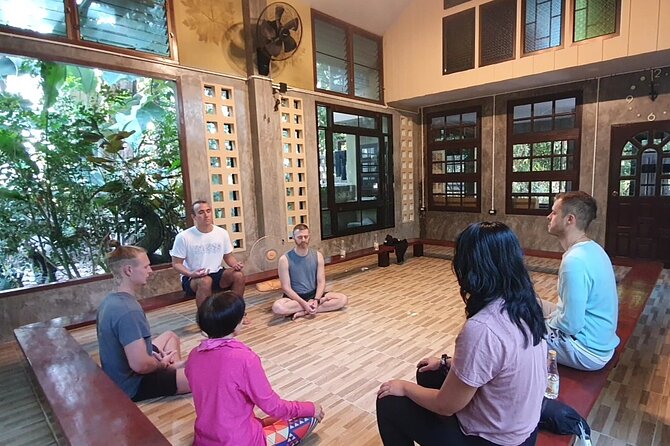
From the moment you start, the session has a clear rhythm. First, you learn mindful walking. Then you move into guided sitting meditation. After that, there is yoga or gentle stretching, and the group finishes with tea or coffee in a garden.
That order is practical. Walking helps you settle the body before you sit still. Sitting meditation then trains attention without requiring you to force calm. Yoga or gentle stretches is a bridge, it reconnects you to how your body feels right now, which can be a big deal if you have been tense from travel.
Also, because the group is capped at five people, it does not feel like you are part of a crowd. You can actually follow the guidance and adjust your posture without feeling rushed.
Elephants aren't the only reason to stay longer:
- Half-Day Thai Cooking Class at Organic Farm in Chiang Mai★ 5.0 · 19,087 reviews
- Chiang Mai: Elephant Sanctuary, Waterfall & Bamboo Rafting★ 4.9 · 9,160 reviews
- Chiang Mai: Doi Inthanon National Park Eco-Friendly Tour★ 4.6 · 6,667 reviews
- Chiang Mai: Elephant Sanctuary & Waterfall Group Tour★ 4.9 · 5,780 reviews
Mindful walking in nature, a meditation you can actually do
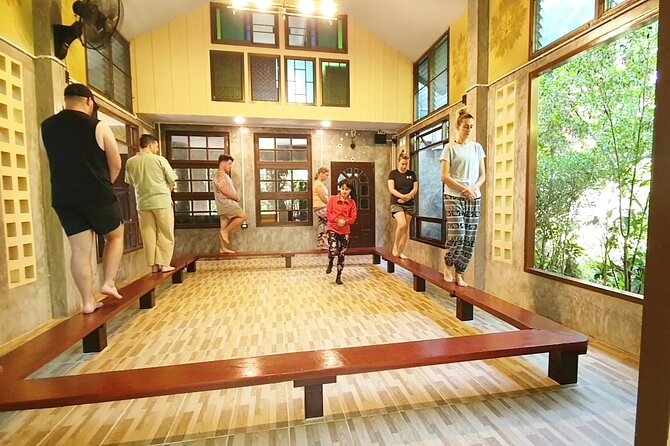
The first practice is mindful walking outdoors. This is one of the most underrated forms of meditation for visitors in Chiang Mai, because it makes the experience physical and grounded. You are not staring at the ground in a stressed way. You are learning to pay attention to movement, steps, and awareness in a simple loop.
Why this works for most people:
- Walking gives you something concrete to focus on.
- The natural setting makes the experience less abstract.
- You can feel progress quickly, even if you have never meditated before.
Practical tip: wear comfortable clothing and shoes that handle outdoor walking. You want to feel stable, so your mind can do the relaxing part, not the balance part.
Guided sitting meditation with Amori: clear instruction beats guesswork
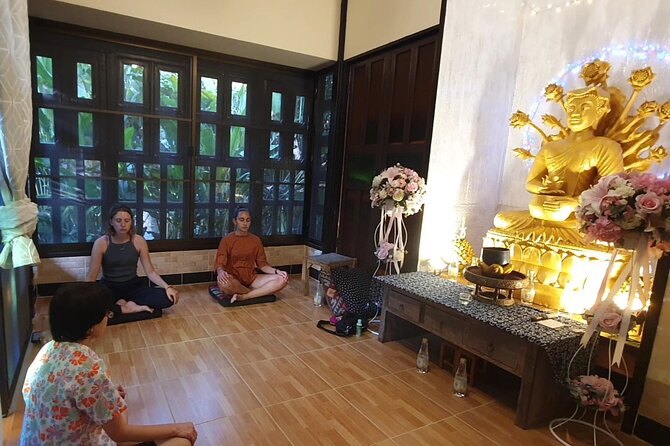
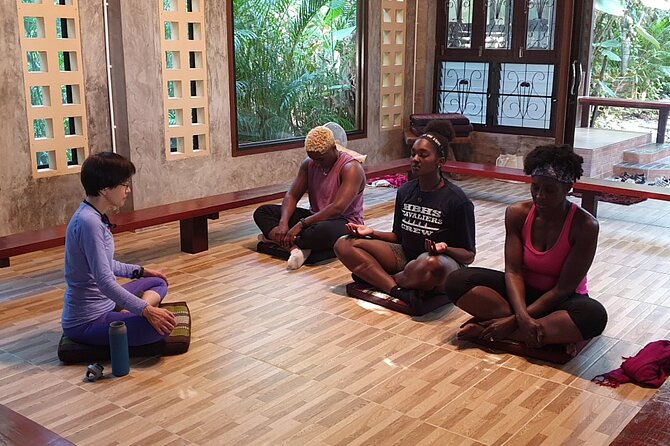
After mindful walking, you shift into guided sitting meditation. This is where the retreat really earns its praise. In the feedback, people highlight that Amori provides extensive explanations of the practice itself, not just a brief intro. That kind of teaching matters because so many first-time meditators get stuck on one question: Am I doing it right?
Here, the guidance is built into the experience. You learn what to do, then you practice with support. The goal is inner calm and a more balanced body and mind, by staying focused on the present moment instead of chasing thoughts about the past or future.
If you tend to overthink, this section can be a relief. The sitting practice becomes less about performance and more about noticing.
Add a day trip while you're up north:
- Chiang Mai: Chiang Rai Temples, Karen Tribe and Hot Springs
★ 4.7 · 5,401 reviews - Chiang Mai: Cooking Class, Market & Thai Herbs Garden Tour
★ 4.9 · 4,824 reviews - Chiang Mai: Authentic Cooking Class with Market & Farm Visit
★ 4.9 · 4,546 reviews
Yoga or gentle stretches, adapted so you still feel like you
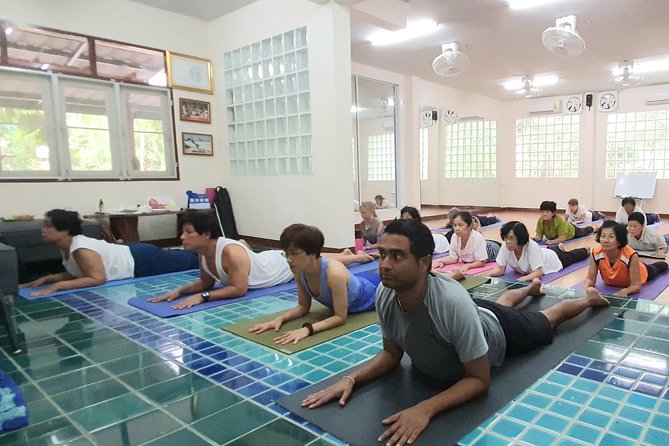
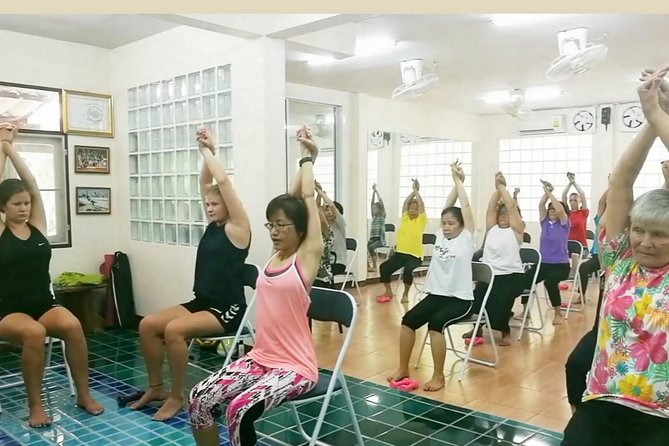
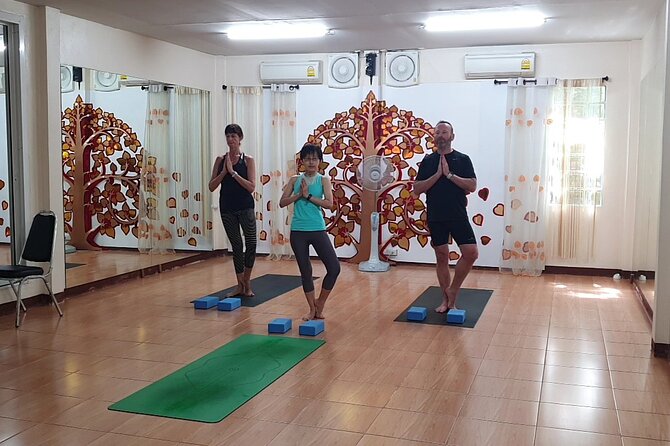
Next comes yoga or gentle stretching. The retreat states that the yoga practice is adapted to practitioners, which is important for mixed groups. Some people arrive with stiff backs from long travel days. Others are active and want a real stretch. Either way, adapted instruction helps you avoid the two extremes: pushing too hard or doing too little.
You should have a moderate physical fitness level. That sounds vague, but it really means you should be comfortable moving, getting into and out of basic positions, and following mindful walking and gentle stretching without pain.
One reason this part feels valuable is that meditation alone can make you stiff if you sit too long in one posture. Gentle stretching helps your body settle instead of tightening up.
Tea or coffee in the garden: the quiet finish that makes it stick
After practice and nature time, you finish with tea or coffee in a garden. This is not an afterthought. It is part of the self-care design.
Why that matters: many “relaxation” activities end abruptly, you stand up, check your phone, and jump back into busy mode. Here, you get a slower landing. Sitting with a warm drink gives your nervous system time to transition from practice state to everyday state.
In feedback, people mention feeling more in tune, less stiff, and more alive. A calm close like this helps that shift feel real, not just theoretical.
Price and value in Chiang Mai: what $47.20 actually buys
At $47.20 per person for about three hours, this retreat is priced like an accessible wellness class, not a luxury retreat. Here is what you are actually getting value-wise:
- Included gear: cushions and a yoga mat. That saves you from hunting for equipment or paying for rental.
- Instruction: mindful walking and guided sitting meditation with a named instructor, Amori.
- Movement support: yoga or gentle stretching adapted to you.
- Included refreshments: tea or coffee and snacks.
- Small group format: max five people, which usually means better attention than a larger class.
The only clear cost gap is transportation. Private transportation is not included, so you may pay a taxi to reach the start point in Doi Saket and to return afterward. If your hotel is far, that can be the main “hidden” variable in total cost.
Still, for what you receive, it feels like a solid deal. You get both mind and body work, and you do it in nature outside the noise of central Chiang Mai.
Logistics that matter: meeting point, duration, and mobile ticket
You start at 3:30 pm in the Doi Saket District, Chiang Mai 50220, Thailand. The activity ends back at the meeting point, so you do not need to figure out a second pickup location. It is also a mobile ticket experience, which is convenient if you rely on your phone.
Because private transportation is not included, plan your route ahead of time. If you do not want to negotiate taxis or find a driver at the last minute, build in extra buffer. In the feedback, one person specifically noted needing a taxi since the meeting point is away from their hotel.
One more practical point: the retreat caps at five people. That can help the experience feel personal, but it also means you should book if you are aiming for a specific day. The average booking window is about 20 days in advance.
Who should book this meditation and self-care retreat
This retreat is best if you:
- Want a beginner-friendly introduction to meditation that does not assume prior experience.
- Like structured guidance, especially clear explanations for sitting meditation.
- Feel travel stress in your body, like stiffness, tightness, or “wired but tired” energy.
- Prefer a smaller group and a nature setting over a crowded studio.
It may not be the best fit if you:
- Want a full-day program. This is about three hours, focused and efficient.
- Expect private transport to be included in the price.
- Have trouble with moderate physical movement, since mindful walking and gentle stretches are part of the flow.
Tips to get the most out of your 3-hour retreat in Chiang Mai
A few small choices can make the session feel smoother.
Wear for comfort and flexibility
Choose breathable clothes you can move in. You will be walking, sitting, and stretching.
Treat the whole session as one unit
Mindful walking, sitting meditation, and gentle yoga all support each other. If you skip one part mentally, you might miss the benefit of the transition.
Let the instruction do the heavy lifting
If you are new to meditation, lean on Amori’s guidance. The whole point is that the practice is explained, so you can focus on following along instead of overthinking.
Keep your schedule light afterward
Plan for a slower evening. The tea or coffee finish can help you carry the calmer feeling forward if you do not immediately jump into hectic plans.
Should you book this retreat?
I think you should book if you want a real reset in Chiang Mai without a big time commitment. For the price, you get structured mindful walking, guided sitting meditation with clear explanations from Amori, adapted gentle yoga, and a quiet garden finish with tea or coffee. The small group size is a big plus, and the overall experience sounds like it leaves people clearer minded, less stiff, and more connected to their body.
Skip it only if transportation logistics are a problem for you. Since private transport is not included, you will want to be comfortable arranging a taxi or other ride to the Doi Saket meeting point.
If you are craving something calmer than temples and traffic, this is a practical, meaningful way to give your mind and body a breather.
FAQ
How long is the retreat?
It lasts about 3 hours.
What time does the experience start?
The start time is 3:30 pm.
Where do we meet, and where does it end?
You meet in Doi Saket District, Chiang Mai 50220, Thailand, and the activity ends back at the same meeting point.
Is transportation included?
No. Private transportation is not included.
What is included in the retreat fee?
Cushions and a yoga mat are included, along with coffee and/or tea and snacks.
How big is the group?
The experience has a maximum of 5 travelers.
Is a mobile ticket used?
Yes, it is listed as a mobile ticket.
Can I bring a service animal?
Yes, service animals are allowed.
Is free cancellation available?
Yes, you can cancel for a full refund up to 24 hours in advance of the experience start time.
Fresh listings for Chiang Mai
- Skydive Chiang Mai★ 5.0 · 1 review
- One day hiking tour in Chaing Mai★ 5.0 · 1 review
- One Day Non Tourist Trek 100% Guarantee★ 5.0 · 1 review
- Chiang Mai to Chiang Rai (Private 3 day Tour)★ 5.0 · 1 review
- San Kamphaeng Hot Springs and Thai Handicraft Tour from Chiang Mai★ 5.0 · 1 review
- Half day Doi Suthep Temple & Mae Ping River cruise (Private)★ 5.0 · 1 review