
Reviewed · HILL TRIBE TOURS
2-Day Karen Homestay – A Cultural Immersion
Footpaths, river water, village chats in one trip. This 2-Day Karen Homestay in Chiang Mai stitches together a local market morning, an uphill nature trek to camp, and real time with the Longneck Karen (Padaung) in their village. I love how the day starts with shopping for the next couple of days at a traditional Northern Thai market, and I love getting to talk with locals about daily life instead of just taking photos. One possible drawback: you need a moderate fitness level, and you’ll do uphill and then mostly downhill trekking.
The homestay side is simple, not fancy, and that is part of the point. If you’re lucky, your guides may include people like Nikorn and Bancha, who were praised for sharing Karen culture and way of life in a way that actually helps you understand what you’re seeing. You’ll also get bamboo rafting on the Wang River, which adds a nice change of pace after the trails.
In This Review
- Key things I’d underline before you go
- Getting from Chiang Mai to a Northern Market Start at 8:00am
- Uphill Trek, Stream Trail, and a Waterfall Dip
- Longneck Karen (Padaung) Village Time, Questions, and Village Life
- Homestay Basics Inside the Karen Village (Shared Bathroom Reality)
- Downhill Morning Through Rice Fields to the Truck
- Wang River Bamboo Rafting, then Back to Chiang Mai
- Price and logistics: what $203.96 really buys
- Who this Karen homestay suits best, and who should rethink it
- Should you book the 2-Day Karen Homestay?
- FAQ
- What is the location of this tour?
- How long is the Karen Homestay experience?
- What time does the tour start?
- What’s included in the price?
- Is hotel pickup included?
- Is bamboo rafting included?
- What meals are included?
- Does it require a minimum number of travelers?
Key things I’d underline before you go
- 8:00am start with hotel pickup in Chiang Mai city, plus airport and train station options
- Karen village visits across two days, with admission included
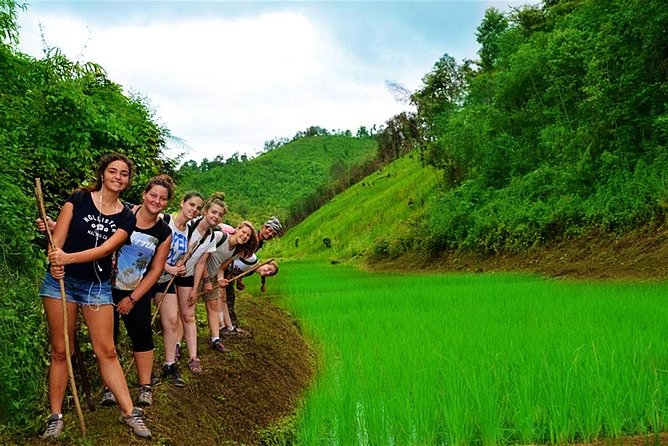
- Uphill trek to camp, then mostly downhill the next morning through rice fields
- Overnight homestay in the Karen village, with a shared bathroom
- 45-minute bamboo rafting on the Wang River, included in the price
- Small group size (max 10), which makes questions easier
Getting from Chiang Mai to a Northern Market Start at 8:00am
This tour moves early, with a start time around 8:00am, and it’s built for convenience. You’ll meet your guide and then get picked up from Chiang Mai city hotels, or from the airport and train station. The tour also uses a mobile ticket, and you’ll receive a leaflet with practical info.
The first big “aha” moment is the market. You’ll drive to a typical Northern Thai local market, and your guide handles the shopping for the next couple of days. That means you’re not just watching from the sidelines. You get to see what people actually buy, what’s considered a staple, and which local specialties are on display. Even if you do not plan to cook yourself, it helps you understand how the rest of the trip fits together logistically and culturally.
One practical tip: markets are great for photos, but keep your hands free. Bring a small day bag for water, sunscreen, and anything you want to keep close, since you’ll be walking and then trekking later.
Uphill Trek, Stream Trail, and a Waterfall Dip
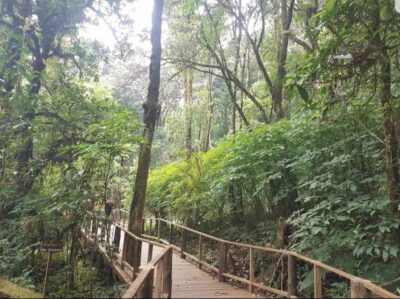
About an hour from Chiang Mai, the trekking starts, and it’s mostly uphill at first. The trail follows a mountain path along a stream, so you’re not just going “up in the dark” or guessing where to step. Water nearby usually means cooler air and a soundtrack of rushing flow, which makes the climb feel less monotonous.
Then there’s the best excuse to slow down: a waterfall near the camp. You’ll have a chance to dip in the cool water. Go with a practical mindset. Don’t expect warm spa conditions. Also, if you plan to swim, keep in mind that your trekking shoes might not dry fast, so choose footwear you’re comfortable with getting wet.
After lunch, you’ll trek further for a visit to a Karen village. That second stretch includes dense forest, so even if the total distance isn’t huge, the feel of the trail can be different. Think slippery leaves, narrower paths, and more shade. If you tend to get cold, pack a light layer. Even in Chiang Mai, temperatures shift when you’re higher up and near moving water.
Villages in the hills, still practicing old crafts
- Chiang Mai: Chiang Rai Temples, Karen Tribe and Hot Springs★ 4.7 · 5,401 reviews
- Thai and Akha Cooking Class in Chiang Mai★ 5.0 · 4,358 reviews
- Chiang Mai: Elephant Sanctuary, Long Neck & Sticky Waterfall★ 4.9 · 2,262 reviews
- 4-Hour Doi Suthep & Hmong Hill Tribe Village from Chiang Mai★ 4.7 · 696 reviews
Longneck Karen (Padaung) Village Time, Questions, and Village Life
The Longneck Karen are part of the Padaung group. Before you arrive, you’ll hear context about migration and current living conditions. According to the background shared on the trip, Padaung people originally came from Yunnan Province in central China, then migrated around 1000 AD to the Salween River Basin in Myanmar. In 1995, the group was estimated at about 25,000 people in Myanmar, and after political incidents against minorities, many Padaung evacuated. Today, the story shared is that they do not have one single clearly defined main location, and they may live scattered across areas while co-living with other minority groups for protection.
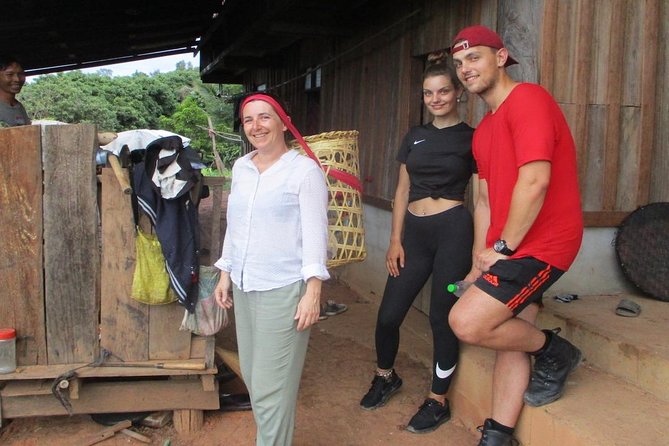
What makes the village time valuable is not the facts on their own. It’s the chance to talk. You’ll chat with locals about daily life, and you get a couple of hours at the Longneck Karen village with admission included. The structure is also interesting: the schedule includes village time in both days, so you’re not rushing everything into one short stop.
That said, keep expectations grounded. This is not a theme park. You’re entering a real community rhythm. Ask questions that show genuine interest, not curiosity that feels like an interview. If you want to photograph, ask first and be ready for no. In villages like this, respect and patience matter as much as manners at home.
Homestay Basics Inside the Karen Village (Shared Bathroom Reality)
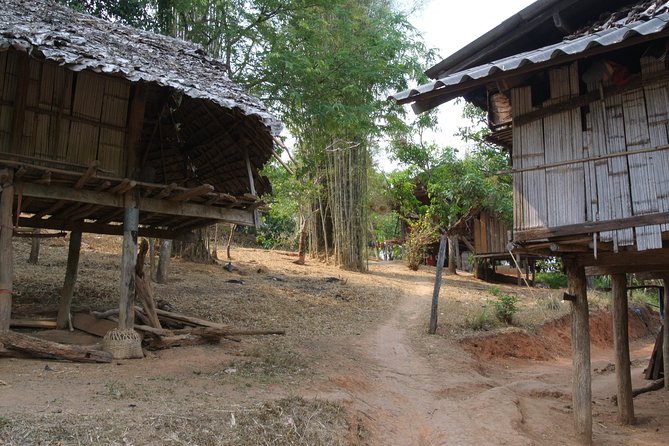
Overnight is at a simple homestay within the Karen village itself. That is a key part of the experience. You’re not going to a lodge with a buffet, Wi-Fi, and a perfect mattress. You’re sleeping close to the life you saw during the day.
The good news is that dinner and breakfast are included. The schedule includes dinner one night and breakfast the next morning, so you’re not stuck hunting for food after the trekking. You’ll also have lunch twice during the tour.
The part you should plan for is comfort. Accommodation is shared, and the bathroom is shared too. That means you should pack with the mindset of a practical field stay: bring a small towel if you like, and consider a light flashlight for getting around at night. Also, keep your valuables minimal. You’re there to experience, not to manage a complicated setup.
If you go in expecting village life to be calm and tidy like a brochure, you might miss the point. If you go in expecting real routines, simple rooms, and conversations, you’ll likely enjoy it a lot more.
Two days, enough time to leave the city
- Chiang Mai: 2-Day Jungle Trek with Elephant Farm & Raft Ride
★ 4.7 · 881 reviews - Chiang Mai 2-Day: Good Morning Elephant & Overnight Homestay
★ 4.9 · 224 reviews - Chiang Mai: 2-Days Jungle Trek, Waterfalls and Karen Village
★ 4.8 · 103 reviews
Downhill Morning Through Rice Fields to the Truck
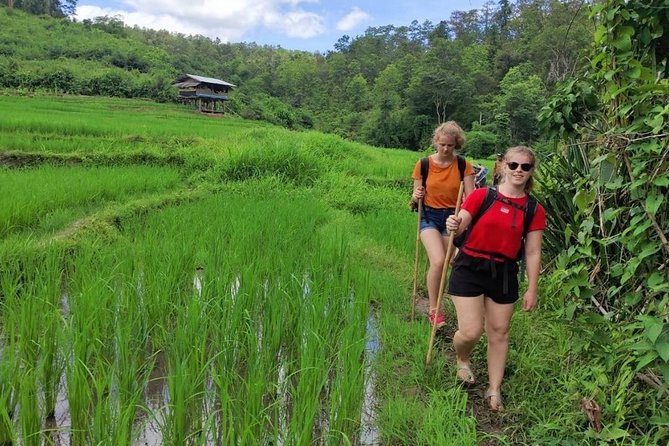
Day two starts after breakfast. The trekking becomes mostly downhill, which is a welcome change after the uphill day. The route is described as passing rice fields and continuing through the landscape until you reach the truck.
This downhill segment is where your body will feel it most. Even though downhill can seem easier, it often puts stress on knees and ankles. If your feet are sore from Day 1, take shorter steps and use trekking poles if you have them. The goal is to finish feeling steady, not shaky.
You’ll also see more “everyday agriculture” scenery as you move through rice fields. That matters because it ties the cultural talk from the village to what you’re actually seeing on the ground. You’ll notice that the landscape isn’t a background. It’s part of daily life and work.
By the time you reach the truck, you’ll be ready for the next shift in pace. And you still have one of the most fun inclusions ahead.
Wang River Bamboo Rafting, then Back to Chiang Mai
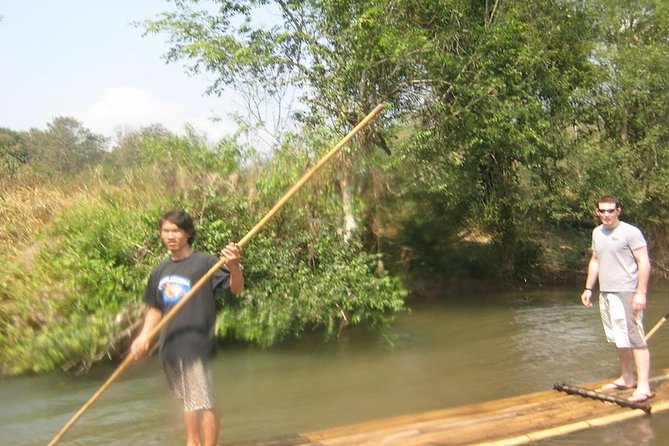
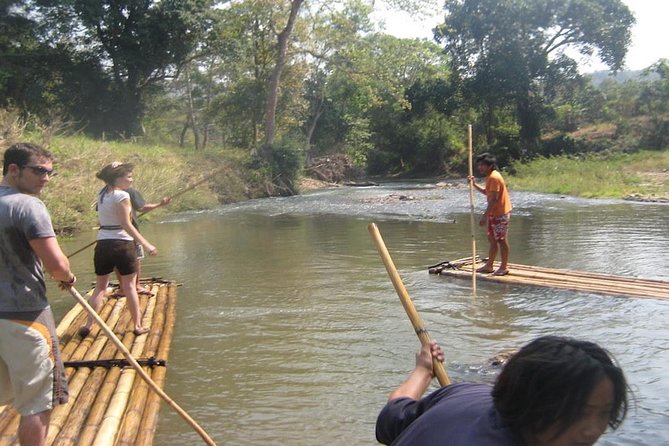
After trekking and reaching the truck, you drive to the Wang River for rafting. The tour includes bamboo rafting for about 45 minutes, and it’s a classic pairing with a trek because it changes your posture and your focus.
Rafting time is short enough to stay fun, but long enough that you feel like you did something real. You’ll be on the water, moving with the river, with the surroundings changing continuously. For many people, this becomes the “reset” moment between the physical day and the ride back.
Once rafting wraps, you head back toward Chiang Mai. Lunch is included as part of the program, so you’re not racing around to find food right after activities.
One thing to think about: if it’s hot, you’ll feel it on the river. Bring water and protect your skin. If you get cold easily, you might still want a thin layer for after rafting when you’re out of the sun.
Price and logistics: what $203.96 really buys
At $203.96 per person for a two-day trip, you’re paying for a full package with a lot included. Here’s what you get without extra fees:
- Hotel pickup and drop-off within Chiang Mai city area, plus airport and train station options
- Transportation by pick up truck
- Entrance fees
- Homestay accommodation inside the village, with shared bathroom
- Meals included: breakfast, dinner, and lunch twice
- Bamboo rafting (about 45 minutes)
- Leaflet with practical information
What you do not get is also straightforward: drinks, gratuities (optional), personal purchases like souvenirs, and any meal not listed in the plan. There may be supplements for certain dates if quoted separately, but the baseline offer includes the big elements.
Is it good value? For me, the value comes from combining multiple “hard costs” that add up fast on their own: transport from Chiang Mai, entrance fees, two meals across two days, and rafting. Add in the homestay, which is usually the piece that makes tours cost more when it’s done properly. The small group size also matters because it usually makes the experience smoother and more conversation-friendly.
Who this Karen homestay suits best, and who should rethink it
This tour fits best if you want more than a photo stop. If you like learning from conversation, walking with a guide, and spending a night somewhere that is real and lived-in, this will feel meaningful.
It’s also for you if you enjoy a balanced itinerary: trekking one day, a different kind of trekking downhill the next, plus a river activity to break it up.
You might want to rethink if:
- You hate moderate hiking or you’re dealing with knee or ankle issues
- You expect private bathroom comfort and hotel-style cleanliness
- You’re uncomfortable in shared accommodations
On the plus side, the overall group size is capped at 10 travelers, which keeps it from feeling crowded. And because it runs on Mondays, Wednesdays, and Saturdays (subject to change), you can pick a day that fits your Chiang Mai plan instead of trying to force it into a random schedule.
Should you book the 2-Day Karen Homestay?
If you want an ethical, human-scale experience where the village conversation is part of the core program, I’d say yes, book it. The strongest pull is the combination of village time with the Padaung (Longneck Karen) and the chance to see the landscape behind the talking, from mountain trail to rice fields. The rafting is also a smart bonus, not a random add-on.
Book with realistic expectations: this is trekking and a simple homestay. If you’re good with that, you’ll likely come away with stories that feel specific and personal, especially if your guides include people like Nikorn and Bancha, who were praised for explaining Karen culture and day-to-day life in a way that actually lands.
FAQ
What is the location of this tour?
It takes place in Chiang Mai, Thailand.
How long is the Karen Homestay experience?
It’s a 2-day experience, approximately.
What time does the tour start?
It starts at 8:00am.
What’s included in the price?
The price includes breakfast, dinner, two lunches, hotel pickup and drop-off in Chiang Mai city area (plus airport and train station), entrance fees, transportation by pick up truck, shared homestay accommodation with shared bathroom, bamboo rafting (about 45 minutes), and a leaflet with practical information.
Is hotel pickup included?
Yes. Pickup and drop-off are included for hotels in Chiang Mai city area, plus the airport and train station.
Is bamboo rafting included?
Yes. Bamboo rafting is included for about 45 minutes.
What meals are included?
Breakfast and dinner are included, and lunch is included twice during the tour.
Does it require a minimum number of travelers?
Yes. At least 2 people are required for the activity to take place. A single traveler may book, but is subject to availability and cancellation if the minimum is not met.
Fresh listings for Chiang Mai
- Skydive Chiang Mai★ 5.0 · 1 review
- One day hiking tour in Chaing Mai★ 5.0 · 1 review
- One Day Non Tourist Trek 100% Guarantee★ 5.0 · 1 review
- Chiang Mai to Chiang Rai (Private 3 day Tour)★ 5.0 · 1 review
- San Kamphaeng Hot Springs and Thai Handicraft Tour from Chiang Mai★ 5.0 · 1 review
- Half day Doi Suthep Temple & Mae Ping River cruise (Private)★ 5.0 · 1 review
Hill Tribe Tours, compared.

Chiang Rai Temples, Karen Tribe and Hot Springs
Read our review →

Elephant Sanctuary, Long Neck & Sticky Waterfall
Read our review →
4-Hour Doi Suthep & Hmong Hill Tribe Village from Chiang Mai
Read our review →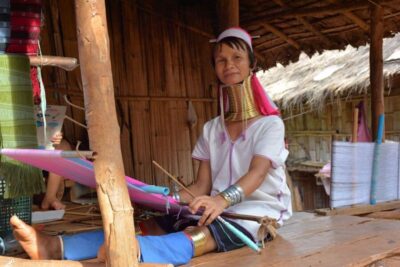
Long Neck Village & Chiang Rai’s Iconic Temples
Read our review →
Chang Mai: Doi Inthanon Day Tour w/Waterfalls & Hilltribes
Read our review →
Chiang Rai Full Day Tour with Boat Trip and Longneck Village
Read our review →Browse the lists this tour appears in