
Reviewed · NORTHERN THAI COOKING CLASSES
Chiangmai: Cooking Class by Chef only 4 people Market visit
Cooking in Chiang Mai feels like a smart shortcut to real food. You get a small-group class with Arm Nitipong plus a fresh market visit, so the ingredients make sense before you start cooking. I love that the menu leans Northern Lanna and also includes Central Thai favorites, not just one style of cooking.
The second thing I really like is the format. You prep your own ingredients at your own station, and Arm Nitipong guides each step with context from training plus local experience, including what he learned from culinary school, hotel work, and his mom. The class is designed for a group of just 4 people, so questions do not disappear into the background.
One consideration: it is a long morning with lots of cooking, but you can start hungry. The class notes you can have no breakfast or a light breakfast before, so plan accordingly if you hate skipping food.
In This Review
- Key things that make this class worth your morning
- Getting picked up, then getting to the ingredients first
- The local fresh market stop, and why it changes the class
- Herb garden at the chef’s house: Thai kitchen flavors in real life
- Cooking time: your own station, your own dishes, real guidance
- The menu: what you will actually cook and eat
- 1) Herb Larb pork salad with sour Thai dressing and roasted sticky rice
- 2) Green curry or Khao Soi, Chiang Mai’s noodle-curry comfort
- 3) Tom Yum shrimp or Tom Kha coconut milk soup with mushrooms
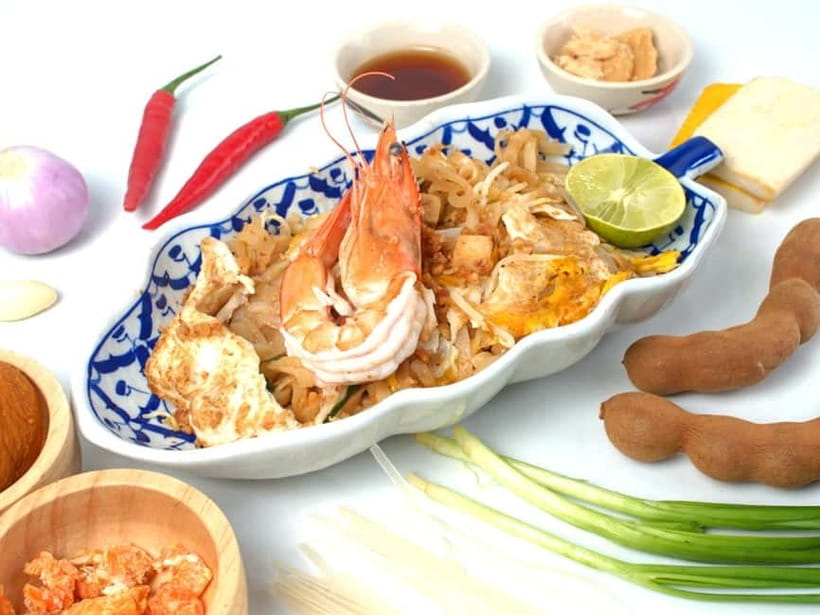
- 4) Pad Thai with tamarind sour sauce
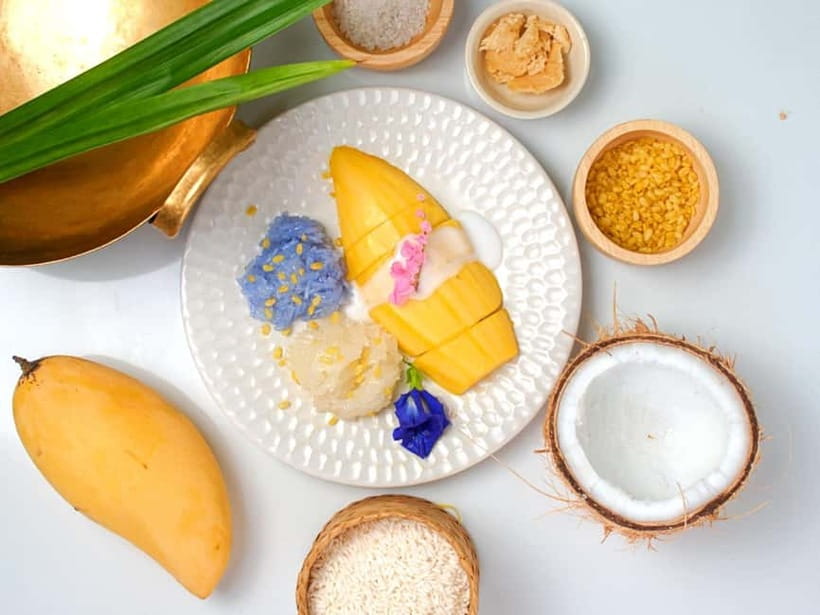
- 5) Mango with sticky rice and coconut milk
- Drinks and extras: small comforts that make the class feel complete
- How much it costs, and what you really get for $39
- Who this class fits best, and who might want a different option
- Quick booking checklist so you enjoy it more
- Should you book this Chiang Mai cooking class?
- FAQ
- What time does hotel pickup happen?
- When will the class end and you get dropped off?
- How big is the cooking class group?
- Which dishes are included in the cooking menu?
- What languages is the instructor able to teach in?
- What is included besides cooking ingredients?
- Do I need breakfast before the class?
Key things that make this class worth your morning
- Small-group size of 4 means you get hands-on attention while cooking
- Arm Nitipong teaches, drawing on culinary school, hotel experience, and family recipes
- Market visit together to choose Thai fruits like mango, rambutan, mangosteen, lychee, longan, and roseapple (when in season)
- Herb garden at Arm Nitipong’s house focused on Thai kitchen herbs like lemongrass and kaffir lime
- Your own cooking station with the tools you need, plus step-by-step help
- A clear, varied menu including Chiang Mai specialties like Khao Soi, plus Tom Yum and Pad Thai
Getting picked up, then getting to the ingredients first
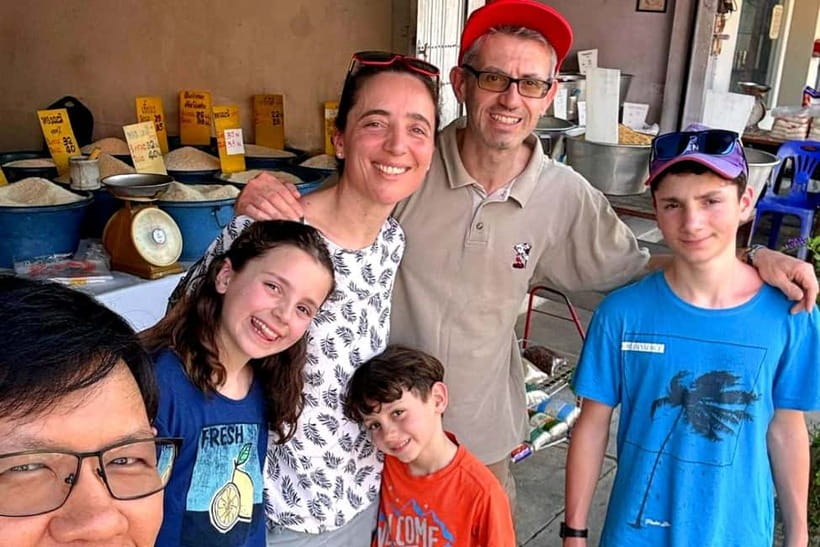
This experience starts with pickup from your hotel in Chiang Mai around 9:00 AM, usually stretching to about 9:15 AM. It is one of those practical setups that keeps the morning smooth, because you do not have to hunt down meeting points. Also, the class can drop you back in the old city area, which is a helpful convenience when you are planning the rest of your day.
The best part is what happens right after pickup. You head to a local Thai fresh market, and Arm Nitipong sets the stage for cooking by helping you choose ingredients with a Chiang Mai mindset. If you have ever tried to cook Thai food at home, you know the difference comes down to the right herbs, the right fruit, and the right seasoning. This class gives you a guided way to see that in real time.
The group stays intentionally small, which matters more than people think. With only four people, you are not stuck watching while someone else does the work. You can ask what a specific herb tastes like, or why one ingredient goes into one dish instead of another, without waiting your turn for the guide to notice.
The local fresh market stop, and why it changes the class
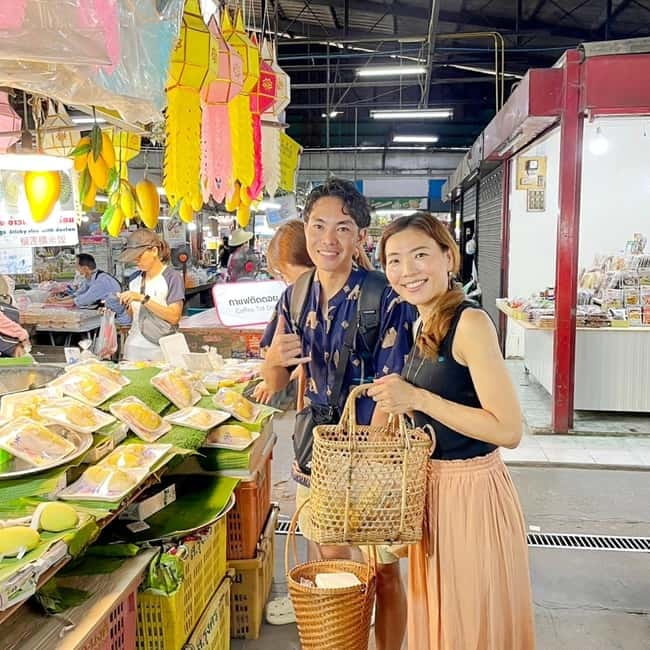
The market stop is not filler. You visit a Thai fresh market with vegetables, mushrooms, fruits, meat, and rice. Arm Nitipong, who grew up in Chiang Mai Northern Thailand, helps you look at produce through the lens of Thai cooking, not just sightseeing.
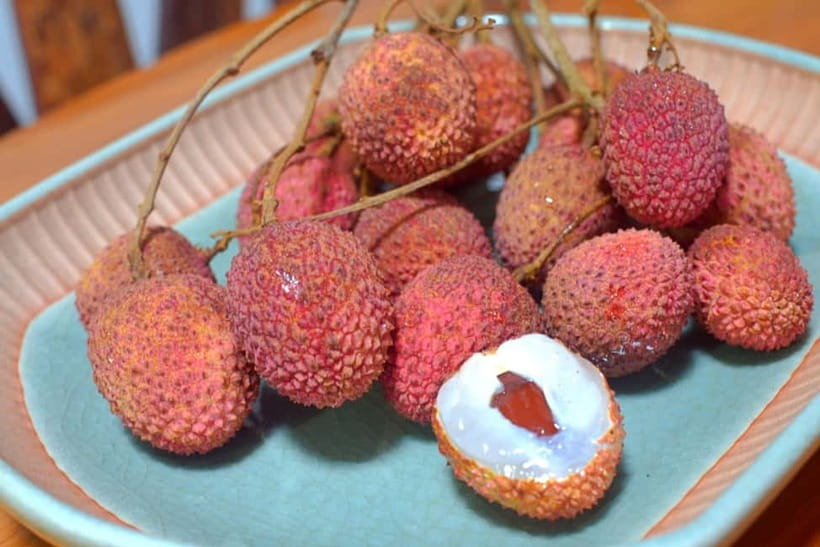
What I like about this part is the fruit education. You get to choose and learn about Thai fruits such as mango, papaya, rambutan, mangosteen, lychee, longan, and roseapple, especially when they are in season. That seasonal angle is huge in Thai food because the flavor and sweetness levels can shift. Seeing what is available in the morning also helps you understand why certain menus work well in Chiang Mai at certain times of year.
You also get the practical takeaway: how to actually pick ingredients. For example, many Thai dishes depend on aromatic balance. If you are used to shopping at supermarkets far from Thailand, you might miss how much the herbs and produce matter. This market walk is basically the lesson before the cooking lesson.
If you have a sensitive stomach or get overwhelmed by crowded markets, this is still likely manageable, but it is a real market. Wear comfortable shoes and expect you will be close to the action.
Market run first, then into the kitchen
- Half-Day Thai Cooking Class at Organic Farm in Chiang Mai★ 5.0 · 19,087 reviews
- Chiang Mai: Cooking Class, Market & Thai Herbs Garden Tour★ 4.9 · 4,824 reviews
- Chiang Mai: Authentic Cooking Class with Market & Farm Visit★ 4.9 · 4,546 reviews
- Thai and Akha Cooking Class in Chiang Mai★ 5.0 · 4,358 reviews
Herb garden at the chef’s house: Thai kitchen flavors in real life
After the market, you visit Arm Nitipong’s house to see a herb garden used for Thai cooking. This is where you connect the dots between what you bought and what ends up in your dishes.
You will see herbs like lemongrass, kaffir lime, sweet basil, and holy basil. These are not just names on a shopping list. When you are standing next to the plant, you start to understand why Thai food uses them so often. Lemongrass brings a bright, citrusy aroma. Kaffir lime leaf adds a signature perfume. Basil varieties bring different sweetness and peppery notes depending on the dish.
This stop also adds charm and authenticity. It is not a staged photo spot. It is a working herb setup tied directly to the dishes you will cook later. And because it is at the chef’s house, it feels personal, like you are learning from someone who cooks the same way in daily life.
Cooking time: your own station, your own dishes, real guidance
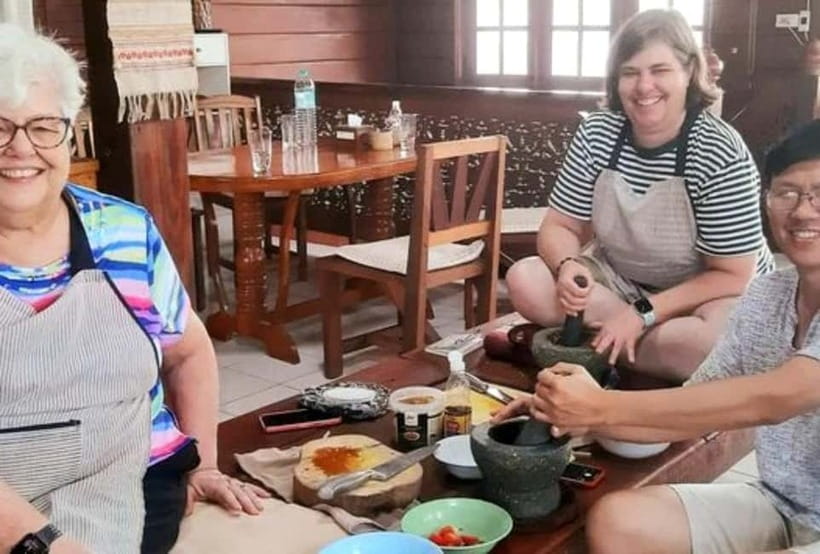
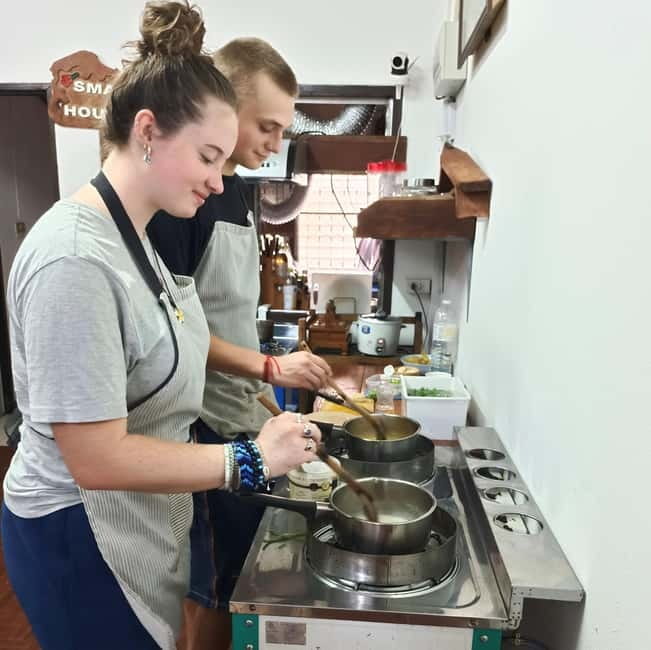
Once you start cooking, you do not just taste and watch. You prepare all ingredients yourself, and you have your own cooking station. That hands-on approach is a big part of why this class feels effective if you want to cook Thai food after you get home.
Arm Nitipong helps you in every step. He also explains dishes background, so you are not only learning technique. You are learning the why behind the cooking style and flavor choices, including the Northern and Central Thai influences that shape the menu.
Also, the class includes cooking equipment like woks and a rice steamer. That matters because Thai cooking often depends on specific tools and timing. If you have ever tried to make Thai dishes without the right setup, you know it can turn into guesswork. Here, you can focus on cooking, not improvising gear.
Food pace note: it is a full cooking session ending around 2:00 PM. Plan your morning so you are ready to cook and taste. The experience says you can have no breakfast or just a light breakfast before, and then you will cook a lot of delicious Thai foods together.
A few more ways to fill a day here
- Chiang Mai: Cooking Class with Market and Pickup
★ 4.9 · 1,365 reviews - Chiang Mai: Evening Cooking Class and Local Market Visit
★ 4.9 · 648 reviews - Chiang Mai: Evening Local Street Food Market Tour
★ 4.8 · 604 reviews
The menu: what you will actually cook and eat
This class is built around a sequence of dishes that teaches you different flavors and techniques. You will cook everything listed below, and each dish has a job in the bigger Thai food picture.
1) Herb Larb pork salad with sour Thai dressing and roasted sticky rice
You start with Herb Larb pork salad, served with sour Thai salad dressing. It is paired with roasted sticky rice on top, eaten with long bean and carrot.
What you learn here is aromatic building. Larb is not just spicy or salty. It is about herbs, acidity, and texture. The roasted sticky rice adds crunch and a nutty feel that rounds out the salad. The long bean and carrot keep it crisp and fresh.
This dish is also a great warm-up because you can see how chopping herbs and balancing sour dressing changes everything.
2) Green curry or Khao Soi, Chiang Mai’s noodle-curry comfort
Next you will make either green curry or Khao Soi curry soup, described as a Chiang Mai specialty.
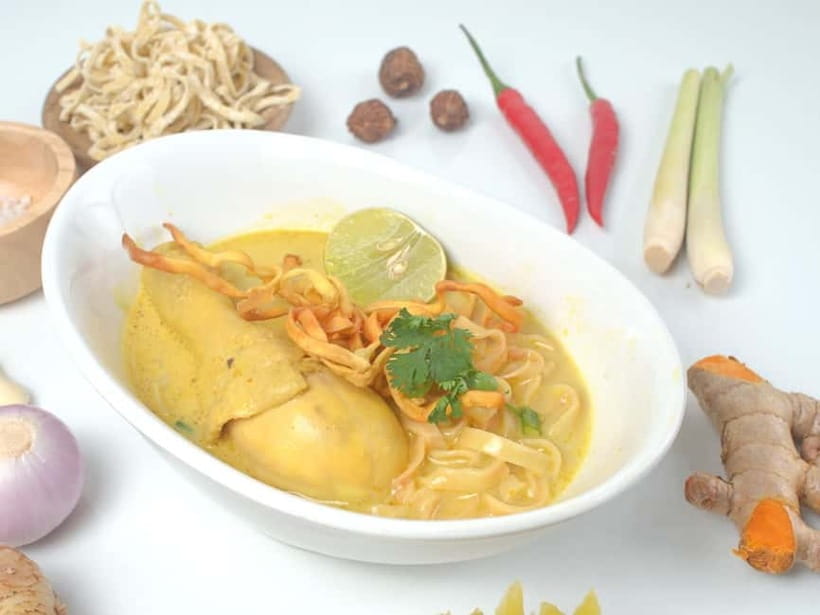
Khao Soi is a famous Chiang Mai curry soup, served with egg noodles. Depending on your dish choice, you might also see green curry elements like eggplant and Thai basil. The big lesson is how curry flavor develops, plus how Thai herbs and aromatics create depth beyond a basic sauce.
If you are visiting Chiang Mai and want one dish that feels local, this is a strong target. Khao Soi is named as a core Chiang Mai curry soup in the class menu, so it is not an optional add-on.
3) Tom Yum shrimp or Tom Kha coconut milk soup with mushrooms
Then you choose between Tom Yum and Tom Kha coconut milk soup.
Tom Yum is the famous sour Thai soup with shrimp. Tom Kha is creamy and coconut-milk based, with mushrooms, lemongrass, and kaffir lime leaf. You get to taste the contrast: sharp sour broth in Tom Yum, versus softer coconut richness in Tom Kha.
Even if you have eaten these in restaurants, cooking them is different. You are paying attention to how the sour element and the aromatic leaves shape the final flavor.
4) Pad Thai with tamarind sour sauce
Next comes Pad Thai stir-fry rice noodle, including Pad Thai with rice noodle sour from tamarind sauce.
This is where technique meets balance. Tamarind brings tang, and Thai cooks use it to build that sweet-sour foundation. The stir-fry method also teaches you how to keep noodles from going wrong in texture.
5) Mango with sticky rice and coconut milk
Finally, you make mango with sticky rice, described as yellow sweet mango with coconut milk and sticky rice.
This dessert is a classic Thai pairing, and it is a nice ending because it reminds you that Thai flavor is not only spicy or sour. It is also creamy, sweet, and fragrant.
If you are someone who often skips dessert when traveling, you will still probably want to try this. The ingredients come from your market work and the cooking process ties it all together.
Drinks and extras: small comforts that make the class feel complete
Food-focused classes are great, but this one also includes several drinks. You get drinking water plus lemongrass tea and jasmine tea. There is also espresso coffee listed, described as 100% Arabica grown in Chiang Mai.
There is even a “Chiang Mai special Wine” included. If you prefer non-alcoholic options, you can still enjoy the teas and coffee. It is simply part of the experience package.
You also receive a Thai cook book, available as printed or PDF. For me, this matters because you get a way to repeat what you cooked. A cookbook is not the same as memory, especially after a busy travel day, so this is one of those underrated inclusions.
How much it costs, and what you really get for $39
At $39 per person, this class lands in a value zone for what you actually do: market visit, herb garden stop, hands-on cooking with a small group, and a full menu of dishes you cook yourself.
Many cooking classes either focus on tasting with limited prep or charge more for privacy. Here, the price includes core ingredients, equipment, a cookbook, and multiple drinks. You are also getting guided instruction in English and Japanese, plus live guidance during cooking steps.
If you compare this to doing Thai cooking class from scratch on your own, the value is not just convenience. It is the guided ingredient selection, especially the fruit and herb choices. Thai cooking is detail-heavy, and that is where a local chef and a market stop can save you time and frustration later.
Who this class fits best, and who might want a different option
I think this is ideal if you want a practical Thai cooking day without the crowds. The small-group format suits couples, solo travelers, and friends who want attention while learning. The market and herb garden also suit people who like to understand where flavors come from instead of only following a recipe.
It is also a good match if you are specifically interested in Northern Lanna Thai and Central Thai food. The menu references Chiang Mai specialties like Khao Soi and also includes widely loved Thai dishes like Tom Yum and Pad Thai.
If you are the type who wants a totally relaxed sightseeing day, this may feel more structured and focused on cooking. You will be working, tasting, and moving through stops from about 9:00 AM to around 2:00 PM.
Quick booking checklist so you enjoy it more
- Plan a light breakfast, or plan to eat soon, because you cook a lot and the session runs into early afternoon
- Wear comfy shoes for the market visit and house herb garden stop
- Bring curiosity, ask about herbs and seasoning while you are cooking, that is when it sticks
- If you want to revisit dishes at home, check that you will use the printed or PDF cookbook
Should you book this Chiang Mai cooking class?
Yes, if you want hands-on Thai cooking with real local context. For $39, you are paying for more than a meal. You are paying for a tight group, a local chef named Arm Nitipong with Chiang Mai roots, and a strong food education system that starts at the market and continues in the herb garden.
Book it if Northern Lanna flavors and Chiang Mai specialties like Khao Soi interest you, and if you like learning by doing. Skip it only if you dislike cooking sessions or you want a more casual, sit-and-watch style experience.
FAQ
What time does hotel pickup happen?
Pickup is around 9:00 AM to 9:15 AM in the morning.
When will the class end and you get dropped off?
You return to your hotel around 2:00 PM. The car pick up can also drop you off in the old city.
How big is the cooking class group?
The class is taught in a small group of 4 people.
Which dishes are included in the cooking menu?
The menu includes Herb Larb pork salad, Green curry or Khao Soi curry soup, Tom Yum shrimp or Tom Kha coconut milk soup, Pad Thai, and Mango with sticky rice.
What languages is the instructor able to teach in?
The experience offers English and Japanese.
What is included besides cooking ingredients?
It includes cooking equipment (like wok and rice steamer), fruits from the fresh market visit, a Thai cook book (printed or PDF), drinking water, lemongrass tea, jasmine tea, espresso coffee (100% Arabica grown in Chiang Mai), and Chiang Mai special wine.
Do I need breakfast before the class?
The class says you can have no breakfast or just a light breakfast before, since you will cook a lot of food together.
More Markets in Chiang Mai


Fresh listings for Chiang Mai
- Skydive Chiang Mai★ 5.0 · 1 review
- One day hiking tour in Chaing Mai★ 5.0 · 1 review
- One Day Non Tourist Trek 100% Guarantee★ 5.0 · 1 review
- Chiang Mai to Chiang Rai (Private 3 day Tour)★ 5.0 · 1 review
- San Kamphaeng Hot Springs and Thai Handicraft Tour from Chiang Mai★ 5.0 · 1 review
- Half day Doi Suthep Temple & Mae Ping River cruise (Private)★ 5.0 · 1 review
Northern Thai Cooking Classes, compared.
Half-Day Thai Cooking Class at Organic Farm in Chiang Mai
Read our review →
Cooking Class, Market & Thai Herbs Garden Tour
Read our review →
Authentic Cooking Class with Market & Farm Visit
Read our review →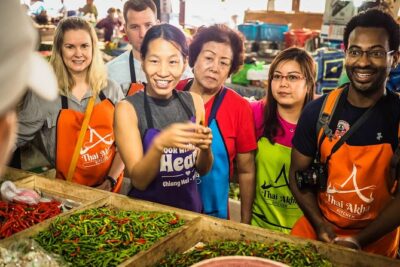
Full Day Thai Cooking at Farm (Chiang Mai)
Read our review →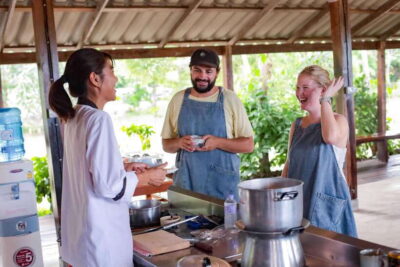
Browse the lists this tour appears in