
Reviewed · WAT PHRA THAT DOI SUTHEP TOURS
Doi Suthep temple and Trekking
Climb to gold, then walk it off. This private Chiang Mai half-day focuses on Doi Suthep, one of the city’s most important hilltop temples, including the climb up 306 steps and a wide view over Chiang Mai. I especially like the contrast between a major city temple and a more forest-feeling return stop, plus the chance to learn the basics of Buddhism in a way that connects to what you’re seeing. One thing to consider is the physical side: it’s short trekking plus stairs, so plan for a moderate effort even though the tour stays around 3 to 4 hours.
The other big win is the guide, not just the temples. You get a private guide and time to interact with locals, and there’s also room for some local food during the experience. The tour uses a mobile ticket, which keeps things simple on the day. The only downside is that transportation details can be a little confusing depending on what’s included, so you should confirm whether the red pickup vehicle is part of your package.
In This Review
- Key highlights at a glance
- Why Doi Suthep still matters in Chiang Mai
- The 306 steps up: what to expect and how to enjoy it
- Golden pagoda and temple meaning, without the lecture
- Wat Pha Lat on the return route: the change of scenery that matters
- Light trekking back to town, and how to plan your effort
- Private tour timing: a realistic 3 to 4 hours
- Local food and Buddhism learning, done in a practical way
- Price and logistics: what $76.93 per group really means
- What to pack and what to watch for
- Who this tour suits best
- Should you book this Doi Suthep and trekking tour?
- FAQ
- How long is the Doi Suthep temple and trekking experience?
- Is this a private tour?
- What are the main stops during the tour?
- Do I climb stairs?
- Is there trekking included?
- What is included in the price?
- What is not included?
- Where does the tour start and end?
- Is there free cancellation?
Key highlights at a glance
- Doi Suthep hilltop temple visit with a major staircase climb and big views
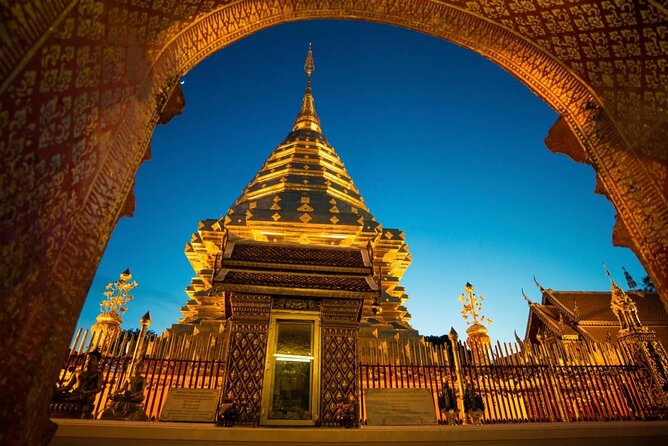
- Golden pagoda scale connected to Chiang Mai’s Mong Rai dynasty roots, including a gold-covered pagoda story
- Wat Pha Lat stop on the way back, with a more old-temple feel
- Light trekking back to town after the temple visit, not a full hike day
- Private guide and learning time tied to Buddhism and temple meaning
- Local food moment built into the outing, not just sightseeing
Why Doi Suthep still matters in Chiang Mai
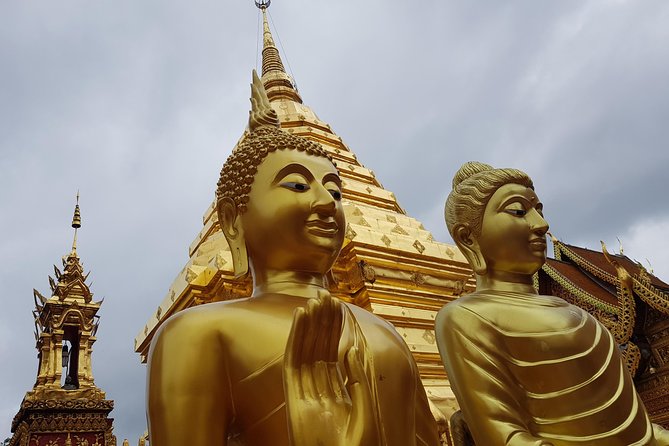
Doi Suthep is the temple most people use as shorthand for Chiang Mai’s spiritual “center of gravity.” It’s not only about a pretty shrine on a hill. The temple sits on higher ground and was built by the Six King of the Mong Rai dynasty more than 600 years ago, which helps explain why it carries such weight for the region. You’re seeing a religious site that’s both historical and active, and it’s presented in a way you can actually understand without needing a religion degree.
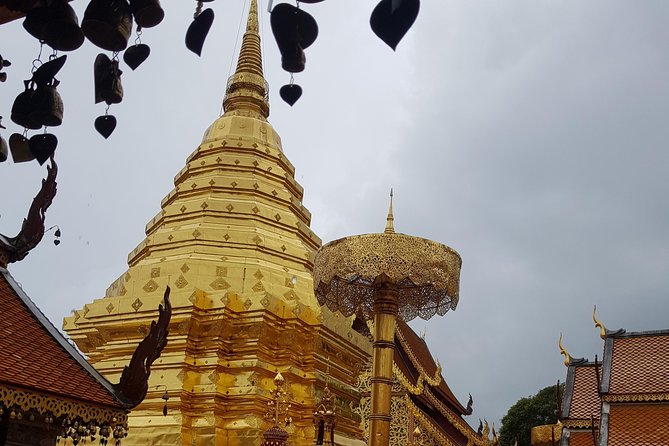
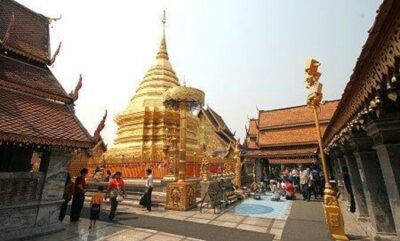
Then there’s the gold. The pagoda is covered with gold, and the scale of the gold story is huge, listed as over 600 kg. Even if you never care much about “how much gold,” that amount gives you a sense of how important this place is. It’s one of the few temple experiences in Thailand where the visual impact is so direct that it makes the history feel immediate.
You also get a practical reward for the trip up the hill. From the top, you get a view over Chiang Mai. That means you’re not stuck in temple-dark incense haze for hours. You can reset your bearings, see the city’s layout, and then come back down feeling like you’ve really clocked where you are.
The 306 steps up: what to expect and how to enjoy it
The climb is the headline: 306 steps up to Doi Suthep. That number sounds tidy, but in real life, stairs change the pace of your whole day. You’ll want to treat this like a mini workout rather than a quick shortcut. The good news is that the climb is part of the experience, not an awkward add-on.
Here’s how to make the stairs feel easier:
- Go slow on the first third. Your legs will thank you later.
- Take short pauses if you need them. This is a temple setting, so steady and respectful works best.
- Bring shoes you can grip on stone steps, especially if it’s warm or humid.
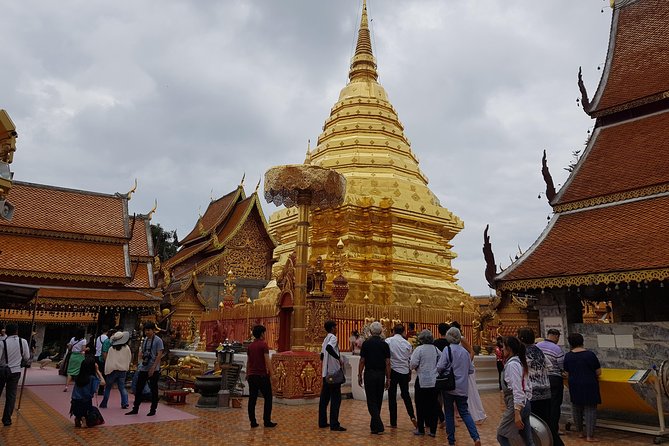
Once you reach the temple area, the views start doing the job the stairs promised. You get a panorama over Chiang Mai, which helps you connect the place to the city. And because Doi Suthep is one of the most important temples in Chiang Mai, you get a level of atmosphere that feels different from smaller neighborhood sites.
It’s also worth noting that the Doi Suthep visit is time-efficient. This is built for a 3 to 4 hour window, so you see what matters without turning it into an all-day slog. If you only have a half-day free, this is one of the better ways to use it.
The mountaintop temple overlooking the whole valley
- Chiang Mai: Doi Suthep and Wat Umong Enchanting Evening Tour★ 4.6 · 1,811 reviews
- Chiang Mai: Doi Suthep, Wat Umong, and Pha Lat Sunrise Tour★ 4.7 · 1,425 reviews
- Chiang Mai: Wat Pha Lat & Wat Phra That Doi Suthep Tour★ 4.8 · 1,207 reviews
- Wat Phra That Doi Suthep spiritual Sunrise Tour with an Ex-monk★ 5.0 · 798 reviews
Golden pagoda and temple meaning, without the lecture
The tour is designed around seeing, then learning. Instead of dumping facts on you, the guide explains what you’re looking at and what it means in Buddhism and local life. That matters because temples can feel like a blur of architecture and incense if nobody gives you a simple framework.
You’ll get a guided visit at Doi Suthep, and then the experience continues with a second temple stop that adds contrast. That contrast is the real learning tool here. Doi Suthep is the hilltop symbol, and the return stop gives you a different feel, one that’s more connected to the hillside and older temple atmosphere.
If your guide includes someone like Lanna, you’ll likely appreciate the communication angle too. She’s highlighted for knowing the temples and for helping visitors interact with locals. That type of guidance can turn temple visits from watching to understanding.
Wat Pha Lat on the return route: the change of scenery that matters
After Doi Suthep, you travel to Wat Pha Lat, described as an old temple on the way back to town. This stop is not just a photo break. It helps you understand the difference between a major city-linked temple stop and something that feels more rooted in the route back.
Wat Pha Lat is also included with a scheduled time of about 30 minutes, and the admission ticket is included. That matters because it keeps your day smooth. You’re not left hunting for tickets while your guide waits or while your group loses time.
What makes Wat Pha Lat valuable is the way it changes the mood. The program is set up as a temple-to-trek-to-town sequence, and Wat Pha Lat sits right in the middle. You get a pause to look around, and then you transition into light trekking back down.
If you like travel days that feel varied rather than repetitive, this structure works well. You’re not just stacking temples. You’re moving from hilltop power to a more return-route rhythm.
Still haven't picked a temple to start with?
- Chiang Mai: Chiang Rai Temples, Karen Tribe and Hot Springs
★ 4.7 · 5,401 reviews - Chiang Rai White Temple and Blue Temple Day Tour
★ 4.6 · 3,366 reviews - Chiang Mai: White, Red/Black & Blue Temples Tour with Lunch
★ 4.2 · 2,017 reviews
Light trekking back to town, and how to plan your effort
One of the best parts of this experience is that it includes light trekking, not a full-day hike. The trekking is part of how you return to town, so it feels like progress, not a separate activity you have to commit to.
The tour is listed for travelers with moderate physical fitness, which is a useful heads-up. In practice, you’re dealing with stairs at Doi Suthep plus walking time during the return trek. That’s not “expert hike” territory, but it also isn’t a couch-and-camera outing.
My practical advice for making it comfortable:
- Wear breathable layers. Chiang Mai weather can shift, and you’ll heat up on the climb.
- Use a small daypack. Keep water and essentials close.
- Expect uneven ground and take your time on any paths.
Also, the tour includes bottled water. That’s a small but important detail. It reduces decision fatigue and helps you stay steady during the walk back.
This walking section is where you get that jungle-temple feel mentioned in the tour description. You’re not just viewing a temple; you’re moving through the hillside environment that surrounds it. For a half-day itinerary, that’s a strong way to add texture to your day.
Private tour timing: a realistic 3 to 4 hours
This is a private tour for your group. That’s a big deal with a temple-and-stairs itinerary because you can go at a pace that fits you. Up to 12 people are covered under the group size, which is convenient if you’re traveling with friends or family.
Duration is about 4 hours, and it’s built around three core blocks:
1) hilltop temple climb and visit
2) travel and short visit to Wat Pha Lat
3) trek back toward town, then return
That timing is especially helpful if you’re trying to balance Chiang Mai sightseeing with evening plans. You’re not forced into an all-day commitment. You can do this and still have time for dinner, markets, or a second activity later.
Because it’s private, you’re also more likely to get a smoother flow. A guide can adjust when you pause, when you take photos, and how long you linger at the most important spots.
Local food and Buddhism learning, done in a practical way
Two parts of the program feel like they’re designed for real culture, not just checkboxes: learning some Buddhism and trying local food.
Buddhism learning matters because it gives you a lens for what you see. Temples can feel like separate worlds unless you understand the basics. The guide’s role here is to connect temple elements to meaning in Buddhism and local practice. That turns your walk around the temple grounds into something more than sightseeing.
The local food piece is also meaningful. Eating in Thailand is often where you learn the most about daily life. This tour’s “local food” time is positioned as part of the flow, which can keep you from needing to squeeze meals between attractions.
Just keep expectations reasonable. The tour is short, so you’re not planning a full lunch experience unless the guide builds extra time. Since lunch is listed as not included, think of it more as a chance to sample something rather than a full meal plan.
Price and logistics: what $76.93 per group really means
The price is listed as $76.93 per group, up to 12 people, and the tour includes temple fees, bottled water, and a guide. That structure can be very good value if you’re splitting it. It’s much more cost-effective than per-person pricing when you have more people.
You should also look closely at what’s not included. Transportation by the red pickup truck (local taxi) and private transportation are listed as not included. That means your total day cost might change depending on where you’re staying and whether transportation is arranged through another option.
Here’s the way to think about value:
- You are paying for a guided temple plan plus temple entry and water.
- You might pay extra for local transport to reach the trail and to return, depending on your booking setup.
- You’re not paying for lunch, so you’ll want an eating plan afterward.
If you confirm transportation before you go, the rest is straightforward. With a private guide, it tends to feel organized even with a short time window.
What to pack and what to watch for
Because this is stairs plus light trekking, the “small stuff” affects comfort. You don’t need a hiking kit, but you do want to be ready for temple surfaces and outdoor walking.
I’d plan on:
- Comfortable, grippy footwear
- Light layers for warm weather
- A cap or hat for sun during approach and walks
- A small towel or tissues, since temples involve hand and face moments
And go in with the right mindset. This is a temple experience where respect matters. Speak calmly, move steadily, and keep an eye on the guide when you’re near active prayer areas.
If you have knee issues, tell your guide early. A good guide can help you pace and choose when to pause, even if you still climb the stairs.
Who this tour suits best
This Doi Suthep and trekking experience is a strong fit if you want:
- a half-day temple plan in Chiang Mai
- a mix of hilltop views and a hillside return walk
- a private guide who can explain what you’re seeing
- a little bit of food and Buddhism context, not just photos
It’s especially good for couples, small families, and groups who want a shared experience without being rushed by a big tour crowd. It’s also a decent pick if you’re not trying to do a full-day trek but still want something more active than a single temple visit.
If you hate stairs or have limited mobility, this may be less comfortable because the 306-step climb is central to the experience. You might still visit Doi Suthep on a different format, but for this specific plan, it’s built around that climb.
Should you book this Doi Suthep and trekking tour?
I think you should book it if you want one efficient, meaningful temple day that mixes the iconic hilltop climb with a second stop and a light trek back. The value works best when you have a small group to split the per-group price, and the included guide, temple fees, and water remove the usual headaches.
Skip it or consider another option if you want a strictly low-effort sightseeing day. The experience depends on stairs and walking time, and the moderate physical fitness requirement is real.
Finally, do a quick sanity check on transport. Since local taxi pickup is mentioned but also listed as not included, clarify what happens from your hotel area to the starting point and back. Once that’s clear, this tour is one of the more practical ways to see Doi Suthep, get the views, and feel the temple world in two different settings.
FAQ
How long is the Doi Suthep temple and trekking experience?
It runs for about 4 hours (approximately).
Is this a private tour?
Yes. It is a private tour/activity, and only your group participates.
What are the main stops during the tour?
You visit Doi Suthep temple, then go to Wat Pha Lat, and you trek back toward town before returning.
Do I climb stairs?
Yes. The Doi Suthep highlight includes a 306-step staircase.
Is there trekking included?
Yes. The tour includes light trekking, including a trek from the Wat Pha Lat area back to town.
What is included in the price?
Temple fees, bottled water, and a guide are included.
What is not included?
Lunch, personal expenses, over time or optional tours, the red pickup truck (local taxi), and private transportation are not included.
Where does the tour start and end?
The activity starts in Chiang Mai, Thailand, and ends back at the meeting point.
Is there free cancellation?
Yes. You can cancel for a full refund up to 24 hours before the experience’s start time.
More Hiking & Trekking in Chiang Mai


Fresh listings for Chiang Mai
- Skydive Chiang Mai★ 5.0 · 1 review
- One day hiking tour in Chaing Mai★ 5.0 · 1 review
- One Day Non Tourist Trek 100% Guarantee★ 5.0 · 1 review
- Chiang Mai to Chiang Rai (Private 3 day Tour)★ 5.0 · 1 review
- San Kamphaeng Hot Springs and Thai Handicraft Tour from Chiang Mai★ 5.0 · 1 review
- Half day Doi Suthep Temple & Mae Ping River cruise (Private)★ 5.0 · 1 review
Wat Phra That Doi Suthep Tours, compared.
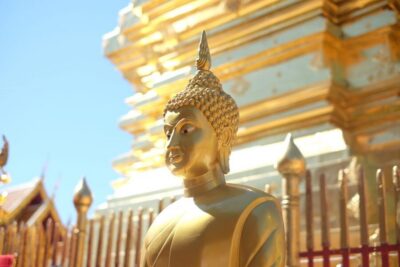
Doi Suthep and Wat Umong Enchanting Evening Tour
Read our review →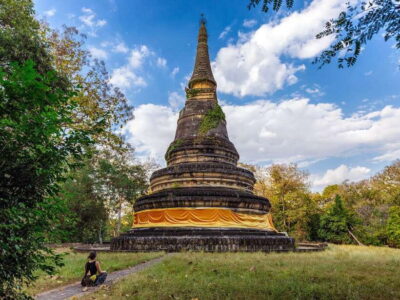
Doi Suthep, Wat Umong, and Pha Lat Sunrise Tour
Read our review →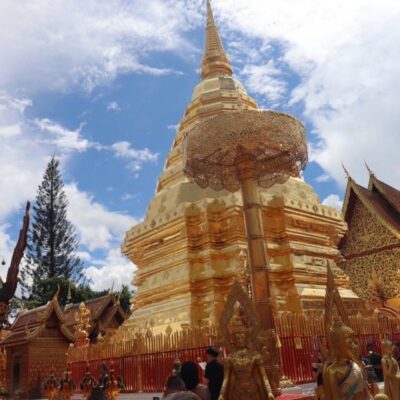
Wat Phra That Doi Suthep spiritual Sunrise Tour with an Ex-monk
Read our review →
4-Hour Doi Suthep & Hmong Hill Tribe Village from Chiang Mai
Read our review →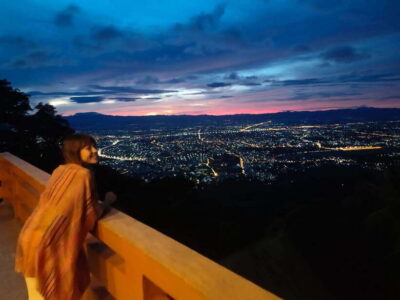
Spiritual Sunrise Wat Doi Suthep, Pha Lat, Alms & Meditation
Read our review →Browse the lists this tour appears in