
Reviewed · NORTHERN THAI COOKING CLASSES
Chiang Mai: Morning Cooking Class with Market Visit
Thai food hits different when you pick the ingredients yourself. This Chiang Mai morning cooking class strings together a local market, an organic garden stop, and a hands-on lesson where you cook six dishes plus dessert, guided in English by staff who clearly love teaching. The one thing to think about is timing and transport, because the pickup driver waits only a short window after the scheduled time.
I especially like the ingredient logic, not just the recipe steps. You shop for what you’ll cook, learn what herbs and vegetables are doing in Thailand, then cook dishes like Pad Thai, curry, and Tom Yum Kung with a chef guiding your hand. If you’re sensitive to spicy flavors, decide early how you want your taste level adjusted, since Thai cuisine can lean strong on chili.
In This Review
- What makes this cooking class worth your 5 hours
- Morning pickup, then straight to Chiang Mai flavors
- The local market: where your cooking choices start
- Organic garden and farm time: herbs with a point
- In the cooking studio: you learn Thai technique, not just Thai dishes
- Starter options: pick one and make it correctly
- Main course options: noodles, basil, cashews, or curry-ready foundations
- Soup and curry paste: the flavor engine of Thai cooking
- Dessert: a sweet finish that’s part of the lesson
- Eating what you cooked: the real payoff
- The price, visitor fees, and what you actually get
- English-led and diet-friendly, with a few practical caveats
- Who this class suits best
- Should you book this Chiang Mai cooking class?
What makes this cooking class worth your 5 hours
You start with a hotel pickup in central Chiang Mai zones, then head out while the morning market is still in full flow. After that, you get a short look at how an organic farm grows herbs and vegetables, and you bring some of those ingredients into the studio cooking. By the time you sit down to eat, the food feels earned, not just practiced.
Key points for your planning
- Market-first shopping so you understand what goes into Thai dishes before you cook
- Organic garden and herb picking to connect flavors with how they grow
- Cook 6 dishes total with real choice across starters, mains, soups, and curry paste
- Air-conditioned dining for dessert after the main cooking, so you can slow down
- English instruction and a recipe PDF you can actually use at home
- Diet-friendly options including vegan, vegetarian, Halal, and gluten-free needs
Morning pickup, then straight to Chiang Mai flavors
The day begins with a hotel pickup in a big chunk of Chiang Mai’s central areas, including the Old City, Santitham, and stretches of Huay Keaw Road up toward Maya Shopping Mall. Pickup is also offered for some farther neighborhoods like Nimmandhaemin Road, Sirimongkrajan Road, Wat Ket Road, Chang Pheuk, Changklan, and Changmoi, but not every address is included. If your hotel is outside the pickup area, you’ll be told in advance and you can go on your own to the market or cooking studio.
This matters because the schedule is tight. Your pickup window is between 8:30 and 9:00 AM, and the driver waits no longer than 5 minutes after the scheduled time. If you like calm starts, set a slightly earlier alarm and aim to be ready right away.
The local market: where your cooking choices start
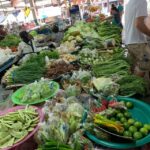
Once you arrive, you do a market tour focused on fresh ingredients you’ll see used again and again in Thai cooking. The best part is that you’re not just walking past stalls. You’re learning what to look for and why, like how certain herbs smell different when they’re fresh, or how ingredients change the final taste.
You’ll also get that satisfying moment when the food smells hit first, and the lesson starts second. One review detail that stuck with me: people describe the market as genuinely local, with very few foreigners around. That usually means you can actually observe what Thai shoppers are buying for everyday meals, not just tour-bait items.
Practical tip: arrive with an appetite and follow the instruction to come with an empty stomach. It makes the tasting and your final meal way more fun.
Market run first, then into the kitchen
- Half-Day Thai Cooking Class at Organic Farm in Chiang Mai★ 5.0 · 19,087 reviews
- Chiang Mai: Cooking Class, Market & Thai Herbs Garden Tour★ 4.9 · 4,824 reviews
- Chiang Mai: Authentic Cooking Class with Market & Farm Visit★ 4.9 · 4,546 reviews
- Thai and Akha Cooking Class in Chiang Mai★ 5.0 · 4,358 reviews
Organic garden and farm time: herbs with a point
After the market, you head to an organic garden and farm area where you explore how vegetables and herbs are grown in Thailand. You can pick some herbs and ingredients to use in your cooking, which is a small detail with a big effect. When you’ve literally chosen the leaf or stalk yourself, you pay attention to the flavor in a way that never happens from a cookbook.
This is also where the class connects Thai food to its growing conditions. You learn what herbs matter, how they’re used, and what “organic” means in the context of a real garden. For me, it turns the cooking lesson from a skills demo into something more practical: you start thinking about ingredient quality when you cook at home.
In the cooking studio: you learn Thai technique, not just Thai dishes
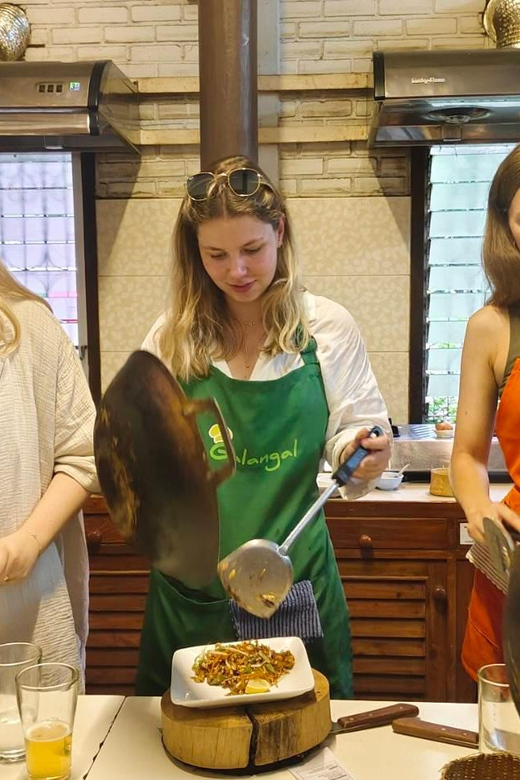
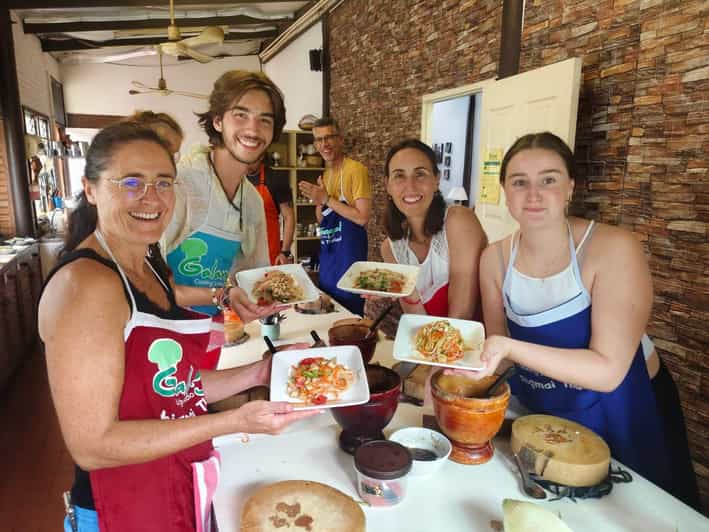
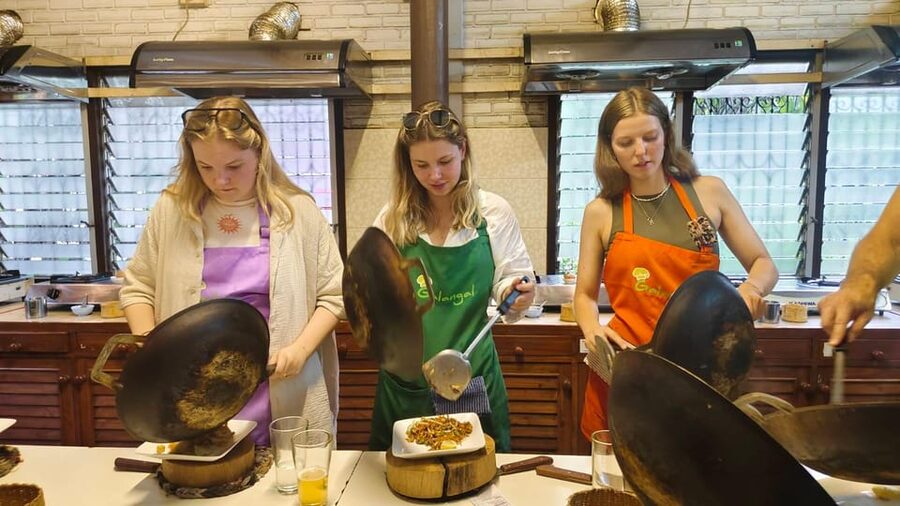
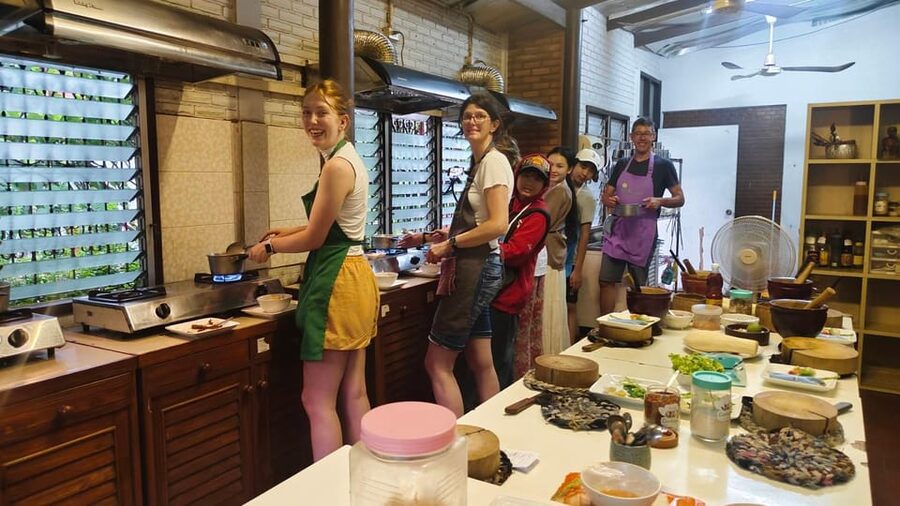
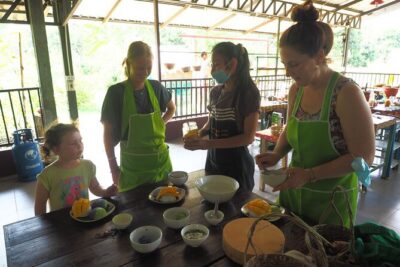
Back at the cooking studio, your lesson starts with Thai cooking skills and basic method. The studio part is also where the group energy really shows up. Reviews describe a warm atmosphere, and some mention that even families and kids were welcomed, with small children encouraged to participate.
The class is structured around choosing and making your way through six dishes, with options for nearly every course. You’ll typically work with guidance from an English-speaking instructor, and the pace is described as workable for beginners while still being satisfying for people who cook at home.
Temples are quieter before the heat sets in
- Chiang Mai: Doi Suthep, Wat Umong, and Pha Lat Sunrise Tour
★ 4.7 · 1,425 reviews - Wat Phra That Doi Suthep spiritual Sunrise Tour with an Ex-monk
★ 5.0 · 798 reviews - Spiritual Sunrise Wat Doi Suthep, Pha Lat, Alms & Meditation
★ 4.9 · 674 reviews
Starter options: pick one and make it correctly
Choose one starter from:
- Som Tam (papaya salad)
- Por Pia Thod (spring rolls)
- Larb Kai (chicken salad)
- Yam Woon Sen (glass noodle salad)
This is a smart way to start. Each option teaches different Thai flavor building blocks. Som Tam pushes you to balance tangy, salty, and spicy. Larb Kai leans into herbs and aromatics. Yam Woon Sen teaches how noodles absorb sauce flavors. Spring rolls help you understand texture and wrapping.
Main course options: noodles, basil, cashews, or curry-ready foundations
For the main, you can choose:
- Pad Thai (fried noodles)
- Pad See Ew (stir-fried with fresh noodles)
- Kai Pad Med Mamuang Him Ma Pan (chicken with cashew nuts)
- Pad Kaphao Kai (minced chicken with holy basil)
If you’ve only had Thai food from restaurants, this is where you gain muscle memory. You’ll learn the cooking flow and how sauces and aromatics get timed so you don’t end up with one flavor that overwhelms everything else. Reviews also mention that the instructor explains ingredient roles and even how you can adapt flavors with ingredients you might find outside Thailand.
A small note on choice: some dishes are more noodle-focused, others are more stir-fry and basil-focused. If you want the most variety for your palate, pick the dish that is least similar to your usual go-to.
Soup and curry paste: the flavor engine of Thai cooking
Next comes the soup course. Choose one:
- Tom Yum Kung (hot and sour prawn soup)
- Tom Kha Kai (chicken soup with coconut milk)
- Tom Kha Je (vegan coconut milk soup)
- Tom Zap Kai (hot and sour with chicken)
Then you choose your curry style, from:
- green
- red
- yellow
- massaman
- panang
The curry paste part is especially valuable. Curry paste isn’t just seasoning. It’s the core flavor system, and making it with instruction helps you understand why Thai curries taste layered instead of one-note.
If you’re vegetarian or vegan, Tom Kha Je is the most directly plant-based option listed. The class also states it can accommodate vegan, vegetarian, Halal, and gluten-free needs, and handles allergies, so it’s worth mentioning your requirements clearly when you confirm.
Dessert: a sweet finish that’s part of the lesson
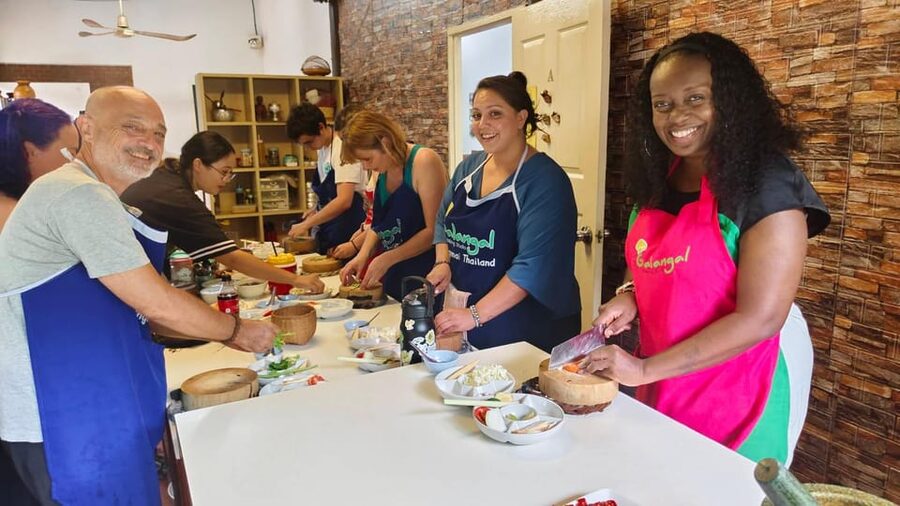
After the main courses, you make dessert, either:
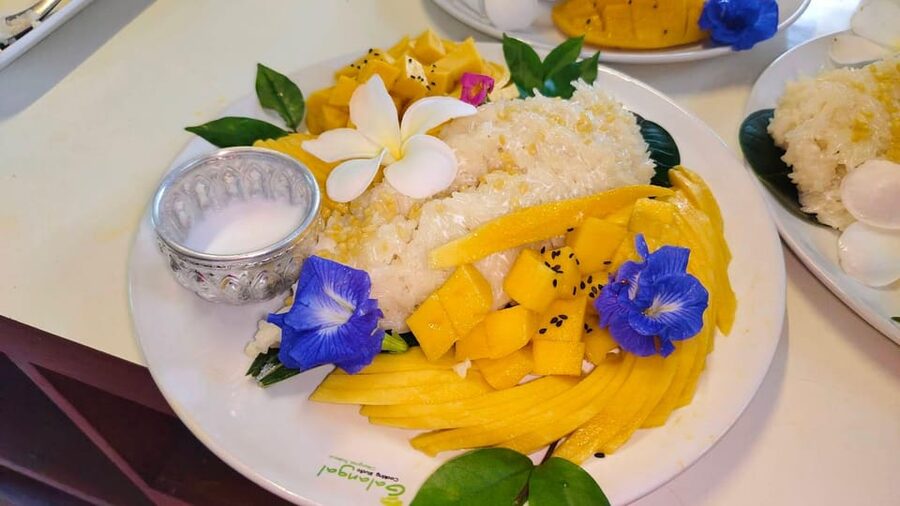
- mango sticky rice with ice cream
- Kuay Tod (deep-fried banana)
Dessert is made in an indoor kitchen and air-conditioned dining room, which is a welcome break if Chiang Mai humidity is doing its thing. The class is designed so you cook, then sit down and eat what you made, so dessert feels like a reward rather than just an extra task.
If you like contrast, mango sticky rice is creamy and fragrant, while Kuay Tod is crisp and warm. Either way, you get a taste of Thai sweetness that isn’t overly complicated.
Eating what you cooked: the real payoff
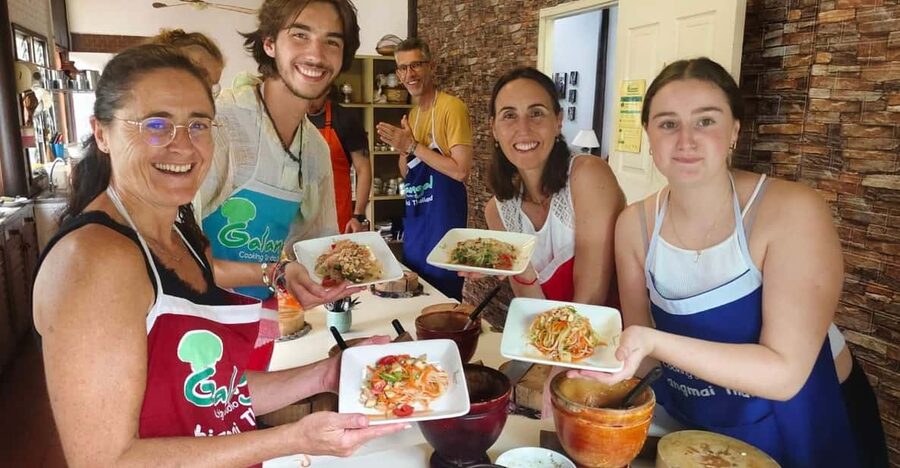
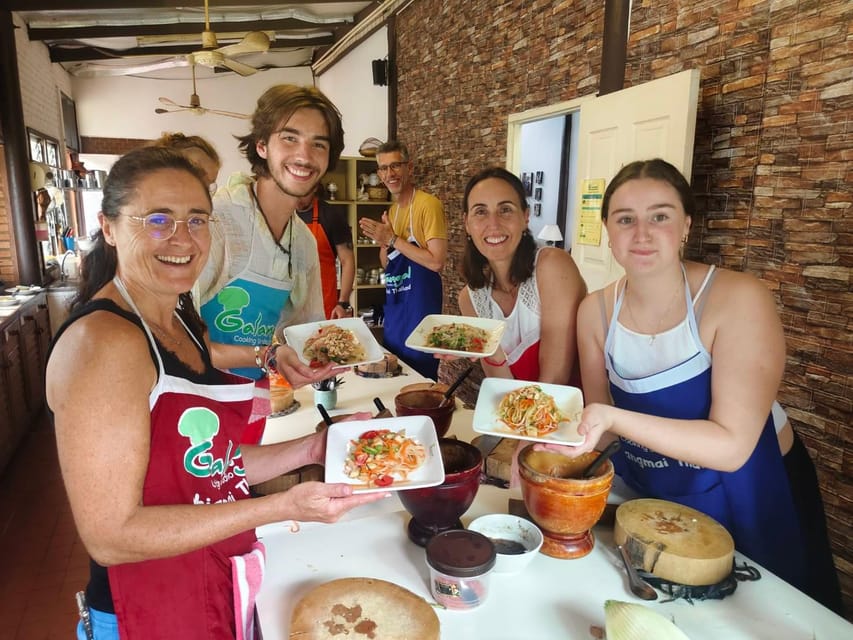
At the end, you eat the dishes you made. This is a big part of why this class works. You can immediately connect steps and ingredients to taste, and you’re not standing around wondering if your finished dish would have been better if you had done one tiny thing differently.
Reviews repeatedly highlight how tasty the food is and how well the instructor’s explanations support both beginners and more experienced home cooks. One theme you’ll notice is that people credit the English instruction, describing it as clear enough to follow all the way through the process.
The price, visitor fees, and what you actually get
The base price is $41 per person for a 5-hour experience. That’s not just a cooking session either. Included are hotel pickup and drop-off, market tour time, instruction, water, tea, and coffee, plus all ingredients and equipment. You also receive PDF versions of the recipe book so you can recreate what you made later.
On top of the $41, there’s an additional visitor fee listed as 500 baht per adult and 350 baht per child (6 to 12 years), which is not included. That extra cost is worth factoring in before you decide, especially for families.
My take on value: you’re getting a morning package that teaches shopping, ingredient understanding, and hands-on cooking across multiple Thai dishes. If you only cared about one recipe, it would be overpriced. If you want real competence and multiple dishes you can cook again, it starts to feel like good value fast.
English-led and diet-friendly, with a few practical caveats
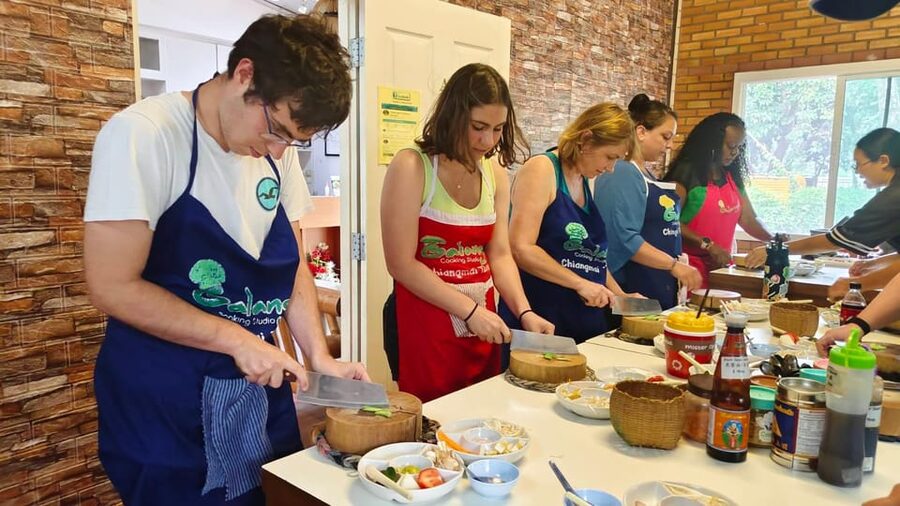
The instructor is listed as English-speaking, and that shows up in the reviews through how well guests could follow along. If you’re coming from outside Thailand and you’re worried about ingredient names or techniques, this kind of instruction helps a lot.
Diet notes are also clearly stated. The class is available for people who are vegan, vegetarian, Halal, and also for those who are gluten free or have allergies. That said, if your dietary needs are strict, send them clearly before you go so the kitchen can plan properly.
The only real drawback pattern I see in the information provided is logistical. One review points out that transportation communication can fail when emails are not answered, and it can cause stress if you aren’t near enough to self-reach the market in time. My advice is simple: confirm pickup details the day before and double-check your meeting point location.
Who this class suits best
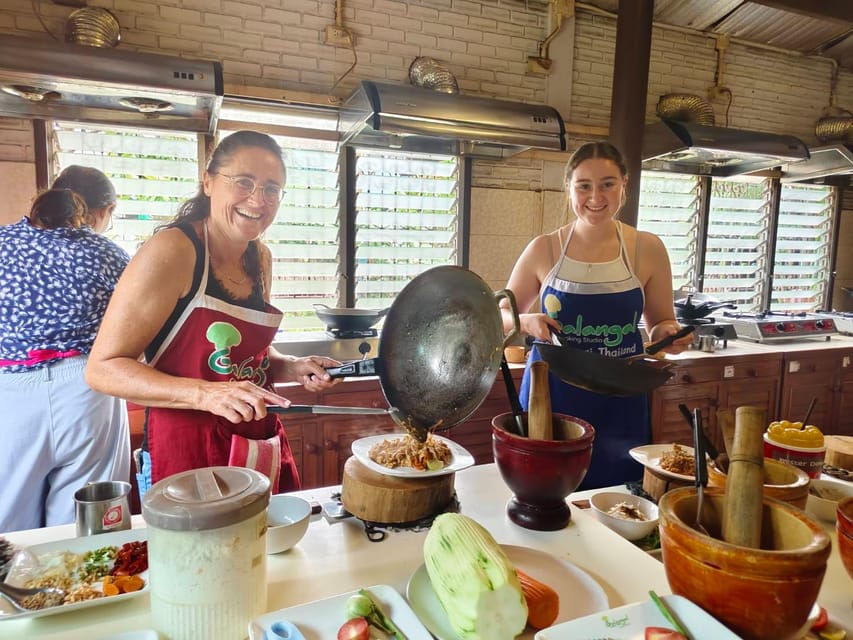
This is a strong fit if you:
- want a hands-on cooking day rather than a quick demo
- like learning where ingredients come from, not just how to cook them
- want a variety of Thai flavors across noodles, curry, soup, and dessert
- need English instruction and diet options
It’s also a good match for couples and small groups because you can get lots of attention while still working in a group format. If you’re traveling with kids, the class description and reviews suggest children can join the activity in a friendly way.
If you’re short on time, you still get a full course set, but the early pickup means you should be ready for a morning schedule.
Should you book this Chiang Mai cooking class?
Book it if you want more than recipes. The combination of market shopping, an organic herb stop, and then cooking six dishes plus dessert is a fast way to build real Thai cooking instincts. The PDF recipe book is also a practical win, since you can recreate dishes after you’re back home.
Consider skipping or choosing a different format if:
- you dislike early mornings and tight pickup windows
- you’re worried about last-minute transport communication
- you want only one or two dishes and nothing else
If you’re on the fence, here’s an easy decision rule: if you can handle a 5-hour morning and you like the idea of cooking a range of Thai classics, this class is the kind of practical souvenir you’ll use again and again.
More Markets in Chiang Mai


More Shopping Tours in Chiang Mai
Fresh listings for Chiang Mai
- Skydive Chiang Mai★ 5.0 · 1 review
- One day hiking tour in Chaing Mai★ 5.0 · 1 review
- One Day Non Tourist Trek 100% Guarantee★ 5.0 · 1 review
- Chiang Mai to Chiang Rai (Private 3 day Tour)★ 5.0 · 1 review
- San Kamphaeng Hot Springs and Thai Handicraft Tour from Chiang Mai★ 5.0 · 1 review
- Half day Doi Suthep Temple & Mae Ping River cruise (Private)★ 5.0 · 1 review
Northern Thai Cooking Classes, compared.
Half-Day Thai Cooking Class at Organic Farm in Chiang Mai
Read our review →
Cooking Class, Market & Thai Herbs Garden Tour
Read our review →
Authentic Cooking Class with Market & Farm Visit
Read our review →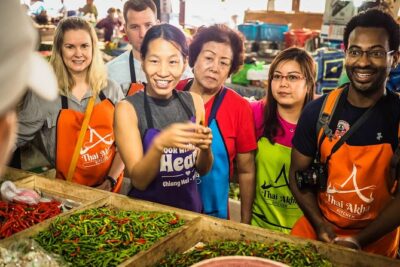
Full Day Thai Cooking at Farm (Chiang Mai)
Read our review →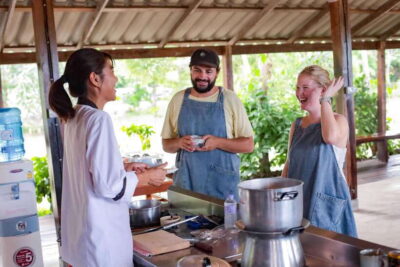
Browse the lists this tour appears in